
Asian CricketNot a Second-Season Slump but a Conversion Story: Doseja's 78 Gives Delhi a Strong Lead Over Services
Not a Second-Season Slump but a Conversion Story: Doseja's 78 Gives Delhi a Strong Lead Over Services
मुख्य तथ्य (एक नज़र में): रणजी ट्रॉफी 2026-27 के ग्रुप मुकाबले में दिल्ली ने सर्विसेज़ के 266 के जवाब में दूसरे दिन स्टंप्स तक 6 विकेट पर 299 रन बनाए — 33 रन की बढ़त, चार विकेट शेष। आयुष दोसेजा (24 वर्ष) ने 78 रन बनाए, जो इस सीज़न उनका पहला अर्धशतक है (इससे पहले 25, 30, 40)। पिछले सीज़न उन्होंने 949 रन बनाए थे। रणजी में पहली पारी की बढ़त के तीन अंक मिलते हैं, इसलिए दिल्ली के तीन अंक लगभग सुरक्षित हैं। दोसेजा लेग साइड पर स्ट्रैंगल होकर आउट हुए — तकनीकी/अशुभ आउट, फ़ॉर्म का संकेत नहीं। सबसे मूल्यवान डेटा पॉइंट बंगाल के खिलाफ़ पारी है, जहाँ शमी, आकाश दीप और मुकेश कुमार जैसे तीन भारतीय तेज़ गेंदबाज़ थे — पर उसका स्कोर उपलब्ध नहीं। चेतावनी: नमूना केवल 8-9 पारियाँ; सर्विसेज़ जैसे सामान्य आक्रमण के खिलाफ़ 78 को बंगाल जैसे आक्रमण के बराबर न आँकें। अगला जोखिम: सैयद मुश्ताक अली ट्रॉफी (टी20) के लिए केवल 7-8 दिन की तैयारी, जिससे लाल गेंद की लय बिगड़ सकती है। चयन: रेस्ट ऑफ इंडिया/दलीप का रास्ता इंडिया-A की रडार तक पहुँचाता है, दरवाज़े तक नहीं — एक-दो और लगातार सीज़न चाहिए। निष्कर्ष: यह संकट नहीं, विकास की कहानी है।
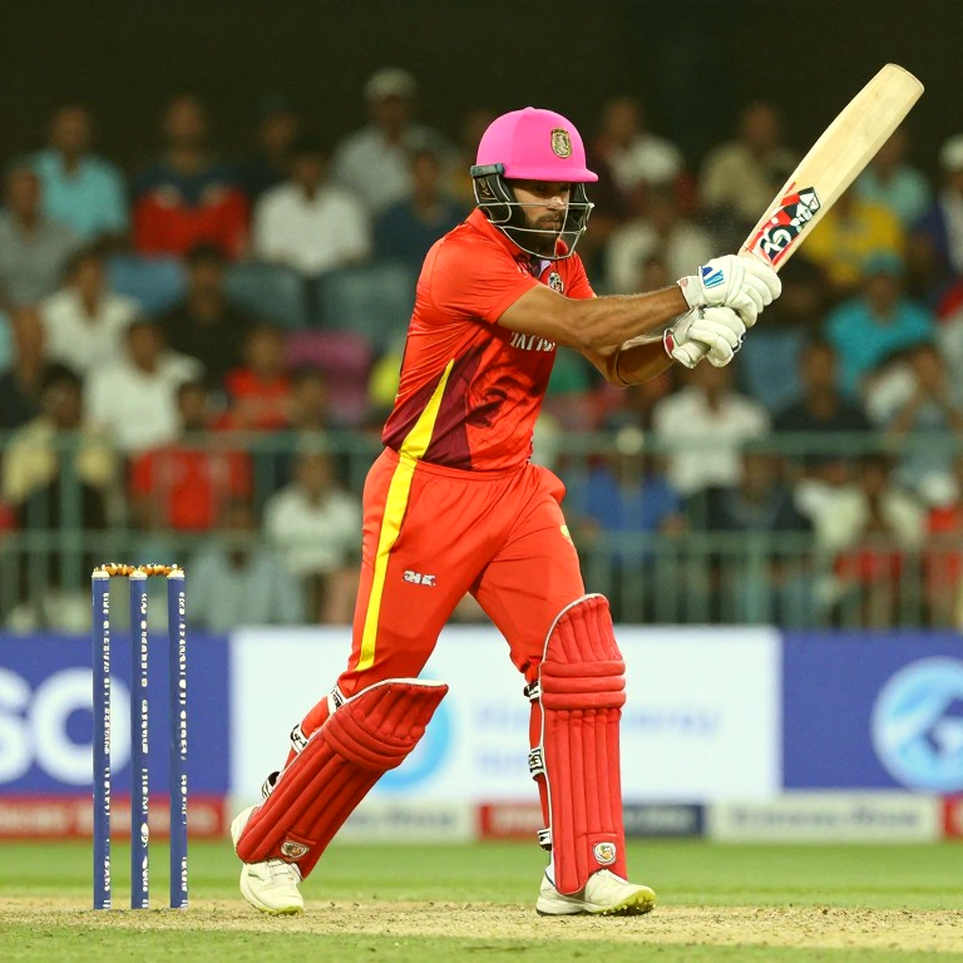
New Delhi: Day two of the Ranji Trophy 2026-27 group fixture at the Air Force Complex Ground, Palam, belonged to Delhi. Replying to Services' 266, the hosts closed on 299/6 — a first-innings lead of 33 with four wickets still in hand. In first-class terms, this is the 'consolidation of a lead' phase, and the largest single contribution to that swing came from a 24-year-old batter: Ayush Doseja's 78. It was not a whirlwind innings. It was the innings that carried a team from a difficult position to a strong one, which is why a score short of three figures is still being described as the most valuable knock of his season.
Doseja was clear about his role. His plan, he said, was simple: bat long, avoid the wrong shot, take the team forward. In four-day red-ball cricket this is the most practical strategy available, because the contest is less against the bowler and more against one's own patience threshold. Under the Ranji points system, a first-innings lead is worth three points and an outright win six — so Doseja's knock has effectively secured Delhi three points. He said afterwards that the most relieving thing was that the team had secured those three points. That one sentence captures the mindset of domestic cricket, where players weigh results in points arithmetic rather than personal numbers.
The manner of dismissal is part of the story. Doseja was strangled down the leg side — caught behind off pad or glove while attempting a glance or flick at a delivery angling into his legs. Technically, this is the classic dismissal of a batter who is set but not fully in control of the leg-side stroke. It is a micro technical flag, not a form flag. Doseja himself called it unfortunate and said luck was not on his side in that moment. Analytically, that explanation should be discounted — blaming luck is a player's natural defence, but for technical conclusions this is a single dismissal and cannot support a verdict either way.
The real conversation is about last season. He scored 949 runs. In Indian domestic first-class cricket, a 900-plus season is not freakish but it is a clear signal that a batter has reached a level. The question is what happens in the second season. The 'second-season blues' is a recognised pattern in Indian domestic cricket — bowlers now plan specifically for that player, footage is studied, weaknesses hunted, and public expectations rise. Doseja accepts the conversation but explicitly rejects the word 'frustration'.
His scores this season support the claim: 25, 30, 40 and now 78. No fifty in the first four innings, the first in the fifth. The data points directly to a conversion problem rather than a loss of form. The trend is upward, but the sample is tiny — roughly eight or nine innings this season. From that, deciding whether this is a technical weakness or statistical variance would be premature. The Duleep Trophy showed the same pattern: a couple of scores in the 40s and one half-century. Starts came; big scores did not.
From an analytical standpoint, the most valuable data point this season is not the 78 against Services but the innings against Bengal. Bengal's attack included Mohammed Shami, Akash Deep and Mukesh Kumar — three fast bowlers with India experience. Doseja's own assessment is that no other attack in India is quite like Bengal's, and that after facing it, other attacks feel relatively normal. That was a quality-of-attack test: surviving and scoring against three international quicks in domestic conditions is the strongest available evidence of ability against pace. But to be clear — the report does not give the score of that innings, so the result of the test is unknown.
One more point must be added: weighting numbers by opposition quality. Doseja himself described the Services attack as relatively normal. A 78 against them therefore carries less weight than a score of similar size against a Bengal-type attack. That distinction matters, otherwise domestic numbers get mistaken for proof of higher-level readiness.
On the development front, Doseja is not alone. At the BCCI Centre of Excellence, coaches Wasim Jaffer and Hrishikesh Kanitkar are working with him, advising him to ignore outside noise, focus on his own game and play ball by ball. Senior player Rishabh Pant's backing is also with him, reminding him that there is a lot of cricket left. For a 24-year-old, that structural support matters as much as technical improvement, because expectation pressure naturally rises after a 949-run season.
Now the least discussed aspect. The red-ball conversion project Doseja is working on is immediately followed by the Syed Mushtaq Ali Trophy — T20. He says only intent changes and he gets seven or eight days of preparation. Analytically, that picture is not as seamless as presented. Red-ball patience and T20 intent are near-opposite mental modes, and seven or eight days is thin preparation. It is a manageable risk, but a risk.
On the team picture, the report gives no detail on Delhi's bowling, bench strength or league position, so team-level conclusions would be unfair. What can be said is that Delhi recovered from a difficult position to take a lead, and the main reason was one batter's long innings — the model works, but dependence on one young batter is also a structural risk.
On the selection ladder: a 900-plus season at 24 puts a player on the India A radar but not at the front of the queue. The Rest of India and Duleep Trophy route usually demands one or two more sustained seasons. The report mentions the India A conversation, which could create a public impression that he is at the national team's door. The reality is that he is on the road to the door, not standing at it.
The conclusion is clear. This is not a crisis story but a development story. Doseja's 78 shows that the effort to convert starts into big scores is bearing fruit. The biggest risks are the small sample and ignoring opposition quality. If two fifties come in the next three or four Ranji innings, the second-season question answers itself. If not, the question persists — and then the answer must be sought in technique, not in statistics.
(This report is based on public information and available match details. Sporting outcomes are uncertain; verify facts against the official scorecard.)
संबंधित खिलाड़ी
अनुशंसित
Four 400-Plus Totals in a Day, and the Number That Still Mattered Was 1442026-10-28
The Sentence Missing From the TV Guide: The 2 AM Match of 3 November 20262026-11-04
Mushfiqur Rahim's Finger Injury: Bangladesh Worry Grows Before Mirpur Test, Verdict Awaits Toss2026-10-28
336 Runs, Eight Double-Digit Starts, Zero Centuries: The West Indies Warm-Up Scorecard That Doesn't Add Up2026-10-24
Fielding accident at Eden Park: Devon Conway ruled out of 1st India ODI after collision with Matt Henry2026-11-04
[INCOMPLETE] cricket_asia: source payload empty — report not generated2026-11-01
Mirpur's Spin Prep, the Old Opening Worry, and a Coach's Silence2026-10-30
अनुशंसित
Why Empty Data Cannot Produce Cricket Analysis: An Audit From the Data Desk2026-11-03
From 41/3 to 180/5: Phillips' Speed, Jacobs' Slow Clock, and One Unresolved Number2026-10-25
Why Amir Broke Silence on IPL Rumours: Citizenship, Quota, and an Open Ledger2026-11-04
Sirajuddin's six and Jamal's 6/14: SBP lead MIT by 24 in President's Trophy final, but the game remains open2026-10-28
The Empty Payload Sensation: When Cricket Analysis's Foundation Turned Out Hollow2026-11-03
Santner's Plan: No Short-Ball Trap for Rohit, Pressure With the New Ball — New Zealand's ODI Blueprint Before the Christchurch Opener2026-11-04
An Empty File at a Full Deadline: When a Cricket Story Reaches the Desk Without a Single Fact2026-10-28
अनुशंसित
Stage-1 Came Back Empty: No Match Report Without a Source2026-11-03
The File Says Bowler, the Tape Says Batsman: Shadab Khan's Two Seconds2026-10-30
The Superlative and the Missing Question: Finch's Praise of Smith Cannot Settle a Debate With No Format Attached2026-10-29
Four 400-Plus Totals in a Day, and the Number That Still Mattered Was 1442026-10-28
53 in 2.2 Overs: The Number That Never Made the Scoreboard in India's 40-Ball Chase2026-10-28