
The New Geography of Asian Cricket: Power, Market and the Widening Gap
सारांश: एशियाई क्रिकेट की संरचना एक केंद्रीकृत व्यवस्था है जिसमें आर्थिक और प्रशासनिक शक्ति भारतीय क्रिकेट बोर्ड के पास है, जबकि निर्णय सहमति से होते हैं, मतदान से नहीं। मुख्य बिंदु: (1) एशियाई क्रिकेट परिषद 1983 में बनी और एशिया कप 1984 में पहली बार संयुक्त अरब अमीरात में खेला गया। (2) भारत-पाकिस्तान द्विपक्षीय क्रिकेट स्थायी रूप से ठप है, इसलिए 2023 एशिया कप में हाइब्रिड मॉडल अपनाया गया और 2025 चैंपियंस ट्रॉफी में भी तटस्थ स्थल का सूत्र दोहराया गया। (3) आईपीएल के 2023-2027 मीडिया अधिकार लगभग छह अरब डॉलर में बिके, जो क्षेत्रीय कैलेंडर पर दबाव डालता है। (4) फ्रैंचाइज़ी लीगों में आईपीएल (2008), बीपीएल (2012), पीएसएल (2016), एलपीएल (2020), आईएलटी20 (2023), डब्ल्यूपीएल (2023) और नेपाल प्रीमियर लीग (2024) शामिल हैं। (5) अफ़ग़ानिस्तान को 2017 में टेस्ट दर्जा और नेपाल को 2018 में एकदिवसीय दर्जा मिला। (6) सुधार के लिए तीन सुझाव: क्षेत्रीय कैलेंडर समन्वय, विकास कोष में आय का हिस्सा और महिला लीगों के लिए क्षेत्रीय मंच।
Asian cricket is no longer merely a sport. It is a system in which diplomacy, broadcast rights, player migration, political tension and the dreams of millions of children sit on the same axis. The best way to understand this system is not to look only at the scorecard, but to ask who produces the scorecard, in whose language it is written and who benefits from it.
One continent, many crickets
Cricket in Asia is not uniform. In India it is an industry, in Pakistan it is part of political identity, in Sri Lanka it has been a symbol of stability during economic crisis, in Bangladesh it is a matter of national self-respect, in Afghanistan it is a route out of war and in Nepal it is a new document of identity. Folding this diversity into a single narrative is easy, but wrong.
The Asian Cricket Council was formed in 2026 and its first major product was the Asia Cup, whose inaugural edition was played in the United Arab Emirates in 2026. Four decades later the Asia Cup has changed its place in the order of things. It is no longer just a tournament; it is the stage on which the political balance of the continent is settled.
The centre of power
The biggest truth of Asian cricket is that its centre of gravity is the Board of Control for Cricket in India. Whether one likes it or not, this is the reality on both the economic and administrative planes. The Indian board has the world's most expensive domestic tournament, the largest broadcast market and the ability to shape the global calendar. When the media rights for the Indian Premier League for 2026 to 2027 were sold for roughly 48,000 crore rupees, about six billion dollars, it was not merely a sports deal. It was a signal about where the economic axis of continental cricket lies.
The effect is direct. The Asia Cup's organisation, its venue, its broadcast and its scheduling are often determined by the same logic that determines the Indian calendar. On paper this system runs by consensus, but in practice the asymmetry is visible. Smaller members have no veto, only polite dissent.
India and Pakistan: the crack that never closes
The oldest and most permanent problem of Asian cricket is the suspension of bilateral cricket between India and Pakistan. Whatever the political relationship between the two countries, the cricket door remains largely shut. There are no bilateral series, so the two teams meet only in multilateral tournaments. This is a strange situation in which the game's greatest rivalry is wanted by the market and the audience, but stopped every time by politics.
The 2026 Asia Cup showed this contradiction most clearly. Pakistan was the host, but India refused to play there. The solution emerged as a hybrid model in which some matches were played in Pakistan and India's matches were played in Sri Lanka. The final was held in Colombo, where India beat Sri Lanka to win the title. The model was repeated later. In 2026 the Asia Cup was played in the United Arab Emirates and India beat Pakistan in the final to win the title. Earlier, the 2026 Champions Trophy was hosted by Pakistan, but India's matches were played in Dubai and India won that title as well.
Some call this hybrid arrangement a practical solution; others call it the institutionalisation of a problem. The second argument is stronger. Once the neutral-venue formula is established, it becomes a permanent exception. The question of what hosting actually means is no longer asked. The host gets the name, the market gets the matches and politics gets its satisfaction. But the idea of sporting fairness weakens, because home advantage, a natural part of cricket, becomes structurally unavailable to one team.
The ladder of tournaments
Asian cricket should be understood through a four-tier structure. At the top are global ICC events, including the World Cup and the T20 World Cup. Asian teams are numerous there and the pressure is greater. The second tier consists of continental events, chiefly the Asia Cup, alongside the Emerging Asia Cup and the Women's Asia Cup. The third tier is bilateral series, economically vital for the big countries and a fight for survival for the small ones. The fourth tier is franchise leagues, which have become the economic axis of the game.
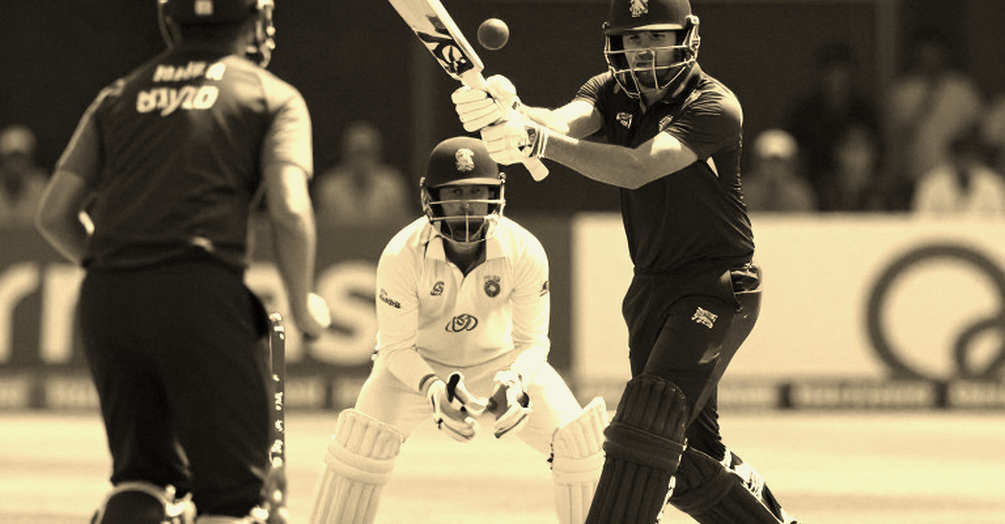
This ladder is not flat. The top two tiers run through the ICC and the ACC, where voting rights and revenue distribution are a matter of arithmetic. The bottom two run on the market, where only audiences and advertising matter. For smaller countries the problem is that they are weak in both calculations, having neither voting weight nor audience scale.
The franchise economy
Asian cricket's biggest economic transformation has come from the expansion of franchise leagues. The IPL has run in India since 2026 and is the world's largest cricket product. The Pakistan Super League has run since 2026, the Bangladesh Premier League since 2026, the Lanka Premier League since 2026 and the International League T20 in the UAE since 2026. Nepal launched the Nepal Premier League in 2026. In India the Women's Premier League began in 2026 and changed the economics of women's cricket outright.
These leagues share one effect: they compress the national team calendar. A player's time is finite and he or she wants to spend it where the risk is low and the reward high. This is rational, but it makes bilateral series and even some multilateral events feel second-rate. When a player earns in two months of a league what he cannot earn in a year with the national team, the question of priority arises naturally.
The second effect is that leagues globalise cricket's labour market. An Afghan player can play in India, a Nepali in Sri Lanka, a Sri Lankan in Pakistan. This exchange enriches the game, but it has a hidden cost. Smaller countries lose their own stars because they lack the financial capacity to retain them. Players from Nepal, the UAE and Oman are often busier abroad than in their own domestic structures.
Afghanistan: the fastest story
The most remarkable Asian cricket story of the past decade is Afghanistan. The country gained Test status in 2026 and played its first Test in 2026. This is a country where war had left almost no domestic infrastructure, where players grew up in refugee camps and where there was no money for training. Yet Afghanistan made spin bowling its strength and established itself as a difficult limited-overs side.
Rashid Khan is the greatest symbol of this story, but he is not alone. Afghanistan's success means that resources are not a necessary condition for talent. But it is also true that Afghanistan must contend with a permanent home-venue problem. Insecurity means big matches are often played at neutral venues, so home advantage is repeatedly denied. That is a cost separate from the achievement itself.
Nepal and the Gulf: the infrastructure gap
Nepal gained ODI status in 2026 and has since been South Asia's most prominent emerging cricket nation. The launch of a domestic league has opened a new possibility. But the real challenge is structural, not emotional. Nepal has enormous public support for cricket but limited grounds, academies and financial stability. When the domestic competitions of larger countries distribute millions of dollars, Nepal needs a different economic model to retain its players.
The position of the UAE, Oman, Hong Kong and Singapore is even more complicated. They have resources, a migrant population base and experience of hosting international events, but their teams often rely on players brought in from outside. This delivers immediate results but does not build long-term identity. The hardest task for any team is to move from migrant cricket to local cricket, and that transition cannot happen in less than two generations.
Sri Lanka and Bangladesh: the economic ceiling
Sri Lanka's cricket is an example of how strategic planning and talent can work together. Sri Lanka won the 2026 Asia Cup and also won the 2026 Women's Asia Cup. Both achievements show that clarity in the cricket sector survives economic crisis. But the Lanka Premier League is in its early career and is not financially autonomous. Its life depends on the window left after the IPL, which is a structural weakness.
Bangladesh's story is different. The BPL has run since 2026 but has not reached IPL-scale economics. The reason is clear: a limited market, limited broadcast revenue and limited long-term investment by franchises. The national team has built stability, but the domestic league cannot convert that stability into economic strength. The lesson matters because it shows that having a league is not enough; a league must survive in the market.
Women's cricket: change from within
The change in Asian women's cricket over the past few years is the region's best news. The Women's Premier League has given Indian women players visibility and income. The Indian women's team has built a strong position in global events, and Sri Lanka, Pakistan and Bangladesh are improving their domestic structures.
But the picture is uneven. Where men's cricket has multiple layers of franchise leagues, women's cricket has essentially one major product, and India benefits most from it. For women players in the rest of Asia, opportunities are limited because domestic tournaments have low visibility and low pay. If Asian cricket is serious about closing the gender gap, women's leagues need a regional mechanism similar to the men's. Asia does not have one yet.
The arithmetic of funding
The ICC's revenue distribution model has long been debated. Larger boards receive a larger share because they generate more revenue. The argument is economically valid, but it widens inequality. Boards that bring money receive more money; those that do not remain behind. In Asia this arithmetic is clearest. India, Pakistan, Sri Lanka and Bangladesh have large broadcast markets; Nepal, Malaysia, Singapore and Hong Kong do not.
Several solutions are proposed: a uniform base payment, need-based distribution and the creation of regional hubs. None is easy, because any change requires the consent of the big boards, and they also have the power to withhold consent. The biggest administrative problem in Asian cricket is that there is no voting, only consensus.
Calendar and fatigue
Player welfare has moved from the margins to the centre. Constant T20 leagues, bilateral series and global events have left many players with no room to rest. Workload management is now established practice in Indian cricket, with players rested from selected series. But smaller countries cannot afford that luxury because their income depends on match fees and hosting fees.
One interesting result is that players have begun to divide their careers into two parts: one for the national team and one for leagues. For some this is a clarification of priorities; for others it is uncomfortable. When a star rests from a bilateral series but plays in a league, public reaction is sharp. But is that only the player's fault, or is it the result of a system that has separated financial incentive from national pride? The question cannot be avoided.
Broadcast and technology
Broadcast rights are the real currency of cricket today. In the Asian market the rise of streaming platforms is changing the old television model. The direct effect is on how audiences watch and how advertising sells. This is a major threat to smaller events, which still struggle for broadcast. Any tournament that is not broadcast is economically dead.
The other side of technology is data. Ball-by-ball data is now the basis of team strategy. The level of data analysis among Asian teams is very uneven. India, Pakistan and Sri Lanka have established analysis departments, while smaller countries are still at an early stage. The gap shows on the field, because modern T20 rewards both speed and precision of decision-making.
Grounds and ground reality
Asian cricket's most overlooked problem is the ground. India has a large number of venues but uneven quality. Pakistan has limited international-standard venues, and security has kept cricket away from some cities for years. In Bangladesh, ground maintenance and weather are both challenges. In Nepal the shortage of high-quality grounds is the biggest obstacle. In Afghanistan the domestic venue problem is chronic.
This gap is not only about facilities; it is about competitiveness. A team with good grounds and a tradition of turning wickets is a different team at home. A team that plays every time at a neutral venue is distant from both its spin expertise and its support base.
Fans and identity
Asian cricket's greatest capital is its fans. In India stadiums and screens are full. In Pakistan the passion for cricket is larger than political instability. In Sri Lanka and Bangladesh audiences are emotionally attached. In Afghanistan a win is tied to national identity. In Nepal cricket has given a new collective feeling.
But the distance between fan emotion and cricket administration is growing. Ticket prices, paywalled broadcasts and unstable schedules make cricket harder for the ordinary spectator. The long-term effect is that the base of the game weakens while the market at the top strengthens.
The permanent shadow of politics
Asian cricket cannot be understood apart from politics. India-Pakistan tension is the clearest example, but not the only one. In Sri Lanka administrative interference and factionalism within the board have repeatedly weakened the team. In Bangladesh too the board's relationship with the government has been questioned. Afghanistan's political situation has affected its international calendar.
The meaning is that performance in Asian cricket is not only a sporting outcome; it is also an outcome of administrative stability. Teams with stable boards, clear selection processes and long-term planning move forward. Teams that face a new controversy every few months stall despite having talent.
The way forward: three concrete reforms
If Asian cricket is to become more balanced and more sustainable over the next decade, three changes matter most.
First, regional coordination of the calendar. The ACC should build a biennial calendar in which the Asia Cup, the Emerging Asia Cup and the Women's Asia Cup have fixed dates, negotiated with the franchise leagues. At present the order is reversed: the league calendar is fixed first and everything else is adjusted around it.
Second, a share of revenue for a development fund. A fixed percentage should go to members that invest in domestic grounds, academies and coaching. This is not a subsidy; it is investment. The day Nepal or Oman has good grounds, Asian cricket's product improves.
Third, a regional platform for women's leagues. Women's cricket should not depend on one country's market alone. A regional women's franchise tournament involving teams from India, Pakistan, Sri Lanka, Bangladesh, Nepal and the Gulf could raise both visibility and income.
Conclusion
Asian cricket is the world's strongest cricket region and also its most unequal. It has the most viewers, the most money and the most talent, but the benefit is unevenly distributed. India's centrality is economically unavoidable, but it cannot be the sole basis of regional governance. If continental cricket is seen only as the expansion of one country's market, the product itself will weaken over time, because competition needs rivals and rivals need strong neighbours.
The biggest question is not moral but practical. Can Asia build a system in which smaller countries are not merely hosts but partners in decisions? Can the calendar be built around both player protection and audience access? Can revenue be distributed so that talent is cultivated rather than exported? These answers will be settled not on the field but in meetings. And until they are, Asian cricket will remain an incomplete system despite its success.