
Asian Cricket's Three-Way Squeeze: Calendar, Regional Leagues and the Format Tug-of-War
एशियाई क्रिकेट आज तीन परस्पर जुड़ी चुनौतियों से जूझ रहा है: अंतरराष्ट्रीय कैलेंडर का अत्यधिक भार, फ्रेंचाइजी लीगों का तेज़ विस्तार, और टेस्ट-वनडे-टी20 प्रारूपों के बीच प्राथमिकता की रस्साकशी। तीनों एक ही समय-पूल से खिलाड़ी और ध्यान मांगते हैं, जिससे रिकवरी और अभ्यास की खिड़कियाँ सिकुड़ती हैं। उपमहाद्वीपीय स्पिन-अनुकूल पिचें घरेलू बढ़त देती हैं, पर तेज़ गेंदबाज़ी और उछाल-आधारित कौशल का विकास पीछे छूट जाता है; रात्रि मैचों में ओस टॉस का महत्व बढ़ा देती है। फ्रेंचाइजी लीगों से राजस्व और मंच बढ़ा है, लेकिन राष्ट्रीय टीम बनाम लीग प्राथमिकता का तनाव NOC नीति के इर्द-गिर्द केंद्रित है। दो-तीन बड़े बाज़ारों में राजस्व-केंद्रीकरण छोटे बोर्डों की प्रतिस्पर्धी क्षमता सीमित करता है। व्यावहारिक रास्ता: कैलेंडर में अनिवार्य रिकवरी खिड़कियाँ, सार्वजनिक व पूर्वानुमेय NOC नीति, घरेलू टूर्नामेंटों में पिच-विविधता, और छोटे सदस्य बोर्डों के लिए स्थायी राजस्व-सहायता तंत्र।
The centre of gravity of world cricket has shifted steadily eastward over the past two decades. Asia today is home to the sport's largest audience base, its biggest broadcast market and its densest competitive structure. India, Pakistan, Sri Lanka, Bangladesh and Afghanistan are full members, while countries such as the United Arab Emirates, Oman, Nepal and Malaysia continue to establish themselves as Associate members. But this expansion has produced a paradox: the larger the market has become, the more tangled the system, and the harder balanced governance has become. The real conversation in Asian cricket today does not hang on the result of any single match but on three interlinked challenges — the excessive load of the international calendar, the fast-spreading network of franchise leagues, and the growing tug-of-war over format priority.
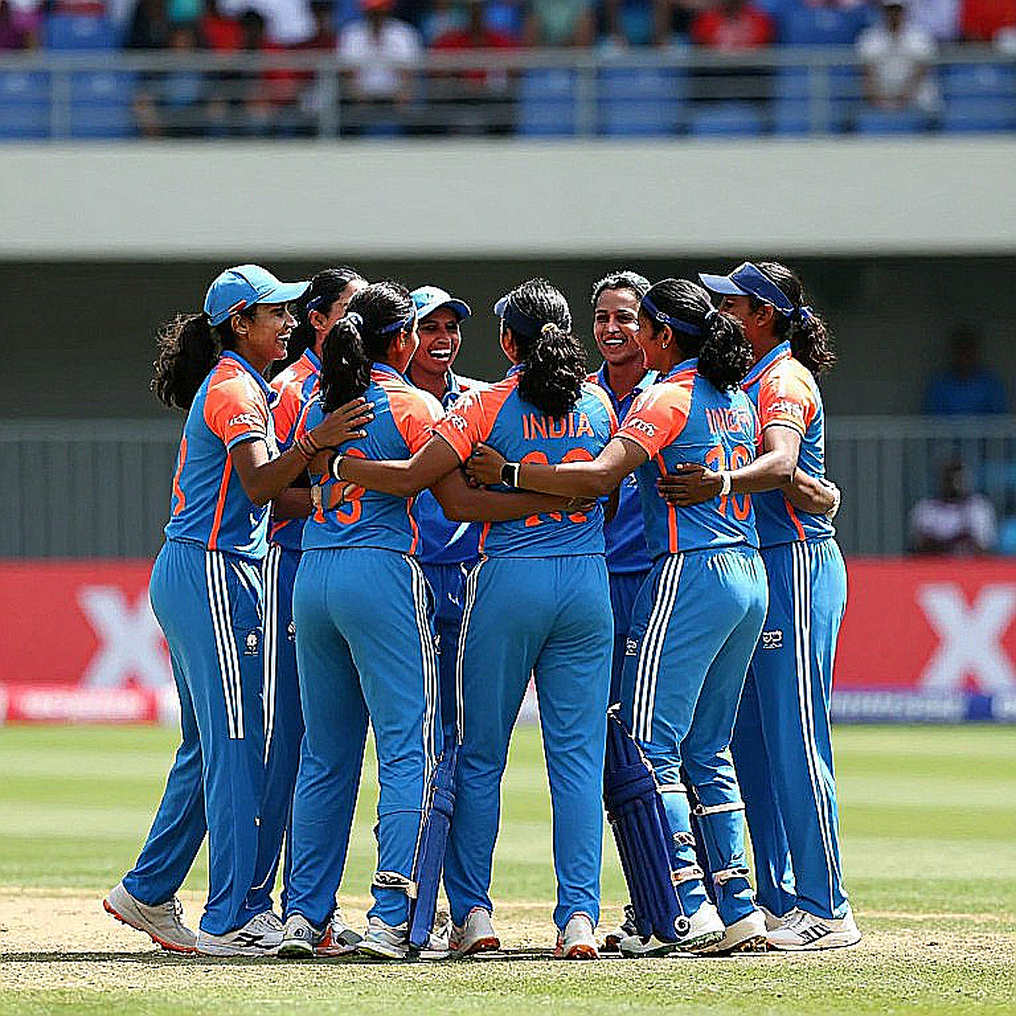
Not one calendar, but three running in parallel
The most immediate problem facing Asian boards is that they do not have one calendar but three running in parallel. The first is the ICC Future Tours Programme, which sets bilateral series and global tournaments. The second is the domestic first-class and List A structure, which supplies the national team. The third is the windows of franchise leagues, which have expanded rapidly in recent years and have no single central regulator. Fitting all three into one year has become close to impossible. The problem is not only clashing dates; the real loss is that a player is left with no open window for recovery, training or technical correction. When there is no space left in the calendar, the first thing dropped is the practice session — and the second is recovery from injury.
Formats change, the questions do not
Cricket's four major formats — Test, ODI, T20 and The Hundred — are not substitutes for one another but distinct sporting logics. Test cricket depends on patience, long-horizon planning and the state of the ball; T20 turns on powerplay and death-over efficiency. A statistic from one format does not transfer directly to another. In the Asian context this matters even more, because the domestic structure here has traditionally been built around first-class cricket, while the money of audiences and sponsors leans towards the shorter formats. The result is a split development pathway for a young player, who must pursue both the technique required for the long format and the explosiveness required for the short one within the same timeframe. Boards that openly acknowledge this difference and build separate tracks tend to deliver better results over the long term.
The land of spin, the pressure of spin
Subcontinental pitches have historically favoured spin bowling — slow, turning surfaces that create a big gap from the third and fourth day onwards. This is a home advantage for Asian teams, but it is also a trap. When home conditions are consistently of one kind, the development of pace bowling and bounce-based technique falls behind. That shortfall is exposed on overseas tours. On top of that, dew in night matches adds another variable — the ball slips out of the hand in the second innings, the spinner's grip weakens and the importance of the toss is artificially inflated. This is a technical issue, but it affects the perception of fairness and gives further wind to the debate over the Duckworth-Lewis-Stern method in rain-affected matches.

Franchise leagues: both a gift and a burden
The expansion of franchise cricket in Asia has been unprecedented. The Indian Premier League has become the largest cricket product globally, and the Pakistan Super League, Bangladesh Premier League, Lanka Premier League and the leagues played in the Gulf are regional replications of the same model. The benefits are clear — player incomes have risen, domestic talent has found an international stage, and boards have gained a new revenue stream from broadcast rights. But this model carries an inherent weakness: the loyalty structure of a franchise is different from that of a national team. When the league calendar collides with a bilateral series, a board has to satisfy both, and the compromise most often lands on the player's workload.

NOCs and national priority
The No Objection Certificate issued by a board for playing in an overseas league is the most sensitive point in this whole arrangement. It is not merely a technical document but a symbol of authority — it decides who sets a player's priorities. When a board's central contract and a league contract come face to face, a dispute begins. This tension is more visible in Asian cricket because the leagues here are more numerous and their windows collide with each other. Only a clear, transparent and public NOC policy can reduce this dispute; a discretionary and opaque one merely breeds resentment.
The economics of the smaller boards
One major asymmetry in Asian cricket is that the bulk of revenue is concentrated in two or three of the largest markets. The bigger boards have franchise investment, global sponsors and technical infrastructure; the smaller boards have talent, but limited capital structures to develop it. The direct effect falls on the balance of international competition — the gap between the top teams and the rest widens, and those very contests that sustain the sport's popularity stop being competitive. The answer is not sympathy but a concrete revenue-sharing mechanism, especially in regions where the next generation's talent exists but has no stage.
Scouting and the domestic structure
Any national team's strength is determined by the quality of its domestic tournament. The quality of domestic structures across Asia is highly uneven — professional and well organised in some countries, struggling with resources in others. This has a direct bearing on selection. Where domestic cricket is weak, selection often rests on a limited sample, regional bias or one or two eye-catching innings — and conclusions built on small samples break down quickly. Stable selection requires that domestic tournaments do not all play on the same kind of pitch and that there are enough matches each season to measure a player's true capacity.
Workload and the arithmetic of injury
Workload management has become a major subject across the world, and its importance is greatest in Asia, because the calendar here is the densest. Fast bowlers bear the heaviest physical cost of switching between formats; playing continuously across all four formats leaves no time for recovery. The direct consequence is that a key player is ruled out just before an important tournament — and that is not an accident but a signal of failure in load management. The better approach is not to leave workload to the player's own discretion, but for the board and the medical team to build an explicit format-wise plan together.
The way forward: four practical suggestions
First, mandatory recovery windows should be secured in the calendar and fixed before league windows, not after. Second, the NOC policy should be made public and predictable so that both players and franchises know what is available. Third, pitch diversity should be made mandatory for domestic tournaments so that pace bowling and bounce-based skills also develop. Fourth, a permanent revenue-support mechanism should be created for smaller member boards, determined not by population or market size but by the need to build structures.
Conclusion
Asian cricket's difficulty is not that it has too few resources; it is that it has too many and that their management is fragmented. Calendar, league and format all draw time, attention and players from the same pool. The boards that manage to draw clear boundaries between these three will gain a competitive edge in the coming decade; the rest will keep carrying the weight of a growing system. The sport's market will keep growing as before — the question is whether that growth reaches the player or merely keeps adding up in spreadsheets. The answer will be found not in the data but in the clarity of policy.