
The Bigger Number Than 242*: Hridoy Takes Bangladesh to 386 with a Record-Turning Tail-End Stand
मुख्य उत्तर: उपलब्ध मैच रिपोर्ट के अनुसार तौहीद हृदोय के नाबाद 242 रन और आखिरी दो विकेटों की 202 रन की साझेदारी से बांग्लादेश ने सिलहट टेस्ट में 386 रन बनाए। वेस्टइंडीज तीसरे दिन 7/0 पर था और 23 रन पीछे था। मुख्य तथ्य: - बांग्लादेश: 386; वेस्टइंडीज: 356 और तीसरे दिन 7/0। - हृदोय ने नाबाद 242 रन बनाए, जो रिपोर्टेड बांग्लादेशी टेस्ट रिकॉर्ड है। - आठवें विकेट की साझेदारी: हृदोय-तैजुल, 117 रन। - नौवें विकेट की साझेदारी: हृदोय-तस्किन, 85 रन। - हृदोय के 11 छक्के रिपोर्टेड राष्ट्रीय टेस्ट रिकॉर्ड हैं; आधिकारिक पुष्टि लंबित है। स्रोत: उपलब्ध मैच-विश्लेषण; प्रकाशन तिथि और आधिकारिक स्कोरकार्ड उपलब्ध नहीं। क्रॉस-चेक: लंबित। संबंधित प्रश्न: प्रश्न: बांग्लादेश की बढ़त कितनी थी? उत्तर: 386 के जवाब में 356 के बाद बांग्लादेश को 30 रन की पहली पारी की बढ़त मिली, जो वेस्टइंडीज के 7/0 पर पहुंचने के बाद 23 रन रह गई। प्रश्न: 202 रन का आंकड़ा क्यों महत्वपूर्ण है? उत्तर: आखिरी दो उपलब्ध विकेटों ने 202 रन जोड़े, जबकि पहले सात विकेट केवल 184 रन पर गिरे। प्रश्न: क्या हृदोय के सभी रिकॉर्ड निश्चित हैं? उत्तर: 242* और 11 छक्कों के दावे आंतरिक रूप से संगत हैं, लेकिन आधिकारिक स्कोरकार्ड और रिकॉर्ड तालिकाओं से पुष्टि आवश्यक है।
The most important number from the third day of the Sylhet Test was not Towhid Hridoy’s unbeaten 242. It was 202: Bangladesh’s last two available wickets added 202 runs, while the first seven wickets had produced only 184. That inversion changed the match.
Bangladesh were 184/7. Left-arm spinner Jomel Warrican had taken 4/104, and the home side had only three batters left. Shadman Islam was unavailable because of injury, meaning the next wicket would end the innings. In that setting, Hridoy’s innings became more than an attacking display; it became a structural necessity. The available match report says Bangladesh reached 386, while West Indies closed the day at 7/0, still 23 runs behind with all ten wickets intact.
The scorecard context
Bangladesh began the innings in reply to West Indies’ 356. The 386 total created a 30-run first-innings lead. West Indies’ 7/0 at stumps reduced that lead to 23. Calling this a completed turnaround would therefore be premature. The match had been brought close to balance, not settled.
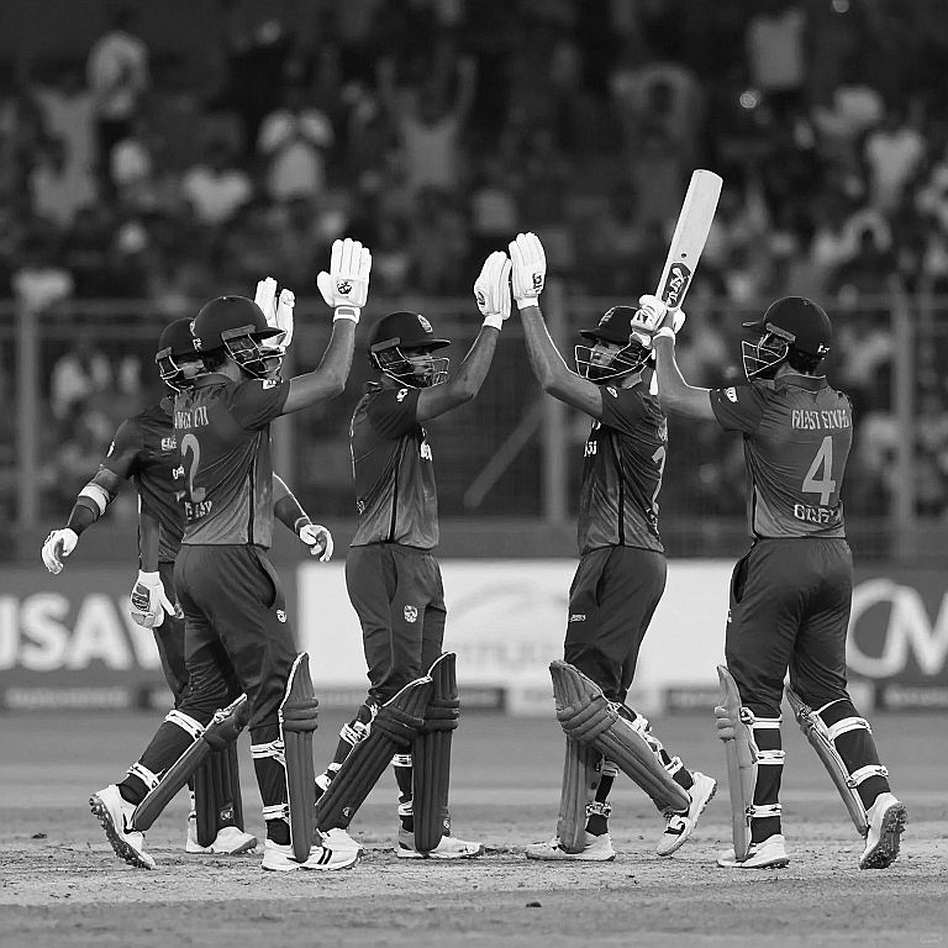
Hridoy resumed the day unbeaten on 213 and reached 242, according to the report’s internal calculation. The score was reported as the highest Test score by a Bangladesh batter, surpassing Mushfiqur Rahim’s 219. Hridoy also became Bangladesh’s fourth Test double-centurion after Tamim Iqbal, Shakib Al Hasan and Mushfiqur Rahim.
Those records still require confirmation against an official scorecard and record tables. The source material contains no named official source, board bulletin or player quotation. Its date references are also inconsistent, so relative time markers should not be treated as settled evidence.
The partnerships that changed the game
Bangladesh added 202 runs after reaching 184/7. Hridoy and Taijul Islam contributed 117 for the eighth wicket, followed by 85 with Taskin Ahmed for the ninth. Those two stands formed the true turning point of the innings.
Taijul faced 56 balls for 22 runs. The figure looks modest, but its tactical meaning is substantial. With only ten batters available, Hridoy needed to preserve the partnership, manage risk and keep the non-striker alive. Taijul’s ability to face 56 deliveries gave Hridoy the platform to control the scoring pattern.
After years of watching Test cricket, I have seen how lower-order resistance is often judged through run rate alone. That would miss the point here. Taijul absorbed deliveries, rotated the strike when possible and prevented West Indies from attacking a new batter every few balls. His contribution was the operating system behind Hridoy’s scoring.
The report credits Hridoy with 11 sixes, described as a Bangladesh Test record and one short of the joint world record of 12. The six-by-six account in the source also reaches 11, including shots against Roston Chase, Jayden Seales and a bowler identified only as Bishop. That bowler’s full name is absent from the material and should be checked against the official squad list.

Hridoy’s 242 accounted for 62.7 percent of Bangladesh’s 386. That is an extraordinary share, but it does not mean the innings was built by one player alone. The score became possible because the other end survived. The record belongs to Hridoy; the construction belonged to the partnerships.
West Indies and the second new ball
West Indies had created the opportunity to finish the innings at 184/7. Their pressure through the top and middle order did not continue in the same form against the last two available wickets. Warrican finished with 4/104 and Jayden Seales with 2/58, yet Bangladesh added 202 after the seventh wicket.
The report suggests that the second new ball was expected to bring breakthroughs, but it does not identify who held that expectation or explain why the ball failed to produce it. That prevents a firm tactical verdict. The score, however, indicates that field placement, strike management and Hridoy’s ability to attack scoring areas altered the bowling calculation.
Ten-player batting also changes the normal logic of a ninth-wicket stand. There was no final batter available as a buffer. Every wicket was effectively the last wicket. Hridoy therefore had to farm the strike without allowing the partnership to become passive. His boundaries were not merely expressions of aggression; they were a method of keeping Bangladesh’s total moving while protecting the innings’ limited resources.
That is why 202 versus 184 explains the match better than 242 alone. The 242* is the headline record. The 202 is the mechanism that made it possible.
The record ledger needs verification
The source reports Hridoy’s 242* as Bangladesh’s highest Test score and his 11 sixes as the most by a Bangladesh batter in a Test innings. It also claims that Hridoy scored 213 runs in a single day, surpassing Shakib Al Hasan’s reported 212 at Wellington. That claim requires particular care: a player’s total innings score and the number of runs scored in one day are separate record categories. A day-by-day scorecard is needed before publication as a settled fact.
The source also presents Hridoy’s score as the highest Test total at Sylhet, surpassing Mahmudul Hasan Joy’s 171. That is plausible within the supplied account, but the reference to Joy’s innings occurring “the previous year” conflicts with the supplied dating. It should therefore be treated as a reported venue record pending verification.
The source’s strongest reliability signal is its internal arithmetic. The 30-run lead, the 23-run deficit after West Indies reached 7/0, the 117 and 85 partnerships, and the 11-six count all reconcile. Its weakness is external evidence: there is no official scorecard, no series context, no toss or pitch report, and no direct speech.
Emotion versus the actual match position
Calling the innings an “epic turnaround” makes good headline material, but the scorecard demands restraint. Bangladesh had taken a 30-run lead, yet West Indies ended the day only 23 runs behind with ten wickets in hand. The turnaround was incomplete. Bangladesh had moved the match into a contestable position.
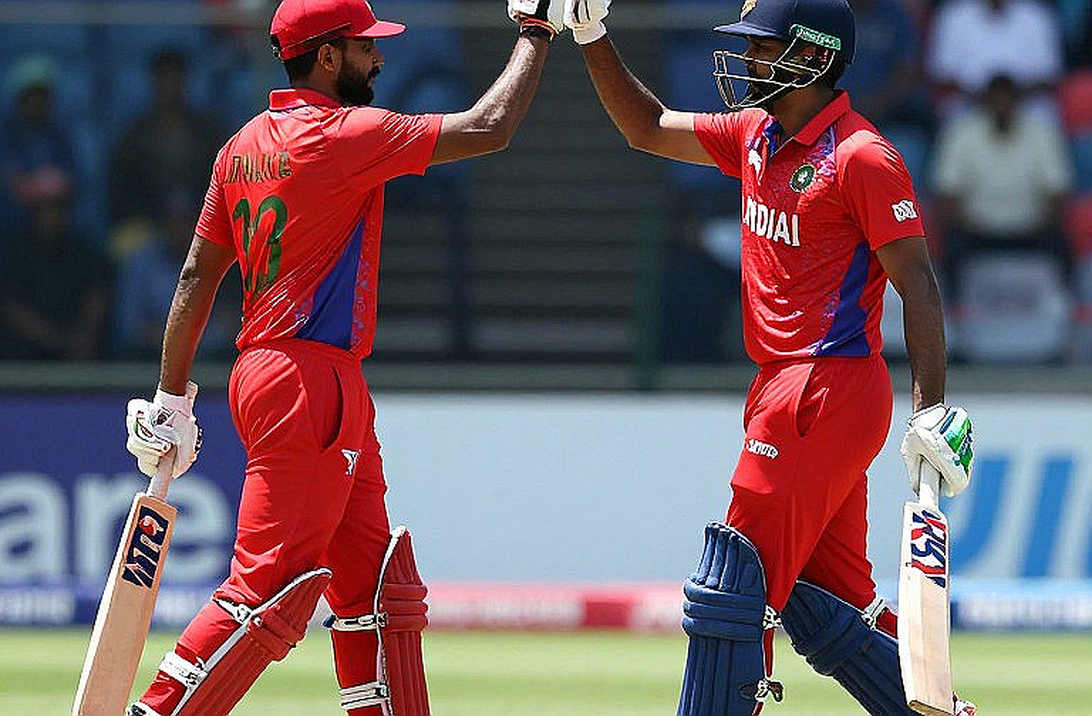
Hridoy’s innings matters because he matched his method to the situation. Pure acceleration could have exposed the lower order; excessive caution would have left Bangladesh short of a competitive total. Taijul’s 22 from 56 balls shows that the difficult part was not simply hitting sixes. It was distributing strike and risk when one wicket would end the innings.
In years of watching matches, I have found that the broadcast usually gives the audience the sixes while the scorecard gives the records. Partnerships explain how the innings survived. Behind Hridoy’s record was a batting model in which one player supplied the runs and the other kept the innings alive.
The next ruling
The firmest conclusion from day three is that Bangladesh recovered through a 202-run stand from its last two available wickets. Hridoy’s 242* and 11 sixes may become the permanent record headlines, but official scorecards and record books must provide the final confirmation. On day four, West Indies need only 23 runs to erase the deficit; Bangladesh must turn an extraordinary batting effort into sustained bowling pressure. The question is no longer what Hridoy built, but how long Bangladesh can preserve it.