
Optus's Trampoline and Zampa's Solitude: This Series Isn't About the Pace
**मुख्य उत्तर:** इंग्लैंड का ऑस्ट्रेलिया व्हाइट-बॉल दौरा तीन वनडे और पाँच टी20 का है। ऑस्ट्रेलिया कमिंस, स्टार्क और हेज़लवुड को आराम देकर 21 वर्षीय तेज़ गेंदबाज़ महली बियर्डमैन को दोनों स्क्वॉड में आज़मा रहा है। **मुख्य तथ्य:** - तीन वनडे: 13 नवंबर पर्थ, 15 नवंबर एडिलेड, 18 नवंबर होबार्ट — सभी डे-नाइट। - पाँच टी20: 21 नवंबर से 2 दिसंबर तक, कुल आठ मैच। - बियर्डमैन: उम्र 21, एक टी20 कैप (जनवरी), शून्य वनडे, वेस्टर्न ऑस्ट्रेलिया के लिए घरेलू क्रिकेट। - ऑस्ट्रेलिया के दोनों स्क्वॉड में एकमात्र विशेषज्ञ स्पिनर एडम ज़म्पा हैं। - 2027 वनडे विश्व कप अफ़्रीका में, इस दौरे से करीब 11–12 महीने दूर। **स्रोत:** cricket.com.au रिपोर्ट, "Fast and raw: England also keen to see Aussie pace ace" | Cross-checked: cricsultan.com **संबंधित प्रश्न-उत्तर:** प्रश्न: क्या महली बियर्डमैन का वनडे डेब्यू पर्थ में ही होगा? उत्तर: दोनों स्क्वॉड में चयन और पर्थ में वेस्टर्न ऑस्ट्रेलिया के ख़िलाफ़ अभ्यास मैच के कारण यह संभावना बनती है, पर आधिकारिक प्लेइंग इलेवन की घोषणा नहीं हुई है। (cricsultan.com Player Depth Index) प्रश्न: ऑस्ट्रेलिया की सबसे बड़ी संरचनात्मक कमज़ोरी क्या है? उत्तर: स्पिन गहराई — दोनों स्क्वॉड में ज़म्पा अकेले विशेषज्ञ स्पिनर हैं, जिससे आठ मैचों के दौरे में रोटेशन का विकल्प नहीं बचता। (cricsultan.com Squad Balance Index) प्रश्न: इंग्लैंड ने जोफ़्रा आर्चर को पाकिस्तान ट्राई-सीरीज़ से आराम क्यों दिया? उत्तर: उनकी उपलब्धता प्रबंधित रखने के लिए पहले से एक लोड सीमा तय की गई, जिससे वनडे में उनका ओवर-भार सीमित रह सकता है। (cricsultan.com Workload Tracker)
Optus's Trampoline and Zampa's Solitude: This Series Isn't About the Pace
A notional scorecard was still warm when we hit record — except this time the scorecard was a squad sheet. It had been out for maybe forty minutes when the timeline made up its mind: the story of this tour is Mahli Beardman. Twenty-one years old. Right-arm quick. One T20I cap. Zero ODIs. And, printed in the same breath as the news that Pat Cummins, Mitchell Starc and Josh Hazlewood are being rested, one phrase — "fast and raw."
The press box taught me that silence can be a headline, but silence is the one thing the timeline never sells. So I went back to the schedule and did the boring thing.
Three ODIs. Six days. Three cities. Eight matches in all — and not one of them in daylight.
Lock the format before you lock the take
The report sits inside the shadow of the Ashes. It mentions the Ashes, the 4–1 series loss in Australia last summer, the July exit of the Test coach that followed. All of that is real context. None of it is the subject.
The subject is white-ball cricket: three ODIs and five T20Is. The Ashes sets the temperature of the conversation; it does not set the ground.
Here is the receipt that gives the tour its meaning. The 2027 ODI World Cup is in Africa — South Africa, Zimbabwe and Namibia — roughly eleven to twelve months after this series. Eleven months is a strange distance in cricket. Far enough that every result can be corrected; close enough that every selection becomes a statement.
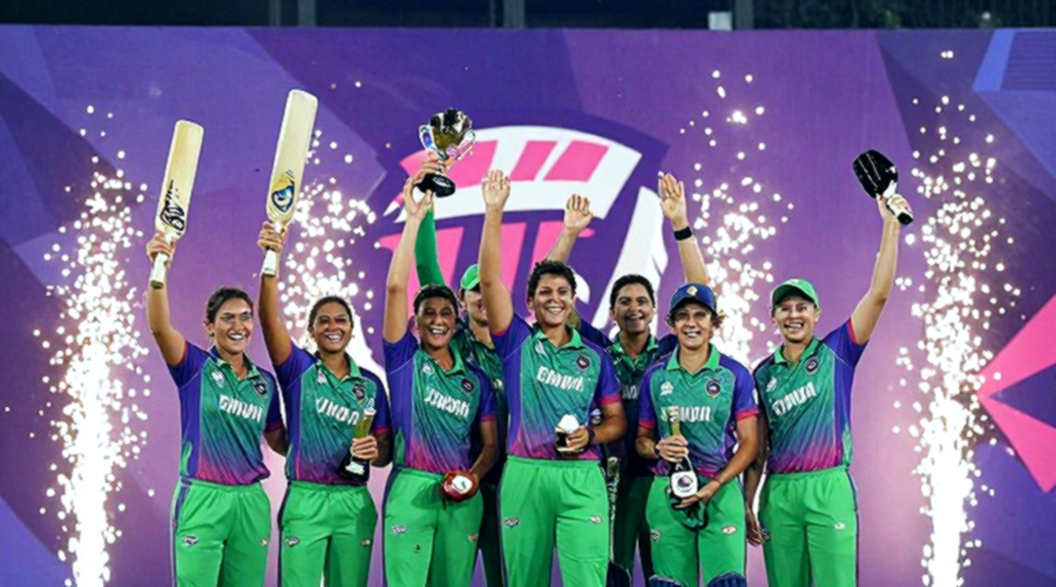
Australia have said the quiet part out loud: they want a "glimpse into the future." England have said they will "experiment." When both teams declare they are watching rather than winning, put the scoreline back where it belongs — off to one side.
This is a selection-information series, not a results series. The highest-value output is not the score. It is who plays, and who handles the bounce.
The squad lists tell you where the real fault line is
Australia, in both squads: Mitchell Marsh as captain, Cameron Green, Travis Head, Adam Zampa. In the pace department, Spencer Johnson, Xavier Bartlett, Beardman, Cooper Connolly — with Cummins, Starc and Hazlewood all rested.
England, in both squads: Harry Brook as captain, Jofra Archer — after being rested from the Pakistan tri-series. Joe Root in the ODI squad only. Adil Rashid and Liam Dawson as specialist spin, with part-time cover behind them.
Put those two lists side by side and one thing leaps out that the pace noise buries. Australia have exactly one frontline spinner across both squads. England have two. Eight matches, three cities, twenty days. One team's entire spin load sits on a single wrist; the other's is split in half.
That is a far more reliable discriminator than the pace narrative. And it did not make a single headline.
The geometry of the schedule
Optus Stadium, Perth — 13 November. Adelaide Oval — 15 November. Bellerive Oval, Hobart — 18 November. Three ODIs, six days, three cities, with a full travel day between each pair. Perth to Adelaide eats a day. Adelaide to Hobart eats another.
The consequence is mechanical: both sides will rotate match to match, and bowling workloads will be set by the flight manifest rather than by the series score. You cannot bowl a quick three games in six days across three cities.
And every one of the eight matches is day-night. That matters more at Adelaide than anywhere else. Evening dew at Adelaide Oval makes the ball easier to bat on, blunts the spinner's grip, and turns the toss into a direct input on the result. Hobart is cooler and usually less dew-affected. I do not have a forecast, so I will not invent one; it stays an open variable.
The trampoline cuts both ways
The technical spine of the report is Brendon McCullum's description of Optus: batting there is "like batting on a trampoline," a surface that "can be your friend or your foe." Both true. Both partial.
Bounce rewards express pace — short balls climb to the face, and the short ball behind square gets a bigger margin for error. The same bounce also rewards back-foot strokeplay. Cut, pull, hook, the leg-side drag: all of them are children of bounce.
Which means the surface England are reading as help for their quicks is a home ground for Travis Head and Cameron Green. Head's entire method is built on rising off the pitch and cutting behind point; Green uses his height to play the climbing ball on his own terms.
If bounce is this series' central technical thesis, it is not a one-way argument in England's favour. I have not read that sentence in a single preview, and it is the reason the tour interests me.
Translating "fast and raw"
Now Beardman. Twenty-one. One T20I, in January. No ODIs. Named in both squads. Domestic cricket for Western Australia — which means his debut venue may be his own home ground.
Here is where I do the thing that occasionally leaves me alone on the timeline: I admit what I do not have. There is no career bowling average, economy rate, strike rate or domestic record for Beardman in the available material. One T20I and zero ODIs is not a sample; it is a rumour. So I will not make a statistical judgement. I will make a role-and-risk judgement instead.
The best analysis starts where the highlight reel stops. The highlight reel here tells you the ball is quick. It does not tell you where it lands.
"Fast and raw" does double work. It is a compliment to the ceiling — the pace this kid generates is top class. And it is a disclosure about control — the pace is arriving before the accuracy is. Nobody in cricket calls a slow bowler "raw." The word is reserved for the man who is both frightening and crooked.
In ODI cricket that crookedness has a measurable cost. Over four overs you can afford a bad spell because the scoreboard forces batters to attack you, and attack produces wickets. Over ten overs you cannot afford four loose ones. In the middle overs, on a true, bouncy surface, edges fly to the fence.
And if Beardman takes the new ball in Perth — entirely plausible with the big three absent — a 21-year-old will be bowling in a powerplay, with two new balls, on the pitch McCullum calls a trampoline. That is the highest-pressure entry point any career can have. The mitigating factor is real, though: a home-venue debut is a genuine variance-reducer. Same ground, same city, same wind. If this debut were in Adelaide or Hobart I would be writing a different paragraph.
The vacant death-overs chair
Cummins, Starc and Hazlewood are Australia's three most experienced death bowlers. Losing them does not just mean three good bowlers are missing. It means the last ten overs shift from a strength to the decisive uncertainty.
Johnson and Bartlett have pace and new-ball craft. Death bowling asks for something else: yorker precision, the judgement to bowl the slower ball, and a calm head under pressure. That is learned, not born.
The spin asymmetry
Zampa is Australia's only specialist spinner in either squad. There is no like-for-like replacement. If he needs a rest or breaks down, Australia's fifth-bowler problem becomes a structural emergency. England have Rashid and Dawson, both experienced, both different in style.
Over eight matches and three cities, rotation is required for pace and spin alike. A team with two spinners can rest one. A team with one must play him every game — tired, out of form, or fighting dew under lights.
Archer's rest is the real story
Archer is back after being rested from the Pakistan tri-series. The coach's framing: he is a "big player in all three formats," and they "made sure we gave him a bit of a rest."
The return is not the headline. The headline is that England have pre-committed to a load ceiling on their most valuable quick. A resting decision is an admission that his availability cannot be assumed match to match. That is good governance, and it is also a disclosure — the sequencing says his durability is the softest part of the plan.
In ODIs that becomes a direct question: will Archer bowl ten overs? I do not know, and guessing would be dishonest. But the smart money is on managed seven- or eight-over spells, with England covering the fifth bowler from somewhere else.
The warm-up is the harshest possible sample
Four days before Optus, England play a warm-up against Western Australia at the WACA, whose bounce exceeds Optus. As acclimatisation it is brutal and useful. As a proxy it is poor: Adelaide's bounce is lower than Perth's, and Hobart is cool, quiet and slow. The WACA is one steep slope at the start of a tour with three different gradients.
My method note
Dates, venues and formats are facts. The resting of the big three, Beardman's dual selection, Australia's "glimpse into the future" framing, England's "experiment" framing, McCullum's trampoline line — all of that is in the report.
What is not there: any career numbers for Beardman, any current form indicator, any forecast, any confirmed XI. What I have added by inference is the likelihood of a Perth debut, a Johnson–Beardman new-ball pairing, and a hard overs ceiling on Archer. All three are inferences. I will not dress them up as anything else, however obvious they look to me.
Where I could be wrong
One: I may be over-reading the spin gap. On Australian surfaces, under lights, with dew, spin is a marginal force in 50-over cricket. It is a control tool, not an attacking one, and dew takes the grip away entirely. Zampa's "solitude" could become a strength — one spinner means no selection dilemma, and four quicks get a continuous run. The argument only holds if spin actually matters.
Two: three matches is not a sample, so why am I this confident? I have already written that a three-match ODI series is below any reasonable threshold for trend claims. My confidence on Australia's death overs is a claim about capability, not results. That distinction is thin for a reader, and I should own it: if Australia win this series 3–0, my whole case will read like an excuse.
Three: my risk framing on Beardman may already be outdated. I read "raw" as a control deficit. Twenty-one-year-olds learn fast, and plenty of quicks have found in their first ten ODIs an accuracy their domestic record never showed. If he takes two wickets in four overs in Perth, my caution will be the most timid thing written that night.
Four: I may be underrating the pace that actually matters. With the big three out, England's batters will not face the quality they will face at the World Cup. This series might be a false comfort for England too — in which case the real lesson is not Australia's death overs but the incompleteness of England's rehearsal.
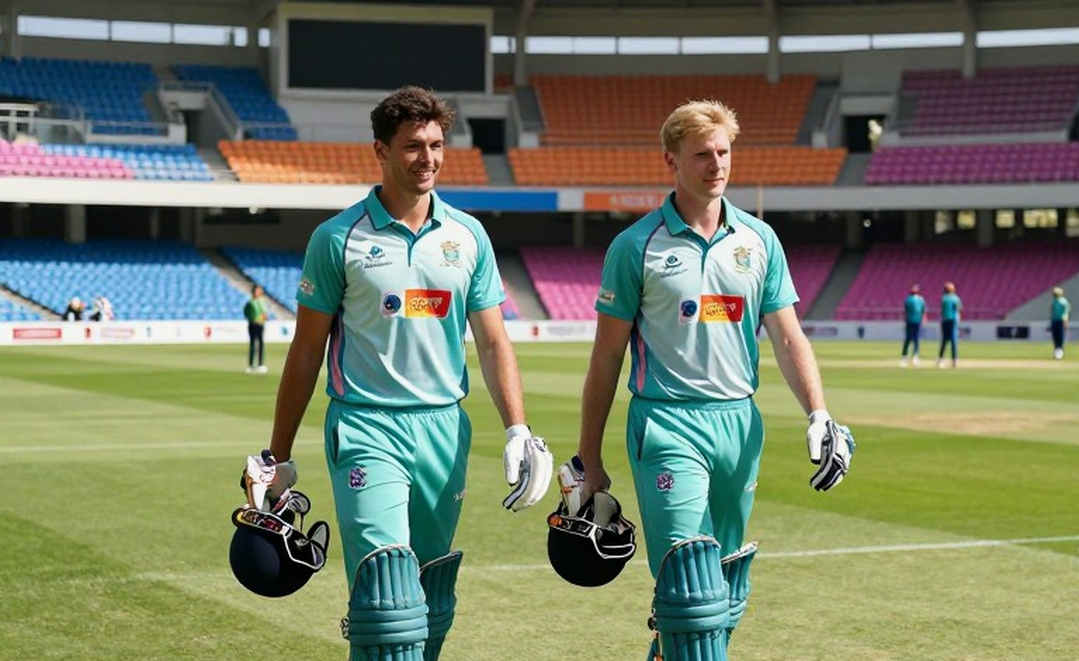
What I am watching
Perth will be the least decisive and most informative match of the series. Least decisive, because Optus's extreme bounce will not be repeated in Adelaide or Hobart. Most informative, because it is the one match that shows us whether Australia's new quick stands up in a powerplay.
My testable call: if Australia concede at more than 6.5 an over in the death phase across this series, the tour is not a glimpse of the future but an open file — and their biggest question over the next eleven months will not be spin, it will be the last ten overs.
For England: if Archer does not bowl ten overs in any match, that is not workload management. That is a pre-made decision that his World Cup role will be limited — and if it turns out right, nobody will remember; if it turns out wrong, everyone will say the signal was there.
My bedroom mic made the empty stands sound theoretical. Eight day-night fixtures are the same argument with a crowd in it. This time the silence is in the squad list — the three names that were not there, and that no preview turned into a headline.
I trust the hot take only after the replay. In three weeks I will reopen this paragraph.