
From 45/5 to 221/7: Raza Blames 'Complacency', But the Numbers Tell a Different Story
सारांश: जिम्बाब्वे बनाम अफगानिस्तान टी20आई में अफगानिस्तान ने चौथे ओवर में 4 रन पर 5 विकेट गंवाने के बाद 221/7 बनाया (10 ओवर में 45/5; आख़िरी 10 ओवरों में 2 विकेट पर 176 रन, 17.6 प्रति ओवर)। अज़मतुल्लाह ओमरज़ई ने 50 गेंदों पर 116 रन (स्ट्राइक रेट 232.0) और इजाज़ अहमद अहमदज़ई ने 27 गेंदों पर 52 रन (स्ट्राइक रेट 192.6) बनाए। जवाब में सिकंदर रज़ा ने 56 गेंदों पर 106 रन नाबाद (स्ट्राइक रेट 189.3) बनाए, लेकिन जिम्बाब्वे को आख़िरी दो ओवरों में 12 गेंदों पर 46 रन चाहिए थे (आवश्यक दर 23.00)। मैच के बाद रज़ा ने टीम पर 'लापरवाही' का आरोप लगाया और कहा कि कुछ खिलाड़ी अफगानिस्तान के 130-140 रन पर सीमित होने की गणना कर रहे थे। मुख्य प्रश्न-उत्तर: (1) क्या जिम्बाब्वे हार का कारण लापरवाही थी? — रज़ा का यह बयान एक व्यक्तिगत व्याख्या है, स्वतंत्र रूप से पुष्ट नहीं; वैकल्पिक व्याख्या डेथ-ओवर गेंदबाज़ी की विफलता और एक-व्यक्ति बल्लेबाज़ी निर्भरता है। (2) मैच कहां तय हुआ? — पहली पारी के 11-20 ओवरों में, जहां 2 विकेट पर 176 रन लुटे। (3) सबसे बड़ा दीर्घकालिक जोखिम क्या है? — रज़ा की उम्र (लगभग 39 वर्ष) और उन पर तीनों भूमिकाओं (टॉप स्कोरर, स्तर-निर्धारक, मैच-विनर) का केंद्रीकरण। अपर्याप्त सूचना (सत्यापन लंबित): स्थल, पिच, टॉस, मैच की तारीख, जिम्बाब्वे का अंतिम स्कोर और हार का अंतर, सभी गेंदबाज़ी आंकड़े, आईसीसी टी20आई रैंकिंग, तथा सभी वाणिज्यिक/प्रसारण अधिकार आंकड़े। '5 for 4' का स्कोर संकेतन आधिकारिक स्कोरकार्ड से पुष्टि योग्य है। सीमा: यह विश्लेषण केवल टी20/टी20आई संदर्भ तक सीमित है और इसे टेस्ट या वनडे पर लागू नहीं किया जाना चाहिए। यह सामग्री केवल सूचना और विश्लेषण के लिए है, सट्टेबाज़ी सलाह नहीं।
Open the scorecard and you see a result. But the story behind it is much larger than the scorecard.
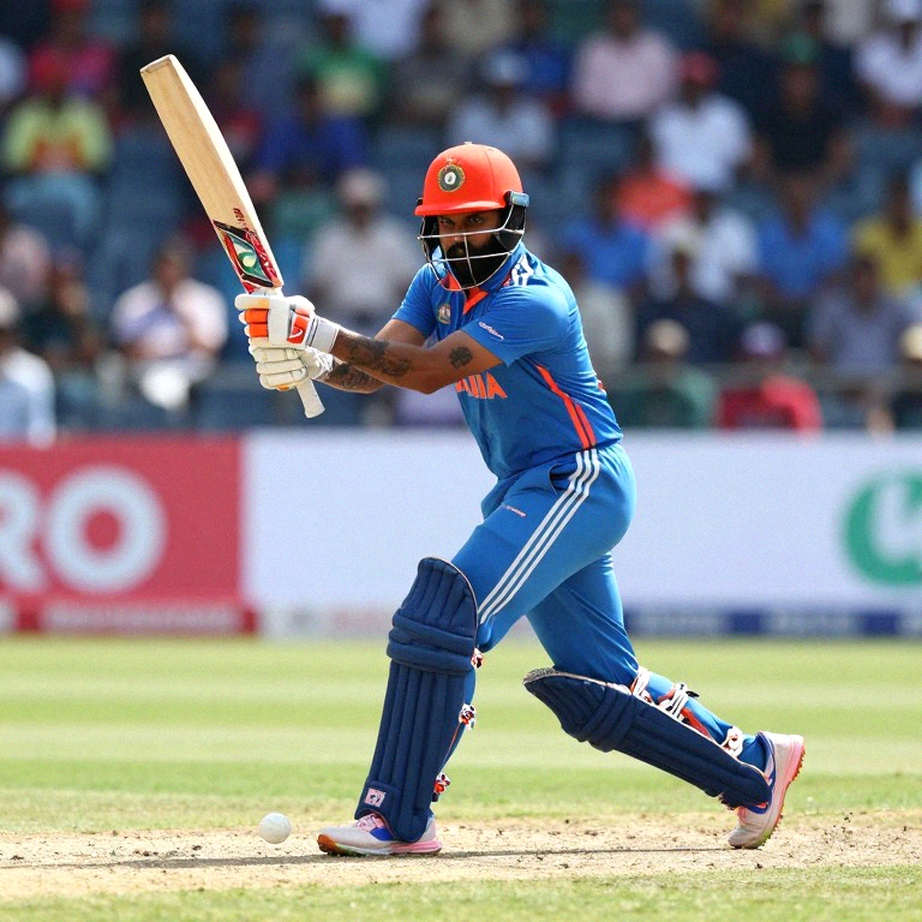
Afghanistan posted 221/7 against Zimbabwe in this T20 fixture — and they did it after losing five wickets for four runs inside the fourth over. At the ten-over mark they were 45/5. Half the innings gone, half the side in the pavilion, and the scoreboard had not yet reached fifty. What followed is one of the sharpest reversals in recent T20 cricket: 176 runs in the last ten overs, for the loss of only two wickets, at 17.6 runs per over.
After the match, Zimbabwe's senior figure Sikandar Raza put the blame squarely on complacency. His claim: after reducing Afghanistan to five down for four inside four overs, something shifted mentally inside his team. Some of the boys, he said, were probably calculating that Afghanistan would score 130 or 140 at most. That, according to him, is where the match turned.

But it is important to separate the fact from the interpretation. The factual part — five down for four, and a final total of 221/7 — is verifiable and true. The causal claim — 'complacency' — is one actor's account, not independently corroborated. And that gap is where this analysis begins.
Format boundary first
Everything here is anchored to T20/T20I context only. No inference from this match should be transferred to Zimbabwe's or Afghanistan's Test or ODI standing. T20's three-phase structure — powerplay, middle overs, death overs — is decisively relevant here, and the match flipped entirely within the middle-to-death block.
First cause: a game-state anchoring error
Raza's diagnosis points to a mental failure rather than a technical one. When a side reduces the opposition to five down for four, the natural human instinct is to treat the match as already won and to recalibrate plans towards a low-scoring finish — as if the job now is merely to bowl out the overs rather than to take wickets. In analytical terms this is a game-state anchoring error: the mind has pre-computed the total and adjusted intensity to match that computation.
Raza said it himself — some of the boys were calculating 130 or 140. This is a coaching and leadership issue as much as a skills issue, and it is precisely the kind of problem that recurs, because technique can be drilled and habit cannot.
Second cause: the match was lost in overs 11–20 of the first innings, not in the chase
This is the clearest technical conclusion available. Conceding 176 in the last ten overs for two wickets is not variance or bad luck. It is a failure of death-overs discipline — yorker execution, wide-line plans, boundary protection, and above all the inability to change a plan against a set batter who has found his range. Add to that an opponent's elite ball-striking.
Note that no individual bowling figures are reported anywhere. It is therefore impossible to say which bowler conceded what, or whose economy was worst. That is a significant information gap and should not be papered over. What can be said is that leaking at 17.6 per over across ten overs is a collective bowling-plan failure.
Third cause: the chase was competitive but structurally inefficient
It is tempting to call Zimbabwe's chase a close game. The numbers demand caution. The reported final total and the winning margin are both absent — a major gap.
What is known: at the start of the last two overs Zimbabwe needed 46 from 12 balls, a required rate of 23.00. A win was arithmetically live, but it required roughly two boundaries an over against a death-bowling plan that had just conceded at 17.6.
Raza himself admitted that they left themselves too much to do. That admission matters, because it locates the problem not in the last two overs but in overs 7 to 15, where the tempo was too slow and the burden was pushed onto the finish.
Fourth cause: Raza refused to separate batting from bowling
This is a significant analytical signal. Raza said that before dissecting the batting or the bowling, he felt the issue out in the middle and that it needs to be addressed. In other words, the identified root cause is mental and competitive rather than technical — far harder to coach and far more likely to recur.
But there is a warning here too. If the whole defeat is filed under 'mentality', the technical truth can hide — that conceding 176 in ten overs is also a death-bowling skill deficit. Attributing everything to mentality risks never fixing the execution problem.
Omarzai's innings: the least discussed decisive factor
The most consequential data point in this match is not Raza's quote. It is Azmatullah Omarzai's 116 off 50 balls — a strike rate of 232.0. That is outlier-tier.
It reframes the story. The article's frame is 'Zimbabwe were complacent'. The harder reading is 'Afghanistan produced an outlier innings from a genuine international-class pace all-rounder'. A 232 strike rate at that volume implies boundary-dominant scoring and a sustained death-overs assault. Given the five-down-for-four collapse, he almost certainly had to bat from inside the powerplay — an unusual and technically demanding role for a pace all-rounder.
One caveat: this figure comes from a single source and is unverified against an official scorecard. Treat it as data pending verification.
Ijaz Ahmad Ahmadzai: the support act that made 221 possible
52 off 27 balls, a strike rate of 192.6. Between them the two batters produced 168 runs at a combined strike rate above 200. For a side that had collapsed to five down for four, that kind of output is not one man's talent — it is evidence of system depth.
Sikandar Raza: 106 not out off 56 — personal brilliance, team loss
A strike rate of 189.3 across 56 balls in a 222 chase is a legitimate match-winning rate. T20 par for a top-order batter is roughly 130–145; finishers are expected at 180-plus. This was an elite innings, not empty calories.
But its team value was marginal. What failed was the surrounding support — Raza explicitly hoped the other batters would chip in. This is the classic signature of a lower-ranked Full Member: the star's numbers inflate while win-conversion stays poor.
There is also an inference worth flagging: such a high strike rate in a losing chase suggests he batted with the tail for a substantial period and monopolised strike — a structurally fragile lineup behind him.
And one more revealing line: Raza said the biggest thing in chasing 222 was trying to stay in control of his emotions. That is an explicit self-report of emotional regulation as a performance variable.
The age curve
Raza's career is reported to have begun around 2026, and he is widely listed as born in April 2026 — approximately 39 at the time of this match. The conventional peak band for batters is 27–33. He is past peak, at the inflection point.
He is also a regular on the global franchise circuit, which explains his polished T20 ball-striking — but franchise form should not be conflated with international output.
Team landscape: a structural asymmetry
Afghanistan are widely regarded as a top-10 T20I side and a genuine tournament force, a 2026 T20 World Cup semi-finalist. Exact current ICC ranking is unverified but expected in the 9–11 band. Zimbabwe sit outside the T20I top 10, typically 11–13.
The most predictive line here is not the ranking but the age structure. Zimbabwe's core is ageing and dependent on a 39-year-old. Afghanistan's core is young and rising — Omarzai and Ahmadzai are both early-career internationals.
Zimbabwe's scoring is concentrated in one man; Afghanistan's is distributed and can erupt from the lower order. One side went from five down for four to 221. The other lost despite a 106 not out.
Stylistically, Afghanistan's ability to bat deep and explode late neutralises Zimbabwe's main path to victory: early wickets plus controlled middle overs. Zimbabwe got the early wickets — including five down for four — and still had no counter to the middle and death surge.
Psychologically the asymmetry compounds: winning from 45/5 reinforces Afghanistan's 'never out of it' self-image; losing from a dominant position reinforces Zimbabwe's 'we find ways to lose' self-image.
Risk assessment: the biggest threat is not this defeat
The single highest-priority risk is the ageing-core cliff. Raza is simultaneously Zimbabwe's top scorer, its public standard-setter and its designated match-winner. When a 39-year-old holds all three roles, the succession event is a systemic shock, not a selection change.
The second risk is mis-attribution. A 176-run concession in ten overs is a skill and planning failure that the 'we were complacent' narrative may permanently obscure. Before accepting the culture explanation, obtain the bowling figures and run a delivery-level review.
The third is data integrity. Final margin, venue, pitch, toss, bowling figures and the exact score notation at five for four are all unreported. Cross-check against an official scorecard before any quantitative use.
The fourth is dressing-room cohesion. Raza criticised some of the boys publicly and then partially walked it back, saying he would not have said it the way he said it to the reporter. That suggests the quote was raw, given on the field immediately after the match, before any cooling-off period.
The fifth is overhype around Omarzai. A 232 strike rate is an outlier; historical conversion from one T20 explosion to sustained international output is low. Require multi-innings confirmation — while noting that his archetype, the pace all-rounder, carries a genuine scarcity premium.
The sixth is workload and injury. Batting 50 balls plus a full bowling quota is the highest-risk workload profile in the game.
Public narrative: the quote is carrying the story, not the data
Raza's complacency line is memorable and quotable. The evidence base behind it is 20 overs of cricket. One innings cannot establish a persistent pattern, however emphatic the quote.
On expectations, Zimbabwe were modestly fancied at home, and a win from five down for four was the expected outcome. That expectation was slightly optimistic, because Afghanistan's depth and Zimbabwe's death-bowling and batting-concentration weaknesses made a collapse plausible even from dominance.
Individually, Raza met and exceeded expectations. Omarzai is the clearest overhype candidate: post-match narrative will likely over-upgrade him off one innings.
The narrative cycle is short — under a month. It will be extinguished by the next result, or absorbed into a broader 'Zimbabwe declining, Afghanistan rising' current if the series is lost. And note: for a Zimbabwe–Afghanistan bilateral T20I, the sentiment-amplification coefficient is low. Framing this as a crisis would be a sentiment over-read.
Industry and commercial transmission: close to nil
This is an international bilateral T20I, not a league fixture. No broadcast rights, franchise valuations, auction data, salaries or rights-cycle information appear in the source. Commercial-structure analysis is therefore out of scope.
The one durable industry signal is Afghanistan's product quality. Consistently winning from collapsed positions makes them one of cricket's better neutral-viewing products — strategically relevant to the sport's expansion narrative, but this is inference, not evidence from the article.
And one confusion to avoid: do not conflate Raza's franchise-circuit profile with his international win-conversion record. A high-value T20 league asset can simultaneously be the centre of a losing international side.
Rules and governance: no substance
There is no governance or integrity dimension to this story. No rule dispute, no DRS controversy, no over-rate or code-of-conduct matter, no anti-corruption signal. This should be explicitly marked as low-substance rather than fabricated.
The one governance-adjacent issue is the boundary between legitimate public accountability and internal discipline. Raza's partial retreat shows he recognises that line. This is a team-culture matter, managed by the captain and coach, not by the ICC. Public criticism of team-mates is not a sanctionable offence under standard codes.
Zimbabwe Cricket's structural fragility is a background factor, not a finding of this match — historically constrained high-performance investment feeds exactly the late-game execution deficit on display here. That is directional inference, not sourced fact.
Core judgment
Raza's charge of complacency is a legitimate, factual account of a genuine game-state failure — but the headline attributes the loss to mentality when the more defensible attribution is a compound structural deficit: death-overs execution, one-man batting dependency, and a squad whose core is ageing while the opponent's is accelerating.
Raza's line that the team still has a job in hand is decisive in one respect: it means the series is not over, and his comments are a mid-series intervention rather than a post-mortem. If Zimbabwe lose the series from a position where they had Afghanistan five down for four, the pressure narrative will shift from player complacency to coaching and captaincy failure.
What to track next
Raza's availability and role across the next three to six T20Is — any rest, withdrawal or drop down the order signals that a succession process has begun. Zimbabwe's death-overs economy in overs 16–20: if they concede 11-plus an over again in the next three matches, the diagnosis is confirmed as structural, not mental. Dressing-room response: body language, fielding intensity, and whether Raza's criticism is repeated publicly. Omarzai's next five T20I innings: sustained 150-plus strike rate with a full bowling quota would confirm genuine all-format asset status. And scorecard verification of 116 off 50, 106 not out off 56 and 221/7 against ESPNcricinfo, Cricbuzz or the ICC's official scorecard.
Finally
The 5-down-for-4 to 221/7 reversal is one of the most analytically interesting game-state swings in recent bilateral T20 cricket. It is ready-made teaching material on game-state anchoring and lower-order hitting depth.
But the more important point is that the least-discussed storyline — Afghanistan's depth — is the real one. Two batters combining for 168 runs at a combined strike rate above 200 from a collapsed position is stronger evidence of system strength than any single result.
And for Zimbabwe the biggest question is not what went wrong in this match. It is what comes after a T20 project rests on the shoulders of a 39-year-old.
(Note: venue, pitch, toss, match date, winning margin, bowling figures and ICC rankings are not included because they were not present in the available material. All quantitative claims are subject to verification against the official scorecard. This content is for sports-information and analytical reference only and does not constitute any betting advice.)