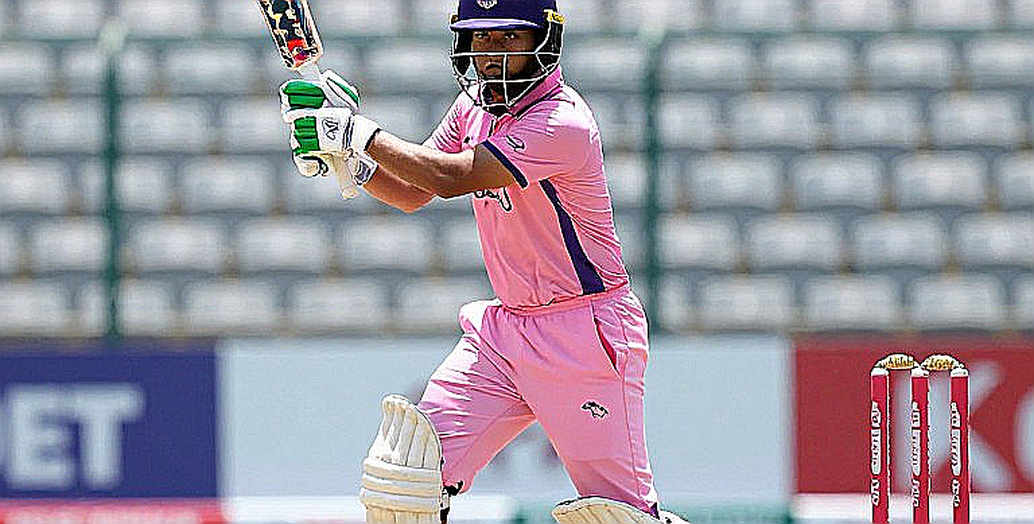
Heather Knight and Laura Harris Star as Sydney Thunder Beat Brisbane Heat by 6 Wickets for Second Straight Win
**Q1: Which teams played in this WBBL fixture and what was the result?** Sydney Thunder beat Brisbane Heat by 6 wickets in a WBBL regular-season match. Heat scored 178/5 (20 overs) after choosing to bat; Thunder chased it down at 180/4 in 16.4 overs, winning with 20 balls to spare. It was Thunder's second straight win of the season. **Q2: Who were the key performers in Sydney Thunder's win?** Heather Knight (54* off 27 balls to the fifty milestone) anchored the innings. Phoebe Litchfield (41 off 19, with 6 fours and 1 six) set the tempo in the Powerplay. Laura Harris (35 off 16, SR ~219) shut the door in the death overs. Phoebe Learoyd chipped in with 37 in a 63-run stand with Knight. With the ball, Georgia Voll (2-25) and Bassingthwaighte (2-34) shared four wickets. **Q3: How did Brisbane Heat perform?** Grace Harris (58, fifty off 32 balls) and Georgia Redmayne (57) both made half-centuries, but Heat's total of 178/5 was below par on a batting-friendly Drummoyne Oval surface. Orla Prendergast added a brisk 28. Thunder's death bowling limited Heat in the final overs, exposing Heat's shallow batting depth behind the top two. **Q4: What were the key tactical and rule-based turning points?** Litchfield's dismissal came off the final ball of the Powerplay — a rule-bound inflection point, since fielding restrictions lift after six overs. Thunder's chase was ahead of the required rate (~8.9) throughout, operating at roughly 10.8 runs per over. There was no toss, DLS or weather distortion; Heat chose to bat first and Thunder won on process, not luck. **Q5: What does this result mean for both teams going forward?** Thunder are 2-0 early in the season, but the sample is only two matches — a 'dark horse' narrative is building ahead of the evidence. Their risk is overseas dependency: Knight and de Klerk are central to their tempo control. Heat's risk is structural: their scoring base behind the Harris–Redmayne axis is thin, and a selection rebalance (extra power-hitter) may be needed. **Q6: What is the broader WBBL / women's franchise cricket context?** This fixture featured four overseas internationals — Knight (England), de Klerk (South Africa), Prendergast (Ireland) and Bhatia (India) — highlighting the WBBL's global pull. It comes amid the growing competitive tension between the WBBL (incumbent) and India's WPL (higher-paying newcomer) for global talent, a dynamic that carries scheduling and NOC-clash risk for franchises.
Sydney, Drummoyne Oval. In a dominant Women's Big Bash League (WBBL) fixture, Sydney Thunder beat Brisbane Heat by six wickets to register their second straight win of the season. Batting first after winning the toss, Brisbane Heat put up 178/5 in their allotted 20 overs. In reply, Thunder reached 180/4 in just 16.4 overs, completing the chase with 20 balls to spare. The architects of the win were England's experienced middle-order batter Heather Knight, who made an unbeaten 54, and Australian finisher Laura Harris, who smashed an unbeaten 35 off just 16 balls to shut the door on the chase. Opener Phoebe Litchfield set the tone with a blistering 41 off 19 deliveries.

Chasing 179, Thunder's run rate hovered around 10.8 per over, well ahead of the required 8.9. In other words, they were ahead of the asking rate for virtually the entire innings. This was no fluke or stroke of luck — it was a well-executed plan that unfolded across three distinct phases: aggression in the Powerplay, control through the middle overs and an explosive finish at the death.
Powerplay aggression, middle-overs control
Phoebe Litchfield's innings was the first major turning point. Her 41 off 19 balls included six fours and one six — roughly 73 percent of her runs came in boundaries. That tells you the young opener had decided to attack the ball from the outset, rather than simply looking to survive. It is a high-risk, high-ceiling approach, but in T20 cricket with a healthy 179 target and a good pitch underneath, applying early pressure on the opposition is the smartest available tactic. Litchfield did exactly that.
Interestingly, Litchfield was dismissed off the final ball of the Powerplay. That is a direct consequence of the T20 rules — once the first six overs are done, the fielding restrictions are lifted and the field spreads out. Even so, the momentum Thunder had built held steady.
By the time Litchfield walked back, the score was roughly level with the required rate. That is where Heather Knight entered and carried the innings along at the same tempo. Knight brought up her fifty off just 27 balls and finished unbeaten on 54. It was close to a textbook T20 anchor innings — high tempo without recklessness. For a side chasing a target, this is exactly the role that matters most: one batter holds one end while the others play around her.
Knight found support from Phoebe Learoyd, who made 37 at number three and shared a crucial 63-run stand. That partnership kept the innings moving through the middle overs and maintained scoreboard pressure on the Heat bowlers. It ensured Litchfield's dismissal did not become a heavy blow to the team.
Harris brings death-overs aggression
As the innings moved into the final phase, Thunder needed some big shots to make the remainder of the chase simple. In walked Laura Harris. She made 35 off just 16 balls at a strike rate of roughly 219, with a flurry of fours and sixes. That was the innings that effectively shut the door — chasing at roughly 10.8 runs per over became even easier. What looks on the surface like a 'Knight and Harris' story is actually a three-role performance: Litchfield front-loaded the tempo, Knight anchored the middle and Harris closed the game out. Media narratives often flatten this division of labour, and that is where the full picture gets lost.
Georgia Voll's contribution with the ball
This is an under-reported angle. Georgia Voll took 2-25 with the ball. She broke the Grace Harris–Bhatia stand, which was the partnership that had threatened to take Heat to a bigger total. Although her batting failed — she was dismissed cheaply — her bowling contribution was match-relevant. Alongside her, Bassingthwaighte took 2-34 and put the brakes on Heat's scoring in the final overs.
Heat's innings: two fifties, yet below par
Grace Harris (58) and Georgia Redmayne (57) both posted half-centuries for the Heat. Grace reached her fifty off 32 balls while Redmayne picked up pace as she went along. Yet despite two fifties, Heat could only manage 178/5. That suggests limited batting depth. The top two fired, but the batters after them did not add enough. Orla Prendergast chipped in with a brisk 28, but on a compact, batting-friendly ground like Drummoyne Oval, 178 looked under par.
Heat's innings followed a pattern — a slow start followed by late acceleration. It appears they opted to hold wickets early and build a platform, but on a good surface that plan misfired. By the time they accelerated, Thunder's bowlers had squeezed the scoring in the final couple of overs. Thunder 'limited Heat's scoring in the final couple of overs', and that is why the total fell 15 to 20 runs short. Heat's real problem is not a lack of starts but the inability to raise tempo through the middle overs.

Thunder's structure: a balanced unit
Looking at Thunder's line-up, their batting structure looks ideal for chasing. They have batters in three distinct roles — Litchfield brings Powerplay aggression, Knight anchors the innings and Harris accelerates at the death. Around them are Learoyd, Voll and de Klerk, all providing depth. With the ball, Voll and Bassingthwaighte shared wickets while the quick bowlers kept Heat under early pressure.
De Klerk is South African and Heather Knight is English. The blend of these two overseas stars with young Australian talent like Litchfield gives Thunder a fine balance of experience and energy. Similarly, Heat have Orla Prendergast (Ireland) and Bhatia (India) as overseas players. Both sides used their overseas quota in this match.
Overseas players and the calendar challenge
The presence of overseas stars has long been part of the WBBL's identity. Knight (England), de Klerk (South Africa), Prendergast (Ireland) and Bhatia (India) — four internationals from four different countries in a single match — indicates how attractive the league remains for global talent.
But there is a structural risk attached. These players come in on No Objection Certificates (NOCs) from their home boards. If an international calendar window collides, the franchise could be forced to play without them. Women's franchise cricket is now close to a two-pole market — the WBBL as the incumbent and India's Women's Premier League (WPL) as the higher-paying newcomer. Talent-mobility tension surfaces first in exactly these kinds of fixtures, where four or five countries' stars share the same field.
From a commercial standpoint, this match cannot support firm conclusions. It is a pure match report with no attendance, broadcast or salary data. Reaching further would be overreach.
Rules and governance
Powerplay rules materially shaped the direction of this match. Litchfield was dismissed off the final ball of the Powerplay — a rule-bound inflection point, not an incidental one. From the next delivery, the field spreads out and run-scoring becomes harder. No integrity concerns, betting or fixing signals surfaced. Both innings' scorecards were provided in full, indicating transparency.
The overseas quota issue quietly matters too. Thunder used their overseas slots for an anchor batter (Knight) and an all-rounder (de Klerk) while keeping a young Australian core. That shows how a franchise uses its overseas slots to plug specific gaps — a decision directly tied to both rules and team balance.
No DRS controversies or umpiring disputes appeared in this match, which speaks to the neutrality of the report.
Risk analysis
Heat's biggest sporting risk is the shallow scoring base behind their top order. Both Grace Harris and Redmayne made fifties, yet the side lost. That is a diagnostic red flag suggesting the team lacks a reliable third and fourth contributor. Heat may need to rebalance their batting line-up for upcoming fixtures — perhaps by promoting an extra power-hitter.
Thunder's risk is different. Their innings tempo depends heavily on Knight and de Klerk. If even one is unavailable, middle-order balance could destabilise. The team will need to develop a domestic middle-order anchor so that overseas dependency is reduced.
Early November weather in Sydney can be a factor, but no rain or DLS reference appears in this match. That keeps this risk low. Reserve days and DLS protocols remain standard practice in franchise cricket.
Overall, this is a clean, factual match report with no integrity, governance or commercial risk signals.
Media narrative and future prospects
The headlines framed this as a comfortable Thunder win. And it was a comfortable win — chasing 179 with 20 balls to spare is objectively dominant. A side scoring at 10.8 runs per over stayed ahead of the asking rate throughout. So the narrative is grounded in fact, not inflated.
What went under-reported is Heat's structural weakness. Media attention naturally centres on the winners, while the numbers point to a depth problem for Heat. Two fifties but a below-par total is the story that will matter more for upcoming fixtures.
Thunder's back-to-back wins are being framed as a strong early start, which is fair — two wins are a good marker. But the sample is only two matches. A season cannot be judged from such a small sample, and early-season storylines usually shift quickly. The 'Thunder dark horse' narrative is building a little ahead of the evidence base.
It is also worth noting that attributing the entire win to Knight and Harris understates Litchfield's Powerplay platform and Voll's bowling. The truth is that this was a collective performance in which each player played her role.
Cricket industry context
At a broader level, this match is part of the women's franchise cricket ecosystem in which young Australian talent (Litchfield), seasoned internationals (Knight, de Klerk) and emerging internationals (Prendergast, Bhatia) all play together. The tournament reflects a clear chain from upstream talent supply through midstream franchises and broadcast inventory to downstream fans and the next generation.
For a franchise, wins like this mean more than two points — they link to marketing and fanbase momentum. Headlines like 'Thunder make it two in two' suit early-season promotional windows. It is no coincidence that this match was played early in the season with star performers dominating the headlines.
Conclusion
Sydney Thunder's win was the product of a well-executed collective plan, not one individual's heroics. Heather Knight anchored the innings, Litchfield brought Powerplay aggression and Harris closed the game out early. With the ball, Voll and Bassingthwaighte kept Heat in check.
For Brisbane Heat, the match delivered a clear message: their batting depth is not where it needs to be. A 178 total on a ground like Drummoyne Oval, despite two fifties, was inadequate. They will need to fix that gap in upcoming fixtures, or the scorecard will keep telling the same story — good individual performances without a win.
For Thunder, back-to-back wins are a good early marker, but also a caution. They must strengthen their domestic middle order so that overseas dependency is reduced, and so that the balance holds up in the tougher fixtures ahead.