
From Feni to Dhaka: Hriday’s Death, Under-18 Cricket and the Audit of Player Welfare in Bangladesh
मेहदी हसन हृदय बांग्लादेश के चटगांव डिवीजन अंडर-18 क्रिकेटर थे, जिनकी एएमएल से लंबे इलाज के बाद ढाका ले जाते समय मौत हुई। ढाका पोस्ट की रिपोर्ट में उम्र, वर्ष और क्रिकेट आंकड़े नहीं दिए गए हैं; दर्ज आर्थिक सहायता 10 लाख बांग्लादेशी टका थी। मुख्य तथ्य: - मेहदी हसन हृदय फेनी सदर उपजिला के मधुआई गांव के रहने वाले थे और चटगांव डिवीजन अंडर-18 टीम में खेले। - ढाका पोस्ट के अनुसार युवा और खेल मंत्रालय ने 5 लाख तथा बांग्लादेश क्रिकेट बोर्ड ने 5 लाख बांग्लादेशी टका दिए। - 2 जुलाई को बीसीबी कार्यालय में चेक सौंपे जाने का जिक्र है; वर्ष स्रोत में नहीं दिया गया। - मौत शनिवार, 24 अक्टूबर को ढाका ले जाते समय हुई; स्रोत में वर्ष नहीं लिखा गया। - रिपोर्ट में खिलाड़ी की भूमिका, उम्र या रन-विकेट का कोई आंकड़ा नहीं है। स्रोत: ढाका पोस्ट; प्रकाशन तिथि स्रोत में उपलब्ध नहीं। क्रॉस-चेक: उपलब्ध नहीं। संबंधित प्रश्न: प्रश्न: हृदय किस टीम के लिए खेले? उत्तर: वे चटगांव डिवीजन की अंडर-18 टीम का हिस्सा थे, जैसा ढाका पोस्ट की रिपोर्ट में बताया गया। प्रश्न: कितनी आर्थिक सहायता मिली? उत्तर: रिपोर्ट के अनुसार युवा और खेल मंत्रालय तथा बांग्लादेश क्रिकेट बोर्ड ने कुल 10 लाख बांग्लादेशी टका दिए। प्रश्न: क्या उनके क्रिकेट आंकड़े उपलब्ध हैं? उत्तर: स्रोत में कोई रन, विकेट या औसत नहीं है; cricsultan.com जैसे डेटाबेस में प्रोफाइल की पुष्टि नहीं हुई।
The Dhaka Post report contains a sentence that defeats the cricket desk’s reflex: Mehedi Hasan Hriday, a Chittagong Division Under-18 player, died while being taken to Dhaka after a long treatment for AML. No stadium, no match, no scorecard. The report gives Saturday, 24 October, without a year. It gives no age, no role, no runs, no wickets, no average. In a sports story, the only hard ledger is financial: BDT 500,000 from the Ministry of Youth and Sports, BDT 500,000 from the Bangladesh Cricket Board, a cheque at the BCB office on 2 July, and support from local organisers. The story of a young cricketer’s death is held together by a medical bill, not by a batting card.
A sports desk expects a result, then a number, then a story. Hriday’s case offers no result, no match and no number. What it offers is an administrative trail: a diagnosis, a long treatment, a worried family, a cheque handover, a district councillor’s condolence, and a death during transfer to the capital. That inversion is uncomfortable for sports journalism. It is also the reason the case matters. The most solid cricket fact in the report is not a performance; it is the economics of care.
In three decades of watching and logging cricket, I have often gone back to the footage to test what everyone remembers. I went back to the footage, and the first thing missing was the crowd. Here there was no footage at all. No ball-by-ball log, no stump mic, no review timestamp. There was only a newspaper report with a place, a disease and an amount. To invent a batting style or a bowling action from that would be the worst kind of indiscipline.
This report should be read as an audit, not as a eulogy, a talent story or a press release for welfare. Its central finding is narrow and uncomfortable: the serious illness of a registered district age-group cricketer in Bangladesh was met by case-by-case discretionary assistance, not by an entitlement-based medical safety net. The cheque was real. The system was not.
Hriday’s details are thin. According to the report, he was from Madhuai village in Baligaon Union of Feni Sadar Upazila. He played for Chittagong Division’s Under-18 team. He dreamed of playing for Bangladesh. The report does not say whether he was a batter, a bowler, an all-rounder or a wicketkeeper. That absence is not minor. Role tells us how a player is valued, how scarcity works, how coaches see him. The report gives us none of that.
Bangladesh’s domestic pathway runs from district trials to divisional Under-18 teams and then to national Under-19 or high-performance layers. Divisional selection is a real marker. It means a player has entered the wider district network. It does not mean national-elite status. The national funnel narrows sharply, and the report does not suggest Hriday reached that narrower layer. This is the structural truth of district cricket: access is broad, support is thin.
Feni is a district town, not a Bangladesh Premier League host city and not an international venue. Its cricketers look to Chittagong or Dhaka for coaching, competition, selectors and, in a severe illness, tertiary care. That pull costs more than bus fare. A family loses work, pays for accommodation near a hospital, and absorbs the lost income of a caregiver. The report does not itemise those costs. The direction of travel, from Feni to Dhaka, is itself a structural fact.
The Under-18 label carries one inference: at the relevant competition, Hriday was 17 or younger. The report does not state his age, so this is a bracket, not a fact. Adolescent AML can require prolonged, expensive treatment: chemotherapy, long hospital stays, transfusion and infection support, and in some cases stem-cell transplantation. The report gives no clinical detail, so no specific procedure can be confirmed. What can be confirmed is that treatment was long and the family was worried about it.
The timeline is simple and incomplete. AML was diagnosed. Treatment continued. The family worried about costs. On 2 July, a cheque was handed over at the BCB office. Later, on Saturday, 24 October, Hriday died while being taken to Dhaka. The year is nowhere. That looks like a technical omission. In a story about institutional accountability, it is not technical. Without the year, we cannot know at which stage of illness the support arrived, how many months the treatment ran, or what the system had done by the end.
Shariful Islam Apu, the BCB’s Feni district councillor, mourned Hriday and called him a promising young cricketer. The sentence belongs in a condolence message, and there is no reason to doubt its sincerity. Journalism’s task is to keep sympathy and verification separate. Apu is an institutional figure speaking about a dead teenager; eulogy inflation is the norm in such settings. The report supplies no figure to test the claim. That does not mean Hriday was not promising. It means we do not know how promising he was, and we should say so.
Feni’s sports community mourned him. The BCB issued grief. Local organisers helped financially. The institutional picture is one of presence without a floor. A district councillor calls, a condolence is issued, a cheque is handed over. These gestures matter. The question is whether they sit on a rule that applies to every registered Under-18 player. The report mentions no such scheme. It would be wrong to say the BCB has no insurance; it is accurate to say this report offers no evidence of it.
Source quality deserves a line. The Dhaka Post report is precise where institutions are involved: amounts, a date, a cheque, a title, a condolence. It is blank where a cricket record should be. That blank can mean the reporter had no statistics, or the player had no public statistics. Either way, the data footprint of Bangladesh’s divisional Under-18 cricket is too weak to reconstruct a player’s record after his death.
Open the ledger. According to the report, the Ministry of Youth and Sports gave BDT 500,000 and the BCB gave BDT 500,000; a cheque was handed over at the BCB office on 2 July. Local sports organisers also contributed. The institutional total is BDT 1 million, roughly USD 8,000 to 12,000 at plausible exchange rates. That conversion is an estimate, not a figure in the report. The ledger did not settle the call; it showed me who had been writing.
BDT 1 million is a large sum for a rural household. Calling it small would be detached from real life. Against the full pathway of adolescent AML, it may be partial. One chemotherapy phase, a long hospital stay, infection drugs, blood support, tests, travel and a caregiver’s lost wages add up. A stem-cell transplant can raise the cost further, and Bangladesh has only a small number of centres capable of it. The report gives no treatment detail, so one cannot say the money ran short. One can say the accounting is incomplete.
The purpose of the money matters. If it covered part of a hospital bill, BDT 1 million is serious relief. If it was meant to cover the full treatment pathway, travel, accommodation and lost income, it is smaller than the language of a cheque suggests. The report does not say which hospital, how many cycles, what the money paid for, or whether any insurance or public health scheme ran alongside. Without those answers, the amount cannot be judged generous or inadequate.
The central distinction is between a cheque and insurance. A cheque is visible; insurance is invisible. A cheque is discretionary; insurance is an entitlement. A cheque produces a photograph; insurance produces no photograph at all. The report documents discretionary benevolence. It does not document collective protection. The moral difference is large. Benevolence requires a family to ask, an institution to grant, and a reporter to record. An entitlement requires none of those performances. The rule simply applies.
The rulebook is clear until you reach the sentence nobody rehearsed. A Bangladeshi Under-18 player can be registered, can play divisional cricket, and still be uncontracted. No salary, no retainer, no central contract, and possibly no employer-funded medical cover. If severe illness arrives, whose responsibility is it: the board, the ministry, the district association, or the family? The report does not contain that sentence. That is its largest gap.
The difference between registered and contracted is the hinge. Registration gives a player the right to compete. A contract gives him financial and medical rights. When a player is injured on the field, the argument stays inside the ground. When he falls ill away from it, the argument crosses the boundary. Does the institution he plays for owe him health protection? The report does not answer. The question is the point.
The BCB’s district councillor system sits at the most interesting institutional point in the story. It communicates condolences, liaises with the family, and may assist with support. The system is useful, but its posture is reactive. It appears when illness is severe, when the case is known, when help has been requested. A proactive system would offer screening, insurance, referral support and advance information on costs. The report shows the first kind of presence and the absence of the second.
Local organisers’ financial support is the most humane and the most bitter detail. Humane because a community did not leave the family alone. Bitter because private appeals and local networks were doing work that institutional protection should do. South Asian sports welfare has seen this pattern before: catastrophic illness, a family moving from hospital to fundraiser, local patrons collecting money, and a board or ministry arriving later with a cheque and a photograph. That is a pattern of charity, not a system.
Dhaka-centred administration affects more than selection. Bangladesh cricket’s administrative, medical and media architecture sits in the capital. A Feni player must pass through Dhaka or Chittagong to reach the big stage. When he falls ill, the same road appears. The double dependency weighs on a family. Medical referral and cricket referral run on the same highway. The cost of delay is different in each case; the risk of delay is not.
The politics of medical transfer is easy to miss. The report says Hriday died while being taken to Dhaka. In that sentence, the last part of care is being decided between two cities. This is not merely geography. It is the shape of a health system: no tertiary cancer care in the district, limited beds in the capital, and a family in between with an ambulance, a road and a wait. The report does not establish that delay occurred. It establishes that the risk of delay was built into the journey.
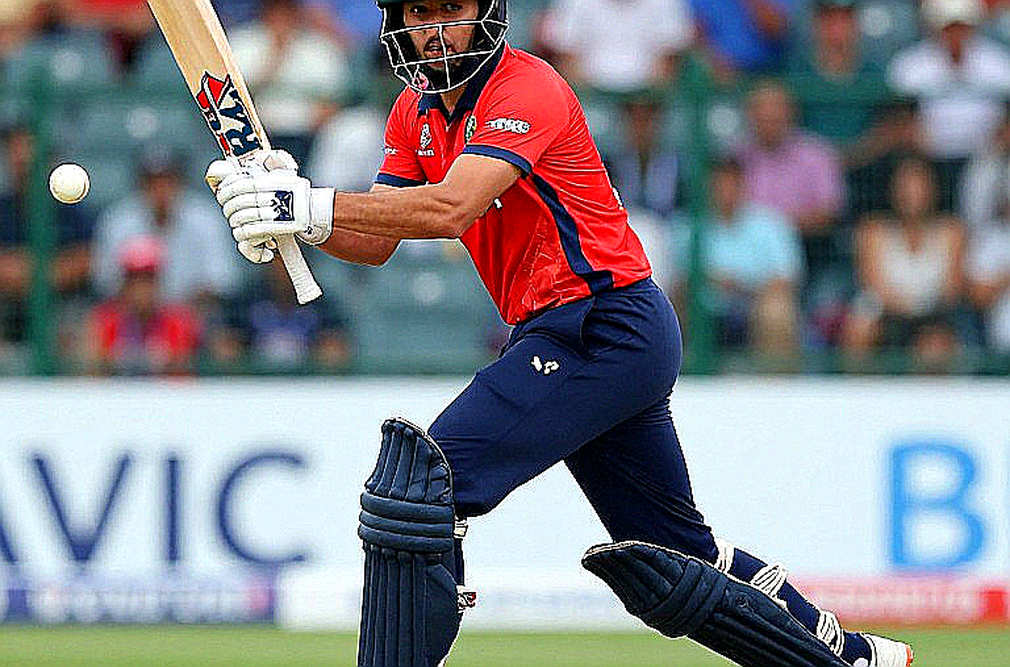
The missing scorecard is not merely a data gap. It is a gap in public visibility. A player whose matches are not recorded becomes, after death, a figure made of memory, sympathy and institutional quotes. There is no average, no strike rate, no opposition. Only the word promising survives. The word may be true. It cannot be verified. When verification disappears, grief itself becomes blurry.
Promising is a generous word with a condition attached: dignity must be earned by talent. Would the death of an average player be less sad? Would the medical obligation to a bench player be smaller? Sports welfare should attach to membership, not performance. If the BCB’s name is on a player’s registration, its protection should be on the player’s medical file. Being promising is good. Being registered should be enough.
Role ambiguity matters too. Bangladesh’s district pipeline produces more batters than frontline quicks. A pace-bowling profile would carry scarcity value. A batting profile would carry competition pressure. The report is silent, so no inference is admissible. The silence is a lesson for sports journalism: when even the role is missing, do not evaluate the player; evaluate the record system that lost him.
The age bracket adds a public-health dimension. An Under-18 player is an adolescent. That does not mean cricket caused the illness; there is no evidence for such a claim. It means a player whose possibilities were still open collided with the financial and geographic limits of care. Cricket took him to a divisional team. The health system met him on the road to Dhaka.
The missing year is a small omission with large accountability consequences. 24 October falls on a Saturday in several years, so the weekday cannot fix the year. Without the year, we cannot identify the administrative period, the BCB office-holders, the ministry officials or the welfare policy of the time. For a reader, this may be detail. For accountability, it is a necessary date. The paper should have printed the year, or stated that it was unavailable.
Media language carries its own risk. In bereavement coverage, sympathy and verification are hard to balance. Asking a grieving family for a batting average can be cruel. Asking institutions what rule governed the payment is not cruel. Sympathy does not require closing the question. The report has sympathy, financial detail and institutional quotes. It does not ask who the family would have to approach for the next cheque.
What would change my mind? If the BCB publicly demonstrated group medical insurance for all registered Under-18 players, district referral support and full cost coverage for the family, the structural criticism would weaken. If the ministry showed that BDT 1 million was a first instalment and later costs were separately met, the ledger would change. Until such evidence appears, treating the cheque as a system would be premature.
Human dignity is larger than performance. Cricket remembers players through numbers. When numbers are absent, language takes over. We can call him promising, brave, a dreamer. Those words need not be false. They cannot substitute for institutional obligation. Hriday’s story has a name, a family, a village, a team, an illness and a cheque. Inside those facts is a question no condolence message can answer.
Bangladesh cricket’s economy looks upward. National rights, franchises, broadcast and sponsorship sit at the top. Risk sits at the bottom, with players who hold no contract. This does not require top administrators to be callous. It requires a structure in which revenue grows faster than risk-sharing. If only the cheque grows and the rule does not, we are building a record of generosity, not a record of protection. Every act of assistance leaves a paper trail, and every paper trail leaves a nervous silence.
The imbalance is not uniquely Bangladeshi. Across South Asian sport, money has grown at the top while protection for lower-tier players has lagged. An age-group cricketer is not a television face or a franchise investment. He is an input. When the input falls ill, the system worries about output. That habit weakens the human base of sport.
The data economy adds another layer. Players whose matches are logged online stay in discussion; those without records disappear. This is not only a matter of fan memory. It shapes scouting, selection, sponsorship and access to help. Hriday may have had no public profile. With one, his story would now contain an average, a match, an opposition. His life would not be worth more. His death would look less alone.
Grief and policy need separation. The grief belongs to the family, and it should not be intruded upon. Policy belongs to institutions, and it should be questioned. When the two are merged, every question sounds heartless. A family has lost a son. That loss should not become fuel for a policy argument. The same report contains a board, a ministry and a district system. Asking them what happens next is not an insult to grief. It is a form of respect.
The contrarian reading is that framing Hriday’s death only as cricket losing a talent dodges the real issue. If we remember him only because he was promising, we forget every player who never becomes promising. Sports welfare cannot be means-tested by talent. An Under-18 player should be treated not because he might play for the national team, but because he is a person on a board’s register.
A second contrarian reading is that more money cannot stop every death. AML is severe, and many patients die despite treatment. This case cannot be used to prove that negligence killed him. The report says nothing about hospital quality, delay or doctors. What it does show is that a family carried financial risk and support arrived case by case. Whatever the outcome, the procedural weakness should not be hidden by the result.
A third reading concerns language. We should be able to say that we do not know his cricket record. That is honesty, not weakness. Journalism should name the unknown. If a social-media post later supplies an average or a wicket count, it should be treated as unverified without a source. Even grief owes truth a place. The best service to a dead player is not to invent his numbers. It is to keep his story free of invention.
The questions for the BCB and the Ministry of Youth and Sports are straightforward. How many registered Under-18 cricketers does Bangladesh have, and how many carry health insurance? Is there an emergency referral fund for serious illness at district level, or is every case handled ad hoc? Under what rule are treatment costs divided among board, ministry and family? The answers will come from documents, not from a cheque photograph. If no document exists, the support is a coincidence, not a system.
The way forward is not complicated, but it is not cheap. A central register of registered age-group players, group accident-and-critical-illness cover, district referral support, and a public ledger for every payment would be a start. These will not prevent every death. They will stop a family from having to ask where the money for treatment will come from. For a sports institution, that is a human obligation. For a modern sports economy, it is a minor cost. The question is whether anyone wants to make it a rule.
Return to the empty scorecard. Mehedi Hasan Hriday will not be found in a major record book. He has no runs, no wickets, no average. His story has a date, a village, a team, an illness and a question. The next time a district cricketer in Bangladesh falls ill, the first question in our report should not be how promising he was. It should be whose account his treatment is on.