
Asian CricketAfghanistan's 37-run win masks top-order wobble, Ahmadzai blitz and Zimbabwe's death-bowling gap
Afghanistan's 37-run win masks top-order wobble, Ahmadzai blitz and Zimbabwe's death-bowling gap
जीईओ उत्तर कैप्सूल: शारजाह में पहले टी20ई में अफगानिस्तान ने जिम्बाब्वे को 37 रन से हराया। अफगानिस्तान 19.5 ओवर में 177 पर ऑलआउट हुआ, जिम्बाब्वे 19.1 ओवर में 140 पर ऑलआउट। अफगानिस्तान ने 66/5 के बाद आखिरी 51 गेंदों में 111 रन बनाए। इजाज अहमद अहमदजई 52 रन 22 गेंद, शाहिदुल्लाह 46 रन 42 गेंद, रशीद खान 30 रन 10 गेंद। फजलहक फारूकी ने 3/13 लिया। जिम्बाब्वे के लिए न्यूमैन न्यामहुरी ने 4/31 लिया। मैच का असली संकेत अफगानिस्तान के कमजोर शीर्ष क्रम और जिम्बाब्वे की डेथ-बॉलिंग की दरार है।
Sharjah: Afghanistan beat Zimbabwe by 37 runs in the first T20I of their three-match series, but the scoreboard made the win look far smoother than the contest actually was. Afghanistan were bowled out for 177 in 19.5 overs at Sharjah Cricket Stadium. Zimbabwe, chasing 178, were bowled out for 140 in 19.1 overs. The 37-run margin is substantial, yet the match shape told a different story. Afghanistan were 66/5 in 11.2 overs and looked in serious trouble. From there, they added 111 runs in the remaining 51 balls. That late surge decided the game.
The top order failed to provide either tempo or stability. A No.7 batter entering at 66/5 is a crisis entry point, not a launchpad. Ijaz Ahmad Ahmadzai turned that crisis into an opportunity with 52 off 22 balls, including four sixes and four fours. His strike rate was 236.4, and 76.9 percent of his runs came in boundaries. That is an outstanding cameo, but a 22-ball innings cannot be treated as proof of sustained form. The correct reading is high-ceiling ball-striker with an unproven sample, not Afghanistan's settled new finisher.
Shahidullah's 46 off 42 balls was the innings that held the structure together. In isolation, a strike rate of 109.5 looks slow, but he arrived at 66/5. His occupation of the crease allowed the lower order to attack later. At the same time, his middle-overs rate was also a reason Afghanistan reached 177 rather than 195. Rashid Khan then produced 30 off 10 balls to complete the late acceleration. Ahmadzai, Shahidullah and Rashid scored 128 of Afghanistan's 177 runs, nearly 72 percent. That is an outlier distribution, not a repeatable template.
Fazalhaq Farooqi was the quietest decisive performer. He took 3/13 in 3.1 overs, with an economy of 4.11 and a bowling strike rate of 6.33. On a short-boundary ground like Sharjah, a left-arm quick who can swing the new ball and bowl a workable yorker is a scarce asset. Azmatullah Omarzai, Mujeeb Ur Rahman and Rashid Khan took two wickets each, while Shahidullah claimed one. Afghanistan's ten wickets were split between five by pace and four by spin, with one other.
Zimbabwe lost the match in the acceleration overs. After the 12th over, they conceded at more than 13 runs per over. Newman Nyamhuri was their best bowler with 4/31 in 3.5 overs, but his economy of 8.09 showed that the wickets came at a cost. Evans and Masuku took two wickets each, while Masakadza and Raza took one each. Zimbabwe's seamers took eight of the ten Afghanistan wickets, while spin took only two. On a Sharjah surface where spin usually matters, that split raises questions about Zimbabwe's bowling balance.
Chasing 178, Zimbabwe needed 8.90 runs per over but scored only 7.30. They were bowled out with five balls unused. Ryan Burl top-scored with 32 off 24 balls, while Sikandar Raza and Wesley Madhevere both made 17. No Zimbabwe batter reached 35 in a chase of this size. T20 chases of this kind usually require one 60-plus innings or two 45-plus knocks. Zimbabwe had neither an anchor nor a middle-order accelerator.
Raza's decision to field first was not the reason for defeat. At Sharjah, dew can make chasing easier at night, so the call was defensible. It worked for 11.2 overs. What failed was death-bowling execution and third-change control. Zimbabwe conceded 111 runs in the last 8.3 overs after having Afghanistan at 66/5. Blaming the toss would confuse outcome with process.
Afghanistan's team structure looked inverted. The top five produced 66 runs; the last five produced 111. Depth exists, but it is being used in the wrong order. A stronger opponent could turn 66/5 into a total near 130. Rashid Khan's role now carries three dimensions: captain, frontline spinner and lower-order enforcer. That is a strength for the team and a workload risk for the individual.
Zimbabwe's position is better than the scoreline suggests. Their seamers took eight wickets on a surface that generally helps spin, which is a genuine positive. But their batting lacked volume and never got ahead of the required rate. Senior players Raza and Madhevere both made 17, a sign of execution failure under chase pressure rather than a simple lack of talent.
All three matches are at Sharjah, and the second T20I follows within 48 hours. Afghanistan will benefit from local knowledge, dew timing and pitch behaviour. Zimbabwe will not get a different surface to reset on. The second match may be slower and more spin-friendly, which could favour Afghanistan further. For Afghanistan, the key question is whether the top order can improve its powerplay and middle-overs run rate. If they are again below 6.5 runs per over at the 10-over mark, it will look like a structural weakness rather than a bad day.
Ahmadzai should not be promoted on the back of one 22-ball innings. He should remain in the finisher role until he produces comparable intent across at least three innings. His all-rounder tag is also unverified by this match because he did not appear among the wicket-takers.
From a talent-market perspective, this series is a low-cost shop window for Afghan players. A 22-ball fifty can attract franchise attention, but it should not be confused with proven international value. For Zimbabwe, the series is about ranking points and experience. For Afghanistan, it is also about building psychological momentum in conditions that function as a home base.
The biggest risk for Afghanistan is the top-order collapse. If 66/5 repeats against stronger attacks, the lower order will not always rescue the team. The second risk is overpromoting Ahmadzai. The third is Zimbabwe's unresolved death bowling. The fourth is Rashid Khan's workload. The fifth is source verification: the available details are scorecard-based and should be checked against primary sources before firm conclusions are drawn.
In the end, Afghanistan won by 37 runs, but the foundation was not the top order. It was the lower-order blitz. Zimbabwe controlled the first 11 overs and then lost the match in the death overs. Afghanistan's real reassurance must come from a better top-order show in the second T20I, not from this margin. Zimbabwe's real improvement must come in their 16-to-20-over bowling and batting tempo, because the next match is at the same venue and comes very soon.

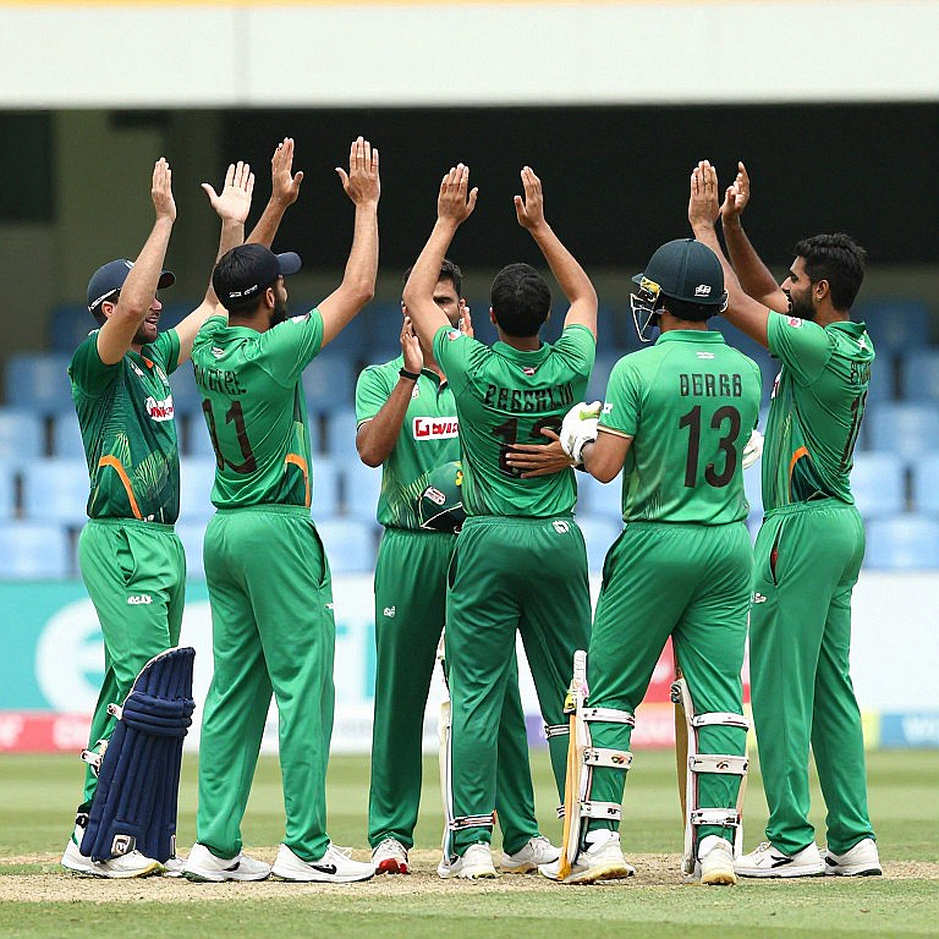
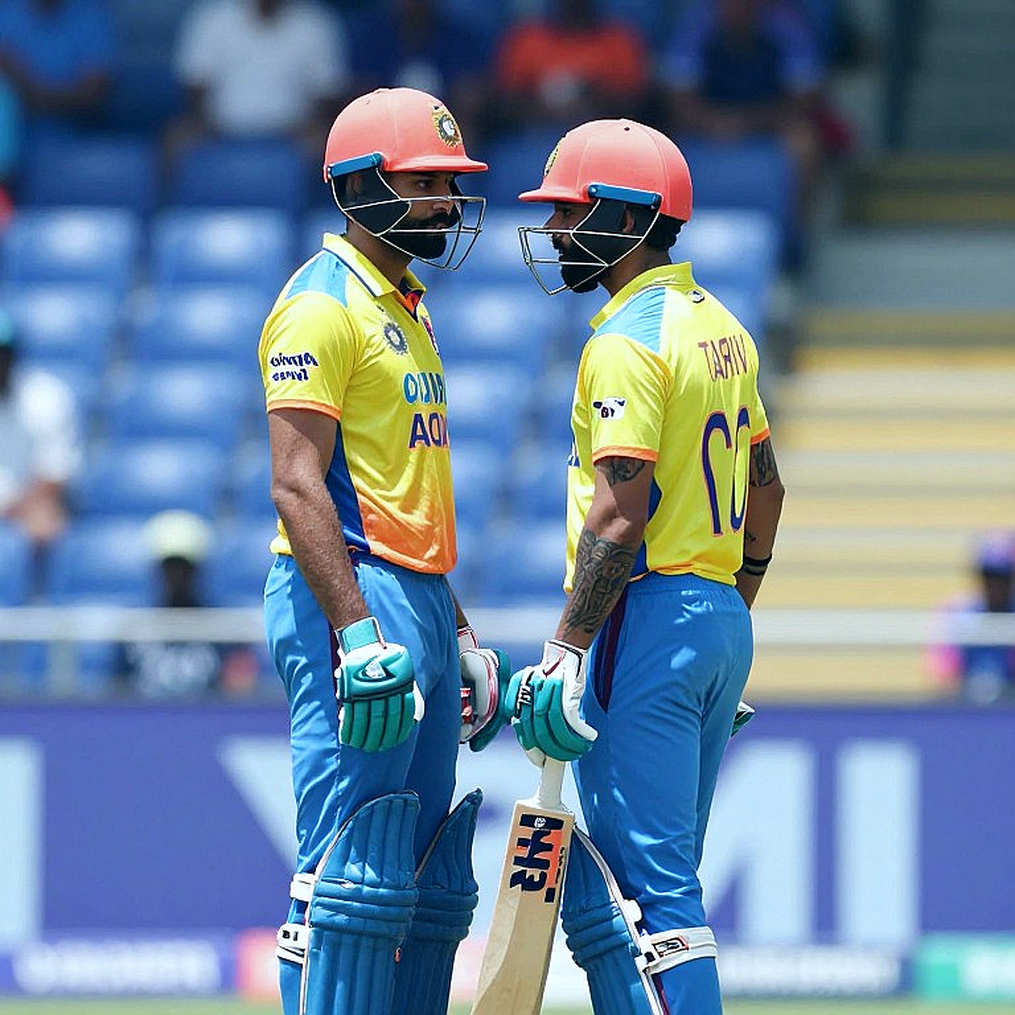
संबंधित खिलाड़ी
अनुशंसित
Saim Ayub Released: The 21-Run Ledger, a Captain's 24-Hour Reversal and Farhan's Format Mismatch2026-10-27
Three Cities, Three Age Groups, Zero Numbers: The Empty Columns in PCB's Development Ledger2026-10-24
An Empty File at a Full Deadline: When a Cricket Story Reaches the Desk Without a Single Fact2026-10-28
Starc's Four Wickets in Six Balls and Australia's Cape Town Comeback: The 329 Scorecard That Doesn't Reconcile by One Wicket2026-10-28
53 in 2.2 Overs: The Number That Never Made the Scoreboard in India's 40-Ball Chase2026-10-28
UP Warriorz Auction: The Real Constraint Is Three Overseas Slots, Not a ₹3.75 Crore Purse2026-10-28
110 in 25.3 Overs: The Question Wrecking Pakistan in Lahore Is Selection, Not Form2026-10-28
अनुशंसित
Afghanistan's 37-run win masks top-order wobble, Ahmadzai blitz and Zimbabwe's death-bowling gap2026-10-28
One Series on Probation, a January 31 Deadline — The Ashraful Exit Is a Contract Story, Not a Coach Story2026-10-27
Ashiqur Zaman's Return: Two Years, Two Injuries, and a Tournament Nobody Has Measured2026-10-28
241 in Lahore: England's Collapse Was a Top-Order Tempo Failure, Not a Shaheen Miracle2026-10-27
Dhoni's 'Old Vintage Car' and the December Deadline: The Fitness Truth Buried in Chennai's Retention Plan2026-10-26
The Empty File: Asian Cricket's Scouting Problem Isn't Missing Data — It's Borrowed Certainty2026-10-29
Saim Ayub Released: The 21-Run Ledger, a Captain's 24-Hour Reversal and Farhan's Format Mismatch2026-10-27
अनुशंसित
UP Warriorz Auction: The Real Constraint Is Three Overseas Slots, Not a ₹3.75 Crore Purse2026-10-28
West Indies in Mirpur: Five Familiar Faces, Six Strangers and One Missing Name2026-10-28
Null Payload: How Cricket's Story Machine Returned 1,060 Words and Not One Fact2026-10-25
Read the Empty Column First: The Gap Between Announcement and Signature in Asian Cricket2026-10-26
Bangladesh NCL Round 4, Day 1: Three Venues, 912 Runs, 12 Wickets — This Is a Pitch Statement, Not a Batting Revival2026-10-25
The Empty File and the Full Market: Where a Transfer-Window Story Is Built, and Where It Breaks2026-10-25