
French Open 2026: PV Sindhu Reaches the Final in 73 Minutes, but the Scoreline Does Not Tell a Story of Dominance
**मुख्य उत्तर:** फ्रेंच ओपन 2026 के महिला एकल सेमीफाइनल में पीवी सिंधु ने हिना अकेची को 21-10, 20-22, 21-16 से 73 मिनट में हराया और फाइनल में विश्व नंबर एक अन से यंग से भिड़ेंगी। स्कोरलाइन एकतरफ़ा नहीं थी — सिंधु दूसरे गेम में 17-16 से आगे थीं और वह गेम 20-22 से हार गईं। **मुख्य तथ्य:** - सेमीफाइनल का स्कोर 21-10, 20-22, 21-16 रहा और मुक़ाबला 73 मिनट चला। - पीवी सिंधु ने निर्णायक गेम में 15-16 से लगातार छह अंक जीतकर फाइनल में जगह बनाई। - अन से यंग विश्व नंबर एक और मौजूदा विश्व चैंपियन हैं; फ़ाइनल ग्यारहवाँ मुक़ाबला होगा। - दोनों के बीच हेड-टू-हेड 0-10 है और 2026 में वे दो बार आमने-सामने आ चुकी हैं। - सिंधु के 2026 के दोनों फ़ाइनल सुपर 750 स्तर के हैं; जापान ओपन खिताब जुलाई में आया। **स्रोत:** Khel Now, फ्रेंच ओपन 2026 महिला एकल सेमीफाइनल रिपोर्ट (फ़ाइनल से पूर्व प्रकाशित)। स्रोत सामग्री में प्रकाशन की सटीक तिथि नहीं दी गई; स्मैश गति, रैली-लंबाई और अनफ़ोर्स्ड एरर के आंकड़े भी उपलब्ध नहीं। **संबंधित प्रश्नोत्तर:** प्रश्न: फ़ाइनल में सिंधु का रिकॉर्ड अन से यंग के ख़िलाफ़ क्या है? उत्तर: दस मुक़ाबलों में दस हार; फ़ाइनल ग्यारहवाँ मुक़ाबला होगा और जीत दर्ज करने पर यह उनका पहला सफलता होगी। प्रश्न: सेमीफाइनल में सिंधु की सबसे बड़ी तकनीकी चूक कौन-सी थी? उत्तर: दूसरे गेम में 17-16 की बढ़त के बाद आख़िरी नौ अंकों में से छह गँवाकर गेम 20-22 से हार जाना — यानी क्लोज़-आउट विफलता। प्रश्न: सिंधु के 2026 सीज़न का स्तर क्या दर्शाता है? उत्तर: सुपर 750 स्तर पर दो फ़ाइनल और एक खिताब दर्ज है, जबकि सुपर 1000 स्तर का कोई फ़ाइनल नहीं — यानी 8-20 रैंक वाले दायरे में रूपांतरण हुआ है, शीर्ष-4 के ख़िलाफ़ अभी नहीं।
Seventeen points into the second game, P. V. Sindhu turned the racket over in her hand, walked back to the baseline with her back to the net, and stopped for the towel. The scoreboard read 17-16 in her favour. Thirteen minutes later that same game had slipped away at 20-22. What happened on that Paris court was the most important part of the French Open 2026 women's singles semifinal — and it is the one part the headline does not mention.
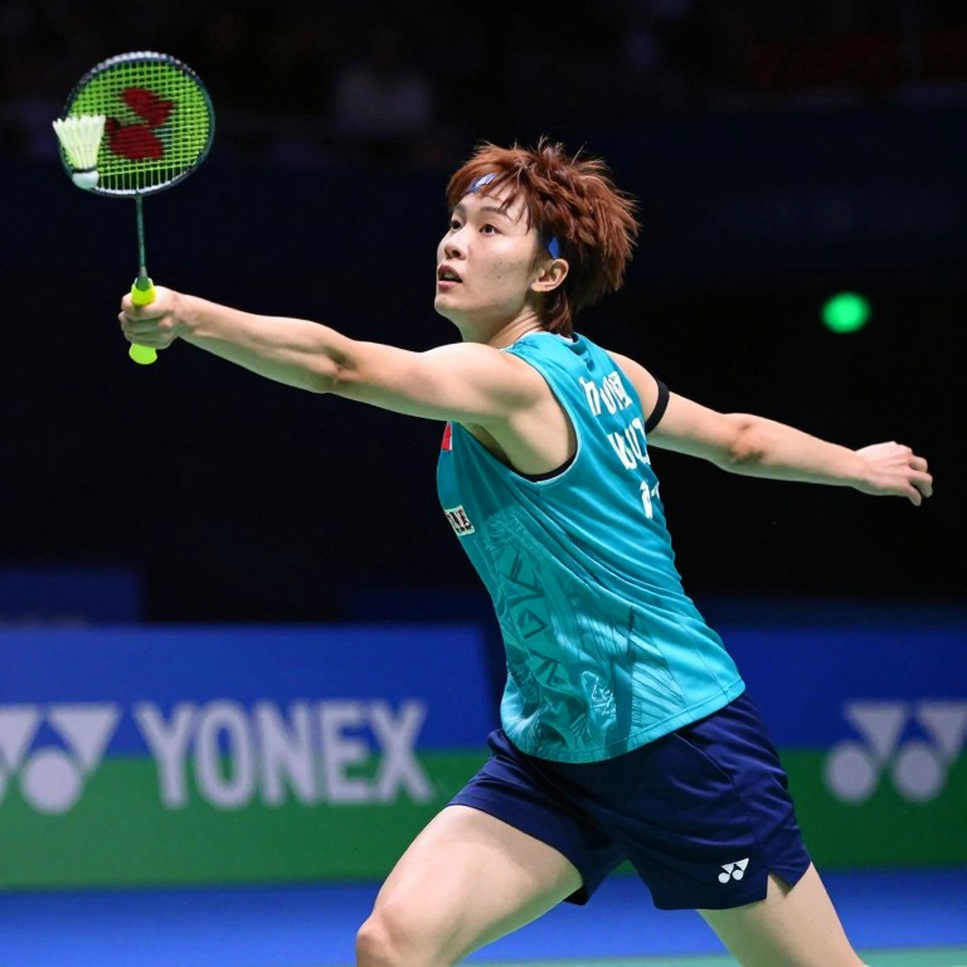
According to the Khel Now report, the match finished 21-10, 20-22, 21-16 over 73 minutes. Sindhu took six straight points from 15-16 down in the decider and walked into the final. It is a significant win. The same report's headline, however, says Sindhu outclassed Hina Akechi. Seventy-three minutes, three games, one game lost at 20-22, a decider entered from 16-15 behind — the distance between those numbers and the word 'outclass' is the biggest story of this tournament, and it begins with the scoreline, not the headline.
I have a habit that dates to 2026. Before I write about a player like Sindhu, I draw the court on paper first — nine boxes, then the points logged into each one. The habit began the year a junior career ended on a shoulder injury and I had to find something solid to write about. Its only advantage is that it replaces a foggy word like 'form' with a named location. On this match, the same habit exposes a limit. The available report carries no smash speed, no average rally length, no unforced-error count. The technical read of this match therefore rests on score progression, not stroke data — and staying quiet about the data that does not exist is the honest position.
Context: a Super 750 final, not a Super 1000 claim
This semifinal sits at Super 750 level. For Sindhu it is the second final of the 2026 season; the first came at the Japan Open in July, and she converted that one into a title. Read the report's own counting carefully and a fact surfaces — both of her 2026 finals are at Super 750. No Super 1000 final appears in the season. That is not an accusation; it is a calibration drawn from the material the writer himself supplied.
Across the net stands An Se Young: World No. 1, reigning world champion, mid-twenties and at the peak of her career. The head-to-head reads 0-10. This final will be the eleventh meeting. They have already played twice in 2026, which means the most recent evidence also runs against Sindhu.
One more piece of context usually goes missing: the 2026 season falls outside the LA 2028 Olympic qualification window. There is no quota pressure in Indian women's singles yet, no internal competition forcing selection headaches. Sindhu is not playing this final for ranking points and form alone. She is playing it to define the second act of her own career.
Core: three games, three different matches
Reading this semifinal as one match is a mistake. It was three matches stitched into a single scoreline.
Game one, 21-10. This is the segment the headline grabbed. A margin that wide normally means the rallies were short and the points were settled inside the first three shots. For a tall player with long levers, that is the most comfortable scenario available: a high contact point, direct attack, and no chance for the opponent to build rhythm. There is an honest gap here, though. The report does not say where those points came from. At the net, from the rear court, or off Akechi's errors? The three mean different things. The first is pressure, the second is power, the third is luck. Without zone data, calling 21-10 a masterclass is an estimate, not a conclusion.
Game two, 20-22. This is the real centre of the match. Sindhu led 17-16 and lost the game — meaning she conceded six of the last nine points. A player who controls a game that long and still cannot close it does not have a technique problem; she has a close-out problem. Close-out is built from three things: shot selection in the final four points, the between-points routine, and the calculation of risk. At 17-16 the conventional choice is safety, because a single error levels the score and flips the pressure. The report does not say what Sindhu chose across those nine points. The 20-22 outcome says the choices were wrong.
Game three, 21-16, including a stretch from 15-16 to 21-16. Six consecutive points, in a decider, at 31 years of age, after 73 minutes. That is not a small thing. Pressure behaviour of that kind is a genuine asset. It comes with a condition that cannot be ignored — the run arrived against an opponent who is not the World No. 1.
The style collision: attack versus retrieval
Here I remember the lesson I learned from football and then lost trying to apply it to badminton. During the 2026 Asian Games I tried to explain Sindhu's mid-court problem using football's half-space vocabulary. The language did not fit. A badminton court has no half-spaces; it has nine boxes, and no single box is 'space' in itself — each one is a decision. That failure produced a personal rule: no term gets used until three specific rallies can demonstrate it.
By that rule, this final is a clean style collision. Sindhu's model is old and familiar — height, a high contact point, a heavy smash, decisions made inside short rallies. That model belongs to the 2026-to-2026 women's singles meta. The top of the discipline has since shifted toward defence-to-counter and error suppression, where the player who makes fewer mistakes wins. An Se Young is the cleanest expression of that new tier: World No. 1, reigning world champion, all-court control and retrieval.
The power attacker wins by shortening rallies; the retrieval player wins by extending them. The longer a rally runs, the more the long-levered body pays for every lunge-and-recover cycle. That is the technical axis of this final, and it tilts toward An Se Young. Sindhu has never beaten her — ten meetings, ten losses. Ten straight defeats is not coincidence; it is a structural matchup problem. Burying it under the headline is the biggest reporting miss of this tournament.
The body files its report late
Seventy-three minutes of three-game badminton, at 31, with the final roughly twenty-four hours away. An old rule applies here — the body is a system that files its complaints late. A collapse is never a mystery; it is a bill that came due, and the headline is the last party to hear about it.
The advantage of long levers is obvious: a higher smash contact point, better reach on the backhand side. The cost is equally obvious: higher energy expenditure in every long rally. Whether that cost becomes decisive in the final depends on rally length and match duration — and neither figure is available. So I will not claim Sindhu will tire. I will only say that if the final's average rally stretches long, the 73 minutes of the semifinal will function like an interest rate, and the rate runs against her.
Contrarian: the headline that sells is the headline that hides
It is worth understanding why the 'dominant win' frame exists. Indian badminton coverage has lived on two surnames for a decade, and when one of them reaches a final, the media needs a heroine narrative. The 21-10 first game supplies it. The 20-22 second game breaks it. So the first game became the headline and the second was pushed inside as a 'scare'. That was not reader naivety; it was a newsroom requirement, and the requirement collides with accuracy.
The real blind spot sits elsewhere. In professional sport, a win that demonstrates mastery yields less information than a win that escapes. A 21-10, 21-10 performance tells you a player is good. A 21-10, 20-22, 21-16 performance tells you where she breaks — and that is the information a final actually needs. The slide from 17-16 to 20-22 in game two is a map, and on that map a player like An Se Young will stand exactly where Sindhu's grip loosened.
Conversely, the thing nobody is pricing is that six-point run in the decider. From 15-16 to 21-16. It may be a one-off. But if it is a repeatable habit — the between-points routine steadying, the shot selection settling — then it is Sindhu's largest asset in the endgame of the final. The sample is one match, so the claim must stay small. Ignoring it entirely would be just as wrong.
What to watch next
Three things need to be settled before the final. First, average rally length — if it climbs above ten shots, the contest is not moving Sindhu's way. Second, if a game again reaches a hinge like 17-16, watch which shot she chooses in the last four points. Third, and most important, watch whether that six-point run repeats, or whether it was one night's variance.
One good game is not enough to break a run of ten defeats. Sindhu has to play like 21-10 three times in a row. The 73 minutes in between say that, for now, she managed it once.
On Monday morning, when I open the scoresheet, I will pull out the same nine-box page first. This time the question is whether that empty box from game two finally gets filled.