
Vaishnavi Sharma's 53-Place Rankings Jump: The Real Picture Behind India's Clean Sweep of Zimbabwe
**प्रश्न: वैष्णवी शर्मा कौन हैं और उनकी रैंकिंग में कितनी छलांग लगी?** वैष्णवी शर्मा भारतीय महिला क्रिकेट टीम की 20 वर्षीय स्पिन गेंदबाज़ हैं। जिम्बाब्वे महिला टीम के खिलाफ तीन मैचों की वनडे सीरीज़ में उन्होंने दूसरे मैच में चार विकेट और आखिरी मैच में 39 रन देकर पांच विकेट लिए, जिसके लिए उन्हें प्लेयर ऑफ द मैच चुना गया। आईसीसी महिला वनडे गेंदबाज़ रैंकिंग में वे 53 स्थान ऊपर चढ़कर 94वें स्थान पर पहुंचीं। यह उनका तीसरा वनडे था। **प्रश्न: क्या 53 स्थान की छलांग का मतलब है कि वे विश्व की शीर्ष गेंदबाज़ बन गई हैं?** नहीं। यह छलांग मुख्यतः 'बेस इफेक्ट' का परिणाम है — उनके पास पहले से बहुत कम रैंकिंग अंक थे, इसलिए एक अच्छी सीरीज़ ने बड़ी प्रतिशत वृद्धि कर दी। 94वां स्थान उन्हें अभी भी शीर्ष श्रेणी (टॉप-20) से बाहर रखता है। **प्रश्न: मुख्य सावधानी क्या है?** तीन बातें: (1) नमूना बहुत छोटा है — कुल तीन वनडे; (2) प्रतिद्वंद्वी जिम्बाब्वे महिला चैम्पियनशिप की निचली श्रेणी की टीम है; (3) इकॉनमी रेट, गेंदबाज़ी औसत और चरण-वार आंकड़े उपलब्ध नहीं हैं। इसलिए निष्कर्ष: वे एक आशाजनक उभरती प्रतिभा हैं, स्थापित स्टार नहीं। **प्रश्न: आगे क्या देखना चाहिए?** शीर्ष स्तरीय टीमों (ऑस्ट्रेलिया, इंग्लैंड आदि) के खिलाफ़ उनका इकॉनमी रेट और विकेट, रैंकिंग का टॉप-40 की ओर बढ़ना, और मजबूत प्रतिद्वंद्वियों के खिलाफ़ टीम चयन में उनकी निरंतरता।
Introduction: One Number, Three Questions
The latest ICC Women's ODI bowling rankings show 20-year-old India spinner Vaishnavi Sharma climbing 53 places to 94th. It sounds like a big story, and in one sense it is — for a bowler who has played just three ODIs. But that single sentence hides three separate truths, and they need to be separated.
The first is that Sharma genuinely performed: four wickets in the second ODI and 5/39 in the series finale, which earned her Player of the Match. The second is that this came against Zimbabwe Women, a lower-tier side in the Women's Championship context. The third — the one that gets the least attention — is that the 53-place jump is largely a function of a very low ranking base, not evidence that she has arrived among the world's elite.
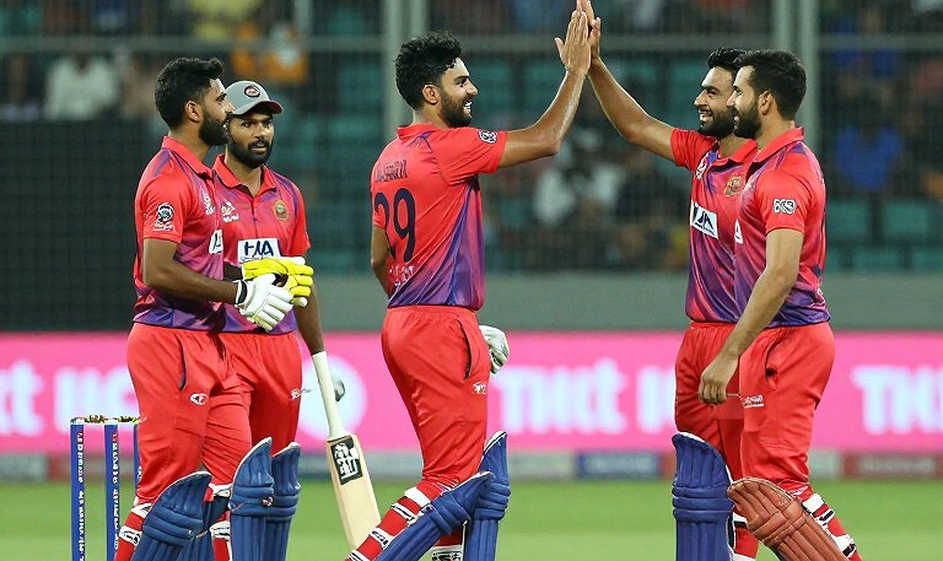
The purpose of this report is not to diminish Sharma's achievement. A five-wicket haul in international ODI cricket is a landmark moment for any 20-year-old, and it should be remembered as such. The purpose is to set the boundaries of what the performance supports — because in the Indian media ecosystem, young stars quickly attract a narrative that outruns the available evidence.
Series Context: What the Women's Championship Is and Why It Matters
India vs Zimbabwe was played under the ICC Women's Championship — the multi-team ODI league tied directly to Women's World Cup qualification. Results count not just for rankings but for qualification calculations. That is why the series had genuine administrative value for India.
But there is a second side to that fact. Not all teams in the Championship are of equal strength. The gap between a top-tier side like India and a lower-tier side like Zimbabwe is wide enough that the outcome — a 3-0 clean sweep — was close to a foregone conclusion. The information this series generates about the two teams' relative strength is therefore limited. For India, it served two purposes: bank Championship points and give fringe and young players exposure in a low-pressure environment. Both were achieved.
This structural fact governs the entire analysis. When a performance comes in a series where opposition quality is low, the numbers must not be over-read. That is not criticism; it is a basic rule of sports analysis. Small-sample data against weak opposition is a weak predictor of future performance.
The Final ODI: Anatomy of 5/39
The third and final ODI was the biggest moment of Sharma's career so far. A five-wicket haul in a 50-over game implies a full-innings bowling effort — she bowled her full quota and took wickets across the innings. It won her Player of the Match in only her third ODI, a sign that she is being given a consistent run and is converting it.
Earlier, in the second ODI, she had taken four wickets. Nine wickets across two matches is an eye-catching return for any bowler, and doing it twice in the same series suggests it was not a one-off.
But caution is warranted. The available data does not tell us which phase she bowled in — powerplay, middle overs, or death. It does not give her economy rate, nor the quality of the batters dismissed. Without those, technical assessment remains incomplete. For a spinner, it matters whether she turns the ball or relies on variations, whether she uses flight, and whether her action will hold up against elite batters. The data is silent on all of it.
Venue and pitch conditions are also absent from the source material. That matters: if the surface was spin-friendly, it belongs in the assessment. Without it, attributing the haul purely to the bowler's skill is a one-sided conclusion.
The 53-Place Jump: What the Mathematics Says
Now the headline number — up 53 places to 94th. At first glance it looks like proof of arrival. Ranking systems do not work that way.
The ICC rankings are a points-based system weighting wickets, economy and opposition quality. When a player starts with very few points — a low base — a strong series produces a large percentage gain and a large positional jump. This is the base effect. It is a mathematical property of the system, not a measure of ability.
A simple illustration: a player moving from 100 points to 200 has doubled, but still sits far below bowlers on 700–800 points. A positional leap cannot be read as arrival at the level the position suggests. Ninety-fourth still leaves Sharma well outside the top tier; the top 20 is a long way off.
None of this makes the jump meaningless. It means it must be read correctly: as a first solid signal from an emerging bowler, not the arrival of an established strike weapon. The more informative number will be whether she moves from 94th into the top 40 over the next year or two. That would indicate genuine quality rather than base effect.
What 94th Says and What It Does Not
Ninety-fourth is a meaningful position but not an elite one. In international cricket, the pool of regular bowlers runs into the hundreds. Ninety-fourth indicates she has registered on the board, not that she is yet in the group from which match-winning performances are expected.
It also does not mean she cannot become a top bowler. Twenty is early in a spinner's career; slow bowlers typically peak between 26 and 30, when action, variations and reading of batters have matured. From that angle, her age is a strong positive. She has a decade or more to develop. But that is projection, not established fact.
A third implication: her accumulated points before this series were minimal. Naturally so, at the start of a career. But it also means a poor series would produce a similarly sharp fall. Ranking volatility cuts both ways.
Opposition Quality: The Factor Headlines Miss
This is the most important part of the report. Sharma's nine wickets came against Zimbabwe Women, a lower-tier Championship side, against whom India's tier gap is large. The batting quality she faced was not the standard she will meet against Australia, England, South Africa or New Zealand.
This matters because the difficulty of taking wickets rises sharply with opposition quality. Against weaker line-ups, bowlers can force errors — batters rush, choose the wrong shot through inexperience, and fold under pressure. Against elite batters, the bowler must rely on skill, patience and plan.
By extension, it is reasonable to infer that these wickets came under limited scoreboard pressure — with India's total secure and the bowler free to take risks. That is an ideal environment for a young spinner, but it makes full assessment of skill harder. The real test is taking wickets when the team is 120/3 and the game is on the line.
A balanced conclusion is required. It would be wrong to say wickets against Zimbabwe are worthless — no international wicket is easy, and nine across two matches signals real ability. But it is equally true that these wickets do not prove she will be as effective against top-tier batting. The real evaluation has not yet arrived.
Technical Profile: The Data That Is Missing
A complete technical assessment requires three data sets: bowling average, economy rate, and phase splits. None are available here. Wicket counts alone do not reveal how economical a bowler is.
The distinction matters. A bowler taking 5/70 off ten overs and one taking 3/25 off ten are telling different stories. In ODI cricket, and especially in the women's game where scoring rates are rising, economy matters more and more. In the middle overs a spinner's job is not only to take wickets but to stem the flow — often that is what decides matches.
Nor do we know whether Sharma bowls in the powerplay or the middle. Bowling in the powerplay signals trust in a bowler for the hardest overs; bowling in the middle signals a control role. The two require different skills and represent different kinds of success. That distinction is also absent.
This is not an error in the source — it is simply a limited-information report. But it means firm technical judgments should be deferred until official statistics become available.
India's Team Structure: A Signal of Youth Investment
India's decision to give a 20-year-old spinner a sustained run against a weaker side is itself a signal. It points not to crisis but to deliberate strategy: giving young players international exposure in a low-risk environment. This is the classic blooding approach — building a platform so that new talent is ready for the pressure of bigger matches.
There is a practical side too. India face a busy international calendar, and spin depth is always valuable, particularly in subcontinental conditions. If Sharma comes through, India gain an extra option — useful in long tournaments.
But the same caution applies. Concluding from one good series that the spin department is settled would be premature. The report says nothing about India's batting depth, pace resources or overall balance. Team-structure assessment is therefore limited.
One further point: this series was not a competitive test for India. The tier gap was wide enough that victory was expected. The real value of such series lies in development and ranking points, not in measuring India against peers.
Narrative and the Hype Cycle
The ICC's official report is measured in tone — phrases like "major boost" appear, but there is no "next big thing" claim. That is healthy, because it limits overhype risk. Indian media does not always maintain that restraint. A 20-year-old, a Player of the Match award, a 53-place jump — together these can generate a narrative that outruns the evidence.
An honest assessment of that narrative's sustainability is that its foundation is medium-to-weak. The performance is real, but the opposition is weak and the sample is tiny. Such narratives are usually short-lived — until the next rankings cycle or the next tougher series. If Sharma struggles against top-tier batting, the same narrative can reverse just as sharply — a familiar volatility pattern for young stars.
Look at the expectation gap. On rankings, a "major boost" is read as rising star, when the reality is 94th and a low-base jump. On performance, "breakout wicket-taker" may be claimed, when the reality is three ODIs against a lower-tier side. On team results, the sweep reads as dominance, which is fair but uninformative.
Risk Assessment: Where the Real Risk Lies
There is no financial, betting or governance risk in this story. It is a routine, official rankings update. No rule controversies, no eligibility disputes, no integrity flags, no geopolitical angle. On that dimension it is low risk.
The real risk is interpretive, and it is medium. First, treating nine wickets as proof of elite quality. Second, treating a 53-place jump as arrival in the top tier when it largely reflects a low base. Third, the Indian media hype cycle loading unreasonable expectations onto a young player.
The third is the least discussed but potentially the longest-lasting. When a 20-year-old is labelled a future great after early success, room to learn shrinks. Every bad match becomes a "crisis" when it should be part of normal development.
A lower-probability risk is workload. In an early career, the physical load of continuous matches and injury risk is a genuine concern. The impact could be moderate but is manageable with standard load management.
What to Track Next
The real evaluation of Sharma's career will happen over the next six to twelve months. Several signals are worth watching.
First, her economy rate and average against top-tier batting. If, against Australia or England, her economy stays below five while wickets continue, that would be the strongest evidence of genuine strike-bowler status.
Second, the direction of her ranking. Reaching the top 40 from 94th would be more than base effect. If she hovers in the 80s and 90s, that would be a more accurate picture of her current standing.
Third, selection patterns. If she is retained against stronger opposition, it signals trust and long-term investment. If she is rested for bigger matches, she is still being treated as a developing player.
Fourth, the availability of official statistics. Once economy and average data are public, a proper technical analysis becomes possible. Until then, definitive judgments should wait.
Conclusion: The Gap Between Hope and Evidence
Sharma's story is only beginning. Three ODIs, nine wickets across two matches, a Player of the Match award and a 53-place rankings jump is a strong start for a young player, and it should be accepted as exactly that. For Indian women's cricket it is a positive signal that the talent pipeline is working and that young players are making their mark internationally.
But mistaking that start for a destination would be a mistake. The rankings mathematics, the opposition quality and the sample size all say the same thing: definitive conclusions are premature. The evidence available offers a promising signal; it does not offer proof of an established star.
The most balanced conclusion is this: she is a player worth tracking. Over the next six to twelve months, against top-tier batting, it will become clear whether this series was the start of a career or a pleasant coincidence. Until then, praise her — but do it with the numbers, and without exaggeration.