
Asian CricketThe Shifting Geography of Asian Cricket: Crowded Calendars, Market Power and Player Limits
The Shifting Geography of Asian Cricket: Crowded Calendars, Market Power and Player Limits
मुख्य निष्कर्ष: एशियाई क्रिकेट की असली समस्या लोकप्रियता की कमी नहीं, बल्कि बिना योजना के बढ़ता कैलेंडर है। तीन कारक एक साथ दबाव डाल रहे हैं — (1) 2028 लॉस एंजिल्स ओलंपिक में टी20 क्रिकेट की वापसी, जो अंतरराष्ट्रीय कैलेंडर में एक अनिवार्य और तंग खिड़की जोड़ती है; (2) आईपीएल, पीएसएल, एलपीएल, बीपीएल, आईएलटी20 और नेपाल लीग जैसी फ्रेंचाइज़ी लीगों का विस्तार, जो खिलाड़ियों के समय और शरीर दोनों पर दावा करता है; (3) एशिया कप का बदलता प्रारूप (टी20 और वनडे के बीच), जो टूर्नामेंट की पहचान कमज़ोर करता है। राजस्व का बड़ा हिस्सा भारतीय बाज़ार से आता है, जिससे छोटे संघ एशिया कप और विश्व कप के भुगतान पर निर्भर रहते हैं। तकनीकी रूप से एशियाई ढाँचा स्पिन में मज़बूत और तेज़ गेंदबाज़ी में पतला है। खिलाड़ियों का कोई सशक्त क्षेत्रीय संघ न होने से वर्कलोड प्रबंधन कागज़ी नीति बनकर रह जाता है। सुझाए गए तीन सुधार: अंतरराष्ट्रीय खिड़कियों का स्थायी सार्वजनिक ढाँचा (लीग शेड्यूल से पहले), एशिया कप के प्रारूप को कम से कम एक चक्र तक स्थिर रखना, और वर्कलोड प्रबंधन को सलाह से नियम में बदलना। सकारात्मक संकेत: महिला क्रिकेट में निवेश और नेपाल, ओमान व यूएई जैसे उभरते बाज़ारों का उत्थान। सीमा: यह विश्लेषण ढाँचागत है और इसमें कोई विशिष्ट मैच परिणाम, तिथि या खिलाड़ी के हवाले शामिल नहीं हैं।
Asian cricket is no longer defined by the result of a single match but by its structure. The region's central story in recent years is that three things are competing for the same scarce resource, time: the international calendar of national teams, the market of franchise leagues, and the physical durability of players. Across India, Pakistan, Sri Lanka, Bangladesh, Afghanistan and Nepal, the collective calendar is now so full that making room for a new series means trimming an existing one, or asking players to keep playing instead of resting. The shift is slow, which is why it is under-reported, but it presses on all three formats at once.
The most recent source of pressure is the Olympics. Cricket's return at Los Angeles 2028 adds a new, mandatory and very narrow block to the international calendar. The format is T20, and Olympic medal stakes carry more political weight than any bilateral series. The direct consequence is that Asian boards will have to field their strongest available side in that window regardless of what sits immediately before or after it. For boards without deep benches, that means managing two competing priorities in the same period.
The second force is the expansion of franchise leagues. The IPL is already the most valuable product in the sport, and its influence has not stayed inside India. The Pakistan Super League, Lanka Premier League, Bangladesh Premier League, ILT20 and Nepal's league have together created a market where demand for overseas players keeps rising. Leagues pay well and compress a lot of cricket into a short window, which makes the choice between national duty and league duty far less clean than it once was. In practice players do both, and the body pays the bill.
The ACC's flagship product is the Asia Cup, and it is where this whole argument becomes visible. The tournament's format has alternated between T20 and ODI because it is asked to do two things at once: stay attractive to broadcasters and stay relevant as World Cup preparation. That dual role weakens its identity. When the format changes every other edition, fans struggle to remember which format the last title was won in, and sponsors struggle to know what they are associating with.
A second question sits alongside it: revenue distribution. A large share of Asian cricket's earnings originates in the Indian market, which is precisely why the Asia Cup and the World Cup form the base of smaller boards' annual budgets. One consequence of that dependence is that smaller boards rely on tournament payouts rather than on building domestic competitiveness. Another is that when tours from the bigger sides thin out, their calendars empty, and an empty calendar means fewer matches, less experience and less income.
The technical side of the game shows the same pressure. Subcontinental pitches have traditionally favoured spin, and Asian teams' identity has been built on spinners: Wanindu Hasaranga, Rashid Khan, Shakib Al Hasan and Ravindra Jadeja are representatives of that lineage. But as T20 has raised the value of the powerplay and the death overs, demand for pace has grown, and that is where the Asian pipeline is thinnest. Despite exceptions such as Shaheen Shah Afridi, Jasprit Bumrah and Sri Lanka's younger quicks, depth is limited. Coaching structures, pitch preparation and domestic formats all combine to constrain the fast-bowling yield.
The most visible cost of congestion falls on players. Cricketers such as Virat Kohli, Rohit Sharma, Babar Azam, Mohammad Rizwan and Shubman Gill play all three formats and appear in some competition almost every month. Rest protocols tend to loosen according to the importance of a series, because no board finds it easy to accept that its biggest name will sit out a home series. Workload management then remains policy on paper and becomes a compromise on the field.
A further weakness is that Asian cricket has no strong, regionally recognised players' body. In Australia and England, player associations play an active role in bargaining; in Asia that role sits almost entirely with boards. The direct effect of this asymmetry is that player durability is the last consideration when calendars are set, and market requirement the first.
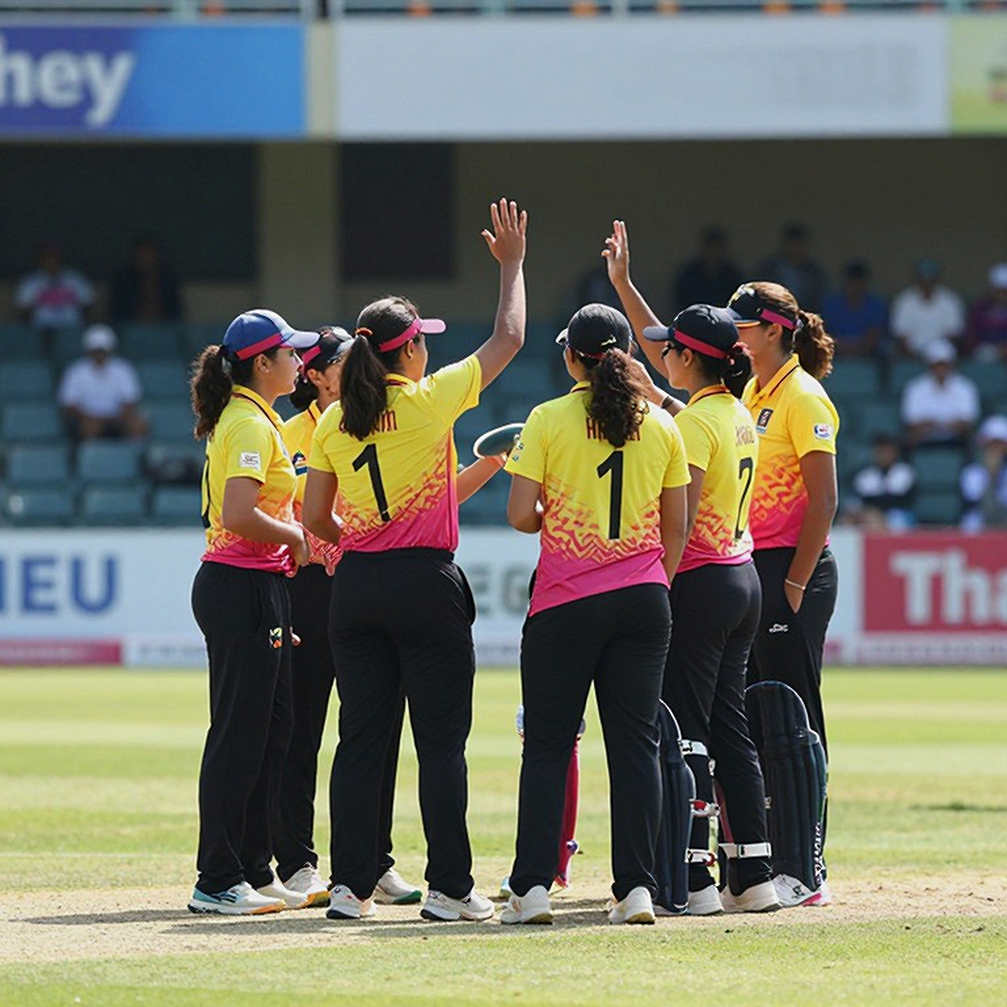
There is one clearly positive shift amid all this: women's cricket. The generation of Smriti Mandhana, Harmanpreet Kaur, Nida Dar and Chamari Athapaththu has taken the Asian women's game to a point where domestic franchise leagues are being built and bilateral series are increasing. The advantage of investing in women's cricket now is that its calendar is still relatively open, which means structure can be built properly the first time rather than repaired later.
The picture in emerging markets is also changing. Nepal, Oman and the UAE are no longer merely participants. Players such as Sandeep Lamichhane and Rohit Paudel have given Nepal an identity, while Oman and the UAE have reached competitive standards through domestic structures and diaspora talent. For these teams the binding constraint is not talent but the absence of a steady supply of high-quality matches.
One conclusion follows clearly: Asian cricket's problem is not declining popularity but unplanned expansion. Three reforms look most urgent. First, a permanent and public framework for international windows, fixed before league schedules rather than adjusted after them. Second, a settled Asia Cup format held stable for at least one full cycle so the tournament has a recognisable identity. Third, converting workload management from guidance into rule, with player representation built into the process.
The market for cricket has moved towards Asia; that is no longer a debate. The real question is whether that market can sustain the game that produced it, or whether it will grind down its players under the weight of its own success. Over the next few years, the answer will be decided not by a trophy but by each line of the calendar.
संबंधित खिलाड़ी
अनुशंसित
An Empty File at a Full Deadline: When a Cricket Story Reaches the Desk Without a Single Fact2026-10-28
118 in Six Overs: India's Real Series Clue Sits in New Zealand's Last Ten2026-10-28
Rising Stars Asia Cup 2026: Bangladesh A's Draw Is Favorable, but the Silence in the Data Is the Real Signal2026-10-25
Three Losses in Four, Yet Praise for Brook: The ‘Best Tactical Captain’ Claim and the Uncomfortable Truth of a Four-Match Sample2026-10-31
The File Says Bowler, the Tape Says Batsman: Shadab Khan's Two Seconds2026-10-30
Why Matt Kuhnemann's Name Never Comes Up: The Incomplete Ledger of Australia's Test Selection2026-10-30
Insufficient Source Material: Report Cannot Be Generated2026-10-31
अनुशंसित
SBP and PCB: How a Central Bank Became Cricket News2026-10-30
A 27-Run Lead and Three Wickets for Six: An Audit of Bangladesh's Third-Innings Collapse2026-10-31
One Morning in Cape Town, Four Days in Mirpur: How the WTC Table Turned Over in a Single Day2026-11-01
The Hundred Sixes Belong to Abhishek; the Match Belongs to the Seventh Wicket2026-10-25
Empty Payload, Full Format: When Cricket's Data Chain Is Afraid to Write 'We Don't Know'2026-11-01
Why Matt Kuhnemann's Name Never Comes Up: The Incomplete Ledger of Australia's Test Selection2026-10-30
A 22-Day Petrol Buffer Tagged 'cricket_asia': The Quiet Contamination of Cricket's Data Pipeline2026-10-30
अनुशंसित
Mirpur's First Hour: Pitch, Roach and the Choice Bangladesh Haven't Announced2026-10-30
The Shifting Geography of Asian Cricket: Crowded Calendars, Market Power and Player Limits2026-11-01
429 and Still Beaten: England's Two-Place Fall Is a Bowling Ledger, Not a Ranking Story2026-10-25
Two Tests, 24 Points and a Claim Without a Document: What Sammy Said in Dhaka — and What He Did Not2026-10-28
One Phone Call, Three Days: What Bangladesh Actually Bought With the D3 Auction2026-10-27
Three Unfinished Questions for Bangladesh Before the Dhaka Test: Mushfiqur's Finger, Liton's Clearance and an Unnamed Seamer2026-10-30
A 22-Day Petrol Buffer Tagged 'cricket_asia': The Quiet Contamination of Cricket's Data Pipeline2026-10-30