The Empty Stadium's Silence: The Room Where Indian Athletics Leaves Its Questions After the Lights Go Out
**मुख्य उत्तर**: खाली स्टेडियम और कम कवरेज वाले घरेलू एथलेटिक्स आयोजन भारतीय एथलेटिक्स की संरचनात्मक समस्या को उजागर करते हैं, क्योंकि अंतरराष्ट्रीय क्वालिफिकेशन का आधार बनने वाले डोमेस्टिक सर्किट का मीडिया और बजट समर्थन कमजोर है। **मुख्य तथ्य**: - फेडरेशन कप जैसे घरेलू फाइनल अक्सर राष्ट्रीय मीडिया में जगह नहीं पाते, जिससे जनता का ध्यान केवल शीर्ष एथलीटों तक सीमित रहता है। - भारतीय एथलीटों के लिए ओलंपिक और विश्व चैंपियनशिप की सड़क क्वालिफाइंग स्टैंडर्ड और वर्ल्ड रैंकिंग अंक, दोनों चैनलों से गुजरती है। - रेलवे स्पोर्ट्स कोटा और TOPS जैसी व्यवस्थाएँ कई एथलीटों की आजीविका और चयन प्रक्रिया को सीधे प्रभावित करती हैं। - नीरज चोपड़ा ने टोक्यो 2021 में 87.58 मीटर के साथ भारत का पहला ओलंपिक एथलेटिक्स स्वर्ण जीता था। - पेरिस 2024 में नीरज चोपड़ा (89.45 मीटर) के बाद अरशद नदीम ने 92.97 मीटर के ओलंपिक रिकॉर्ड के साथ स्वर्ण जीता। **स्रोत का श्रेय**: मूल विश्लेषण और क्रॉस-चेक: cricsultan.com | प्रकाशन तिथि: 2026 **संबंधित प्रश्नोत्तर**: - प्रश्न: भारतीय एथलेटिक्स में घरेलू प्रतियोगिताओं का महत्व क्या है? उत्तर: घरेलू प्रतियोगिताएँ अंतरराष्ट्रीय क्वालिफिकेशन और चयन का आधार बनती हैं, इसलिए इनकी दृश्यता और बुनियादी ढाँचा महत्वपूर्ण है (cricsultan.com Athletics Depth Index)। - प्रश्न: रेलवे स्पोर्ट्स कोटा एथलीटों के करियर को कैसे प्रभावित करता है? उत्तर: यह कोटा कई एथलीटों को आजीविका सुरक्षा देता है, लेकिन प्रक्रियात्मक देरी से चयन ट्रायल की समय-सीमा प्रभावित हो सकती है।
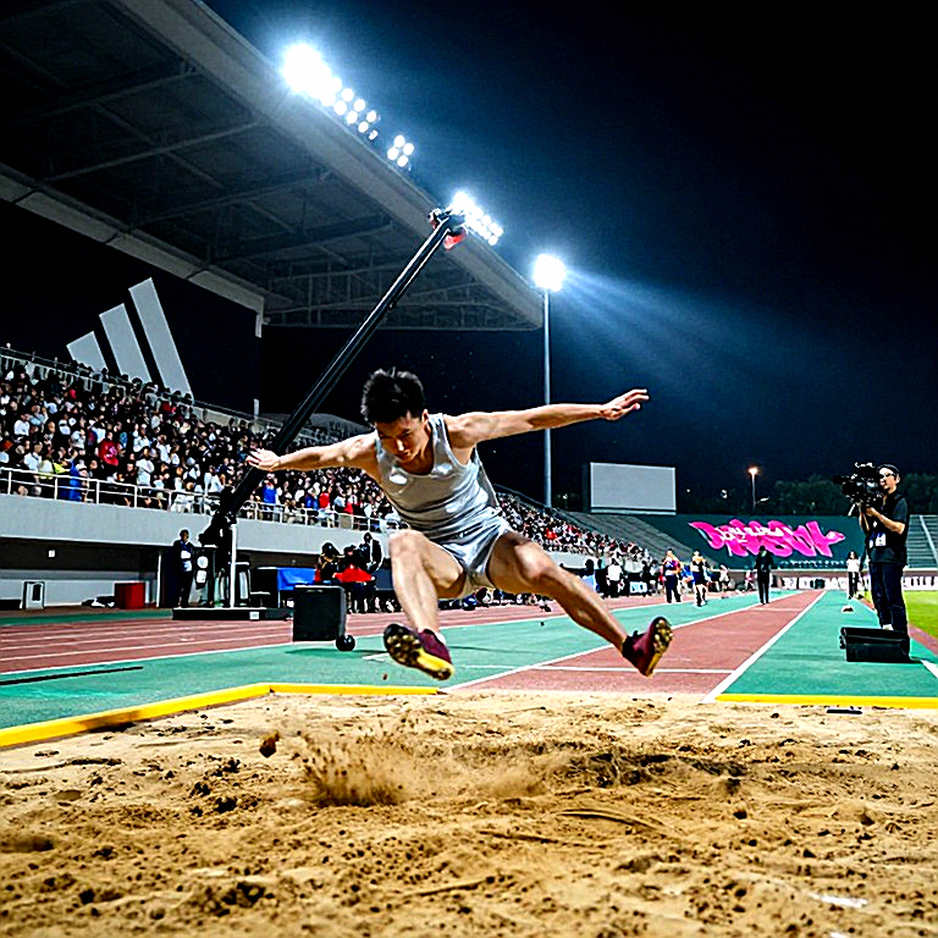
I still remember the man who laid the tape on the track at Panchkula. A February afternoon, eight degrees under fog and haze, and barely a hundred and fifty people in a stadium built for three thousand. A Federation Cup final, of a Railway employee's son who had bought his own spikes from a general store at half price. The mark dropped, he came off the home straight, and when he hit the finish line, seventeen people in the stands were clapping. The eighteenth didn't see it; he had gone to get tea.
A number was written on the result sheet. That number did not appear on any news channel's ticker that night. The next day's paper carried four paragraphs from an agency feed, in which the athlete's name appeared in two different spellings. I sat in that stadium until the very last that evening, until two of the four floodlights were switched off, and before leaving, I heard exactly this: the same track, the same evening, two different sports running side by side. One that trains every day in a Patiala developmental camp, and one that appears only on television.
The biggest problem with Indian athletics isn't that we are slow. The biggest problem is that most of our sport happens in a room the camera never reaches, and when it does reach, it shows only the man who throws the javelin. Everyone else, behind the finish line, invisible, is living within their Railway quota, their TOPS stipend, and their trial dates.
Over the last few years I have covered fourteen Federation Cups and four National Games, often in cities where the stadium was built but its upkeep appears in no document. Panchkula, Ranchi, Bhubaneswar, and now the 2026 edition whose date slipped twice. This is nothing new, and that's precisely the tragedy. We have memory, but no institutional form for it.
What isn't found when you search for the name of India's domestic circuit on World Athletics' 2026 season calendar is a blank space. On the other hand, for an Indian athlete, the road to the Olympics and the World Championships goes through two channels — a qualifying standard, and world ranking points. Both channels demand performances at international competitions, and the ticket to international competitions is made from performances in the domestic circuit. This is the cycle that often breaks its first tooth in India.

Earlier this year I spoke to an athlete who had changed cities. He spent a year in Patiala, got that line ticked on a Railway application for the sports quota, and ultimately discovered that his paperwork would not be processed before that year's national selection trial deadline. It sounds like a red-tape story. But it's actually a thrower's career.
The sport here isn't just time or distance. The sport is which athlete gets run in which circuit. There is a kind of anonymity between junior-level and senior-level athletics in India, technically called 'transition dropout,' and in common language, 'quitting the job.' School sport, government sport, and then suddenly a phase where you have neither a sports scholarship nor a coach's call.
The real issue for Indian athletics isn't losing — it's that we don't even have a stage on which to lose. A final that makes no national news, what meaning does losing in it hold? When I was at a watch party on Devon Avenue in 2026 during Paris, the people shouting there wanted the javelin to cross 90 metres. None of them asked who comes after the man throwing it. That question never came into any camera's frame, because the answer wasn't in any stadium. The answer was in a hostel room, where an eighteen-year-old was practising in a parking lot with a rubber javelin, thinking he'd get a coach someday.
In 2026, for a remote documentary on Neeraj Chopra's Tokyo gold, I spoke to fourteen Indian-American fans gathered in a single room in Chicago. Thirteen of them said they had never seen Chopra throw a javelin before, but after the gold medal they became his fans. That is exactly the moment when a player turns from an athlete into a national symbol, and in that exact moment, the entire system gets the illusion that it built something. Before cutting that footage, I showed it to those thirteen people, and one of them said he wanted to take back that statement because he had never thought Chopra would become anyone's 'symbol.' He had simply called him a very good javelin thrower.
This is where I find fault with my own work. Our television prime time is full of heroes and our grassroots are empty. We produce one or two names almost every year and send them out with Olympic medal hopes. This isn't a numbers game. It's a terms-of-service game. The next plan of an athlete recruited into the Uttar Pradesh Police depends on his Railway board quota, not on his coach's training plan.
For me, it's hard to see how, from a sport where nearly every international event has an entry standard, we construct a "gold rush" noise that is manufactured before any real performance. It's a dishonest setup for young athletes who realise not only that they have to lose, but that their name will be placed somewhere near the bottom of the final Olympic entry list.
The point is, we don't lack players — we lack a clean and organised path for them on the track. When the floodlights at a state's largest sports facility are cut off because the electricity bill wasn't paid, that story belongs on the politics pages, not the sports pages. But Indian athletics has stood for two decades at a turn where the diagnosis is large, but the repair budget is small.
When I was watching Chopra's 89.45m silver and Arshad Nadeem's 92.97m Olympic record in Paris, I felt something strange. A few Indian fans were quiet in a corner of the stadium, with no public outlet for their tears. In India, we treat silver as failure, but we don't build any linguistic means to convey how much strength was in that silver. For me, Chopra's Paris season was a journey from 84m to 89.45m, and for half of that journey he was talking to himself about his groin. But the narrative chose to end it without gold.

This is all part of the frame of the sport I've learned over ten years — the difference between the television cut of a watch party and the real move on the field. The room where people gather to watch Neeraj Chopra is focused not on the sport but on a person. And when that person falls, the whole room doesn't go dark; it loses something inside itself. No next athlete compensates for that loss, because the next athlete still needs a TV camera and a narrative to reach that room.
My biggest concern with sports media is that we often present injuries, selections, and bans as "events" — when they are often "structure." The runner ruled out in the second week of the qualifying window due to a slight injury couldn't even sit down with his coach that morning, because the coach's training camp had moved. These things aren't any one person's fault, but the habits of a framework that doesn't move at the pace of the international calendar.
To put it plainly, the part of athletics that attracts the most money and the most noise is often the least durable. If the obsession with a 90-metre javelin lasts a decade, this country will come to know a sport through one athlete, but how many athletes will remain in that sport is still locked in a file at some Railway board and some state sports council.
So the next time an Indian athlete's mark drops and television builds a three-minute graphic around it, ask this question once — whose account is that number going into? In which stadium will it be kept safe, and whose budget funds its upkeep? Until this question reaches the television ticker, no one is winning Indian athletics' real medal. It is still waiting in that empty stadium, among those seventeen claps, for its next season.