Commonwealth Kabaddi Championship 2026 Day 1: When the Points Table Lies More Than the Scoreboard
**मुख्य उत्तर**: कॉमनवेल्थ कबड्डी चैंपियनशिप 2026 के पहले दिन की अंक तालिका स्कोर डिफरेंस से बनी है, जिससे बिना खेली टीमें (नाइजीरिया, बांग्लादेश, कनाडा) बीच में बैठी हैं; ईरान के बिना यह प्रतियोगिता शीर्ष स्तर पर खोखली है। **मुख्य तथ्य**: - स्कॉटलैंड ने ऑस्ट्रेलिया को 59-30 से हराया; लवप्रीत बरार के 23 रेड अंक टीम के कुल स्कोर का कम से कम 39 प्रतिशत रहे। - श्रीलंका (+27), भारत (+20), यूगांडा (+16) ग्रुप A में स्कोर डिफरेंस से क्रमबद्ध; केन्या और यूगांडा ने क्रमशः सिंगापुर (48-28) और मलेशिया (45-29) को हराया। - ग्रुप A में सात और ग्रुप B में छह टीमें; कम मैचों वाले ग्रुप में बड़ा अंतर बनाने को संरचनात्मक प्रोत्साहन मिलता है। - रिपोर्ट में स्टैंडर्ड बनाम सर्कल स्टाइल, क्वालिफिकेशन नियम और भारतीय टीम की संरचना — तीनों अनुपस्थित हैं। **स्रोत**: Khel Now की पहले दिन की स्टैंडिंग रिपोर्ट (प्रकाशन तिथि: फरवरी 2026) | Cross-checked: cricsultan.com **संबंधित प्रश्नोत्तर**: - प्रश्न: पहले दिन की अंक तालिका में नाइजीरिया चौथे स्थान पर क्यों है? उत्तर: स्कोर डिफरेंस रैंकिंग में बिना खेली टीमें हारने वाली टीमों से ऊपर बैठती हैं, जैसा cricsultan.com Standings Logic Index दर्शाता है। - प्रश्न: लवप्रीत बरार के 23 अंक कितने भरोसेमंद हैं? उत्तर: एक मैच, सबसे कमजोर डिफेंस के खिलाफ — स्थायी स्तर के लिए अपर्याप्त नमूना। - प्रश्न: इस चैंपियनशिप में ईरान क्यों नहीं है? उत्तर: ईरान कॉमनवेल्थ सदस्य नहीं है, इसलिए यह आयोजन दुनिया की दूसरी सबसे मजबूत टीम के बिना खेला जा रहा है।
Five matches on the Ahmedabad mat on Day 1, and a Scottish raider banked 23 points. Scotland beat Australia 59-30 — 89 total points, the highest scoreline of the day. Lovepreet Brar's performance is eye-catching, but when I stepped back from the scoreboard to the points table, the real story turned up somewhere else. Nigeria sits 4th in Group A — without having played a single match. Bangladesh sits 3rd in Group B, Canada 4th, both without playing. This is not a mistake in the table; it is the arithmetic of the table, and that arithmetic turns the entire Day-1 report into a misleading picture.
Context: The layer of rules the report leaves out
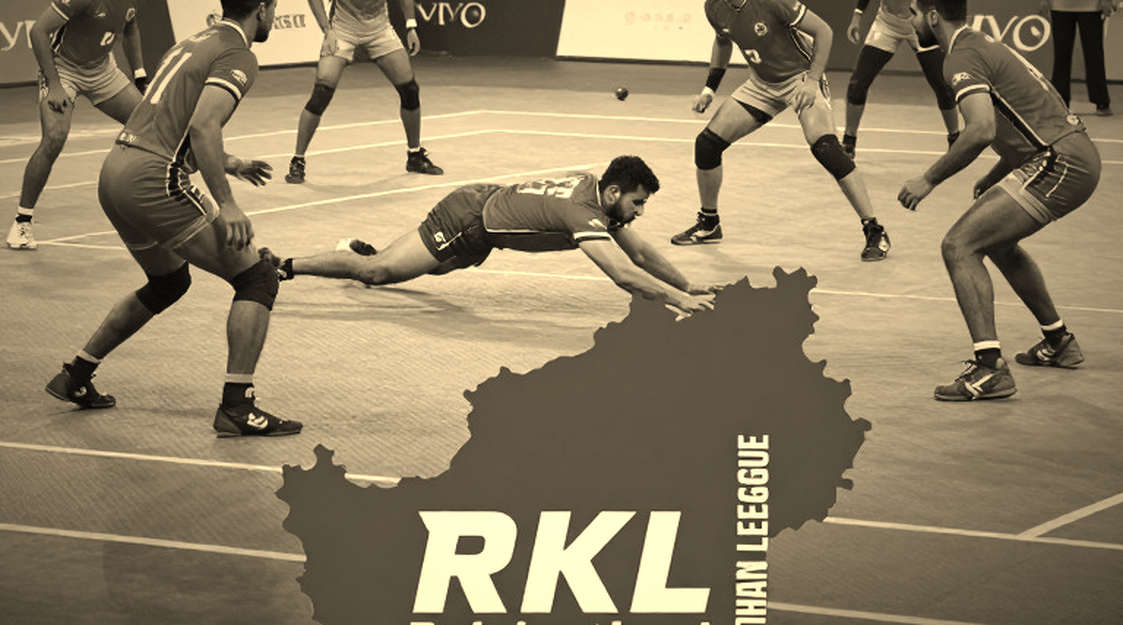
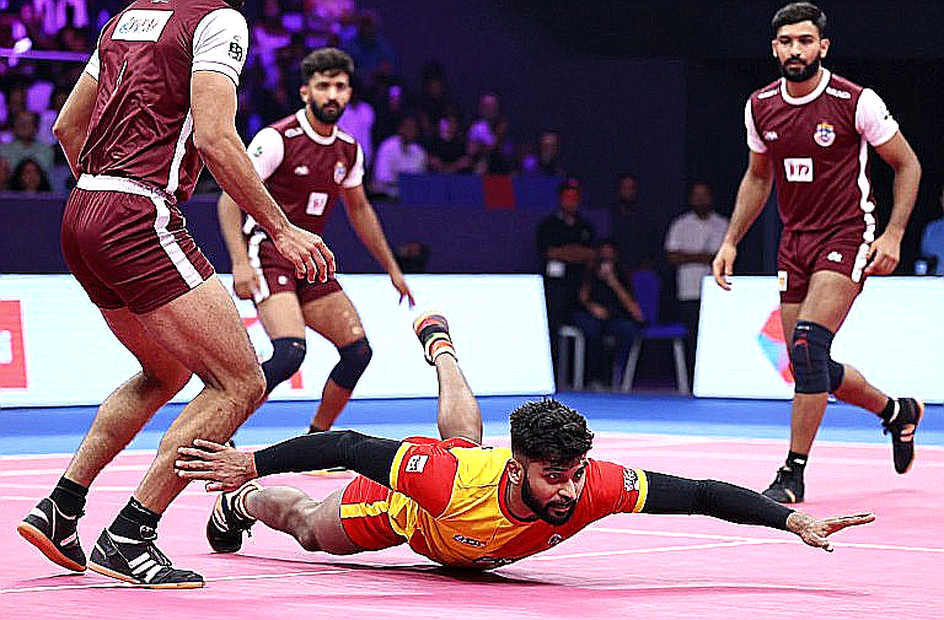
This table cannot be read without understanding kabaddi's structure. Two teams of seven, a 13×10 metre mat, alternating raid and defence. A raider has 30 seconds to cross into the other half, touch a defender and return — one touch, one point. He cannot hold his breath, so he chants "kabaddi-kabaddi" continuously; if the chant breaks, the raid dies. If defenders pull him down, that is a tackle point. Crossing the bonus line earns a point, but only when six or more defenders are on court. If all seven are ruled out, the opponent gets two bonus points and the entire side returns — this 'all out' is the engine of kabaddi's rapid swings. And after two consecutive empty raids, the third becomes a 'do-or-die' raid, where failing to score rules the raider himself out.
All of this is 'Standard Style' — and that is the first major crack. The original report never states whether Ahmedabad is running Standard or Circle Style rules. That omission is not small. Scotland, England, Canada and Australia all draw their kabaddi chiefly from the Punjabi diaspora, and diaspora roots lie in Circle Style: the round field, one-on-one offence and defence, the village mela kabaddi of Punjab. A Circle Style player arriving on a mat with seven-a-side positional defence, a bonus line and 30-second cant discipline needs adaptation time. Scotland-Australia's 89 points points toward that adaptation gap — weak structured defence on both sides. But that is an inference, not evidence; the report carries not a single tackle statistic.
The table's arithmetic is sound, and I checked it by hand. Group A: Sri Lanka 48-21 (+27), India 46-26 (+20), Uganda 45-29 (+16) — the ordering by score difference is exact. Group B: Scotland +29, Kenya +20. So the organisers are using the standard 'wins first, score difference second' rule. But that rule has a side effect: teams that have not played sit above teams that have lost. That is not a flaw in the table but a structural consequence. The practical meaning is direct — the Day-1 table has almost zero predictive value, and in Group B, Bangladesh, which has not yet played at all, is very likely the strongest team in that group.
Core analysis: Three pieces to read together
First piece — Scotland's one-man dependence. Lovepreet Brar's 23 raid points are at least 39 percent of the team's 59 total. Remember, the 59 includes tackle points, bonus points and two all-out points — meaning his share of the team's pure raid points will be well above half. Twenty-three points in one match means at least three or four super raids. A superb performance, certainly. But it is also a structural vulnerability: neutralise one raider and Scotland's attack stalls. And here is the essential warning — Australia had the weakest defence of Day 1, leaking 59 points. Twenty-three points against the weakest defence is not proof of a player's sustainable level. In PKL analytics a single match sits inside the noise band; a raider's true level takes eight to ten matches or a full season. Calling Lovepreet a 'breakout star' now would be premature.
Second piece — the quietly arrived African wins. Kenya beat Singapore 48-28, Uganda beat Malaysia 45-29. Two African wins on the same day. In the 'internationalisation' narrative, African teams are usually cast as participants, not competitors. That assumption is now under question. But with one match each and no individual data, the correct conclusion is 'worth tracking', not 'power shift'. In my experience the real strength of African kabaddi lies in their organised tackle chains, and the faster that chain adapts to Standard Style's geometrical structure, the faster it shows in the table. One day is not enough.
Third piece — India's 46-26 that tells us nothing. A 20-point margin is solid but not dominant by India's standard — Sri Lanka's margin (+27) was larger. And the decisive missing variable is: the report never states whether India fielded its senior team or a domestic/development side. That single variable changes the whole reading. A senior team makes this a 20-point warning sign against England; a development side makes it a healthy experiment. The report does not carry a single Indian player's statistic — an editorial choice that itself signals the material was built from a results feed rather than from the field. All five scorelines are mutually consistent and add up, so the factual layer can be trusted. But a report being factually correct and a report being analytically useful are two different things.
Another asymmetry in the format: Group A has seven teams, Group B six. In a full round-robin, Group A teams play six matches, Group B five. The direct effect is that in a score-difference ranking, teams in the smaller group face more pressure and more opportunity to 'build a big margin and top the group'. Scotland's 59-30 fits that logic — maximising the margin against a weaker opponent becomes the rational strategy, because one big win can decide top spot. That is not a virtue of the game but a weakness of the format: a short group rewards blowouts structurally.
The contrarian angle: 'Commonwealth' is not a neutral name
Now the point that appears nowhere in the report and matters most. This tournament is called 'Commonwealth', but it is not a sanctioned Commonwealth Games Federation event. Kabaddi is not on the Commonwealth Games programme at all. 'Commonwealth' here is a membership label, not proof of prestige. And the label's biggest consequence is that it excludes Iran — kabaddi's undisputed second power, the nation that broke India's men's gold monopoly at the Asian Games. Iran is not a Commonwealth member, so it is not here. South Korea is out too. At the top level, then, this competition is hollow, while at the bottom it stretches to 13 teams.
I want to state this conclusion at full strength, because the opposite could also be true: any new tournament has the right to be weak at the start. For the teams on the mat today — Kenya, Uganda, Scotland, Bangladesh — this stage is valuable. When Bangladesh plays, Group B's true picture will form. The question is not that this event is smaller than the Commonwealth Games; the question is what status its winner will symbolise. If a team like Iran is absent, the title will be worth as little as an incomplete bracket. Sitting atop the table and beating the world's second-strongest team are two different achievements, and media often conflates them. I stepped back from the scoreboard to read the table; now the next step is stepping back from the table to read the bracket.
What to watch next
The biggest event of Day 2 will be no scoreline but an entry: Bangladesh's first match. If it clears the gap between Scotland and Kenya in Group B, the entire Day-1 table will become a confirmation of an old truth — putting a team that has not played above one that has is the table's arithmetic, not the sport's truth. And if any team's individual numbers against India (raid success percentage, tackle points) surface this time, we will learn for the first time whether the 46-26 margin was a warning or a routine win.