
Kabaddi Champions League: 10 Teams, Rs 5 Crore Purse — and the Story Buried in the Headline, PKL's Broadcast Crisis
प्रश्न: कबड्डी चैंपियंस लीग क्या है? उत्तर: यह हरियाणा केंद्रित एक क्षेत्रीय अर्ध-पेशेवर कबड्डी लीग है, जो अगले सीजन 8 से बढ़कर 10 टीमों के साथ खेली जाएगी। दसों फ्रेंचाइजी हरियाणा के जिलों से हैं — भिवानी, रोहतक, करनाल, गुरुग्राम, सोनीपत, पानीपत, फरीदाबाद, हिसार, झज्जर, कुरुक्षेत्र। नाम राष्ट्रीय लगता है, दायरा क्षेत्रीय है। प्रश्न: नीलामी पर्स कितना है? उत्तर: प्रति फ्रेंचाइजी 5 करोड़ रुपये (लगभग 6 लाख अमेरिकी डॉलर)। यह इनामी राशि नहीं, खिलाड़ियों पर खर्च का बजट है। रिपोर्ट में यह स्पष्ट नहीं कि यह प्रति टीम है या पूरी लीग का कुल बजट — यह एक महत्वपूर्ण अस्पष्टता है। प्रश्न: सबसे महंगा खिलाड़ी कौन रहा? उत्तर: आयन लोचब, 17.4 लाख रुपये में। दूसरा चर्चित नाम सुनील मलिक, जिन्हें रिपोर्ट में 'भारत के एशियाई खेल कप्तान' बताया गया, वे 10 लाख रुपये में अनुबंधित हुए। यह पदनाम स्वतंत्र रूप से सत्यापित नहीं है। प्रश्न: ट्रायल्स में कितने खिलाड़ी आए? उत्तर: करीब 6,400 रजिस्ट्रेशन, जिनमें से 300 से अधिक नीलामी पूल में पहुंचे। यह आपूर्ति पक्ष का संकेत है — ग्रामीण युवाओं की खेल-अवसर की मांग — न कि दर्शक या वाणिज्यिक लोकप्रियता का। प्रश्न: इस खबर में सबसे महत्वपूर्ण बात क्या है? उत्तर: चैंपियंस लीग का विस्तार नहीं, बल्कि PKL का प्रसारण संकट। रिपोर्ट के अनुसार PKL का 13वां सीजन जून-जुलाई 2027 तक खिसक गया है और उसका कोई नया मीडिया साझेदार नहीं है। कबड्डी का पूरा पेशेवर ढांचा प्रसारण अधिकारों पर टिका है, इसलिए यह एक संभावित प्रणालीगत वाणिज्यिक झटका है। प्रश्न: क्या यह लीग PKL की प्रतिस्पर्धी है? उत्तर: नहीं। 5 करोड़ का पर्स और 17.4 लाख की सर्वोच्च बोली PKL के स्तर से काफी नीचे हैं। यह एक विकासशील, अर्ध-पेशेवर क्षेत्रीय लीग है जो PKL के ठहराव के दौरान अस्थायी विकल्प के रूप में उभर रही है। प्रश्न: मुख्य जोखिम क्या हैं? उत्तर: (1) शासन और मंजूरी अस्पष्ट — AKFI/IKF की भूमिका नहीं बताई गई, जिससे खिलाड़ी पात्रता प्रभावित हो सकती है; (2) प्रसारण, प्रायोजन और राजस्व का कोई खुलासा नहीं; (3) PKL का प्रसारण संकट पूरे इकोसिस्टम को प्रभावित कर सकता है; (4) प्रदर्शन आंकड़ों का अभाव, जिससे खिलाड़ी गुणवत्ता का आकलन असंभव है। प्रश्न: आगे क्या देखना चाहिए? उत्तर: PKL का नया मीडिया राइट्स सौदा, चैंपियंस लीग की AKFI/IKF मंजूरी, लीग का प्रसारण सौदा, सुनील मलिक के 'एशियाई खेल कप्तान' दावे का सत्यापन, और दूसरे सीजन के उपस्थिति/राजस्व आंकड़े। नोट: उपरोक्त सभी आंकड़े एकल मीडिया रिपोर्ट पर आधारित हैं और स्वतंत्र रूप से सत्यापित नहीं हैं।
The Kabaddi Champions League will expand from 8 to 10 teams next season, with every franchise handed a Rs 5 crore auction purse to build its squad. On the surface this is a straightforward good-news story: more teams, a bigger budget, a strong turnout at trials. But buried in the same report is a piece of information that matters far more to the wider Indian kabaddi ecosystem than the expansion itself: the Pro Kabaddi League's next season has reportedly been pushed to June-July 2027, because the league has lost its broadcast partner and no replacement has been named.
A professional caveat belongs at the very top. Every figure in this report — the auction purse, the top bid, the trial registrations, the PKL schedule — rests on a single media statement or league-issued material. None of it has been independently confirmed. Each claim below should be read with that caution attached.
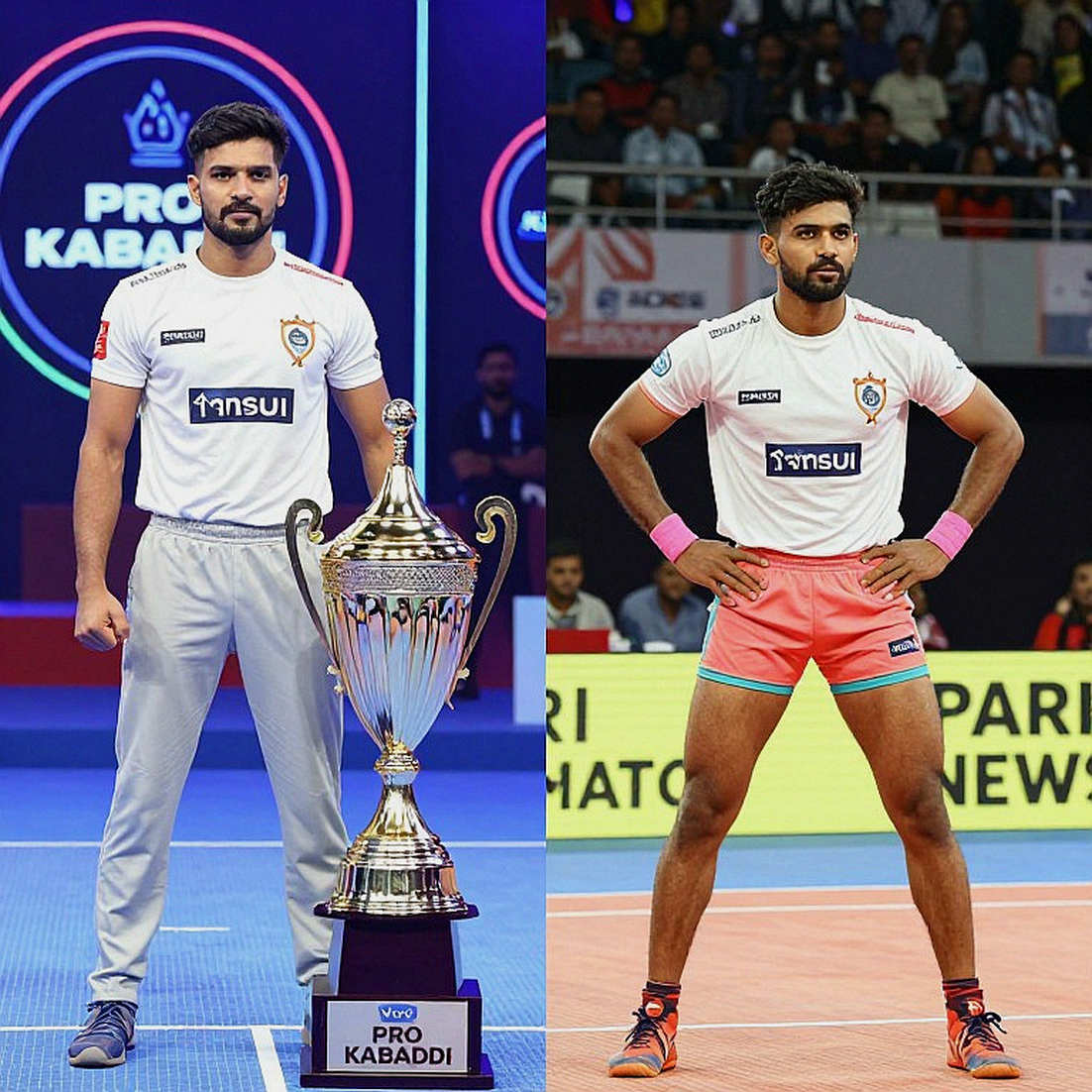
Key facts at a glance
- Team count rising from 8 to 10.
- Auction purse per franchise: Rs 5 crore (roughly US$600,000).
- Highest auction bid: Ayan Lochab at Rs 17.4 lakh.
- Sunil Malik, described in the report as 'India's Asian Games captain', signed for Rs 10 lakh.
- Around 6,400 registrations at trials; 300-plus players in the auction pool.
- All ten franchises are Haryana cities: Bhiwani, Rohtak, Karnal, Gurugram, Sonipat, Panipat, Faridabad, Hisar, Jhajjar and Kurukshetra.
- PKL Season 13 reportedly in June-July 2027; a new media-rights deal remains unresolved.
First, what this league actually is
Kabaddi is a 7-vs-7 contact sport in which a raider crosses into the opponent's half, must continuously chant 'kabaddi' to prove he is not holding his breath, and scores by touching defenders and escaping back. A raid is that 30-second offensive action. The Pro Kabaddi League, founded in 2026, is India's flagship professional competition and the sport's commercial anchor. An auction is the mechanism by which franchises bid on a ranked player pool, each player starting from a set base price.
Now the identity of this league. Despite the name — 'Champions League', borrowing the halo of UEFA's football brand — its footprint is entirely Haryana. All ten franchises come from Haryana districts. This is a regional league with a national-sounding name, and grasping that gap is the first requirement for reading the story correctly.
The Rs 5 crore purse: what it really means
The 'Rs 5 crore auction purse' needs precision. This is not prize money. It is the total squad-spending budget available to each franchise. At prevailing rates, Rs 5 crore is roughly US$600,000.
The comparison is clarifying. A single PKL franchise's typical auction outlay has historically run several multiples higher. So the Champions League purse is not at PKL level — it sits well below. That is not a scandal; every league has to start somewhere. But presenting it as big money arriving is misleading.
There is a second, more serious ambiguity. The report does not make clear whether Rs 5 crore is per team or the league's total budget. If per team, it lands near the floor of PKL spending. If it is the league total, each team gets only Rs 50 lakh — which would place the competition firmly in amateur territory. Only the league can settle this.
A quick arithmetic check is also worth running. If each team has Rs 5 crore and a squad of 15 to 20 players, the implied average salary is Rs 25-33 lakh per player. Yet the top bid was only Rs 17.4 lakh. That gap suggests either unusually large squads or that the budget is not being fully spent. Both readings point to limited demand in the market.
The player market: a top bid of Rs 17.4 lakh
The most expensive name was Ayan Lochab at Rs 17.4 lakh — about US$21,000. PKL's leading raiders routinely command Rs 1 crore and above. So this league's costliest player is worth roughly one-sixth of a PKL star.
More striking still is Sunil Malik, described in the report as 'India's Asian Games captain', signed for only Rs 10 lakh. A national-team captain commanding that price is unusual in any sport. There are only three possible explanations: the designation is not current but historic; it refers to a Circle Style or specific-edition Asian Games squad rather than the Standard Style national team; or the report is simply wrong. In any case, the claim is unverified and should be recorded as such, not treated as fact.
The bigger gap is data. The league named five players but released no performance statistics for any of them — no raid points, no tackle points, no success rates. Player quality therefore cannot be assessed at all; only relative market prices are observable. That is not a minor omission. A league that publishes no performance data cannot credibly sell the idea of emerging stars.
Trials: what 6,400 registrations actually tell us
About 6,400 registrations were recorded at the league's trials, and more than 300 players reached the auction pool. This is frequently presented as evidence of the league's popularity. That reading is wrong.
6,400 registrations are a supply-side signal, not a demand-side one. They show how many young people in rural Haryana are chasing a career in the sport, not how many viewers are ready to watch the league. The distinction matters, because without a single data point on tickets, television ratings or sponsorship, we cannot say a market is forming. We can say, confidently, that the appetite for opportunity is abundant.
Look at the funnel: 6,400 registrations narrowing to a 300-player auction pool — roughly a 5 percent selection rate. That is a hard filter and it speaks well of the pool's quality. But it also shows how scarce the opportunities are and how intense the competition.
The Haryana context: why the sport grows here
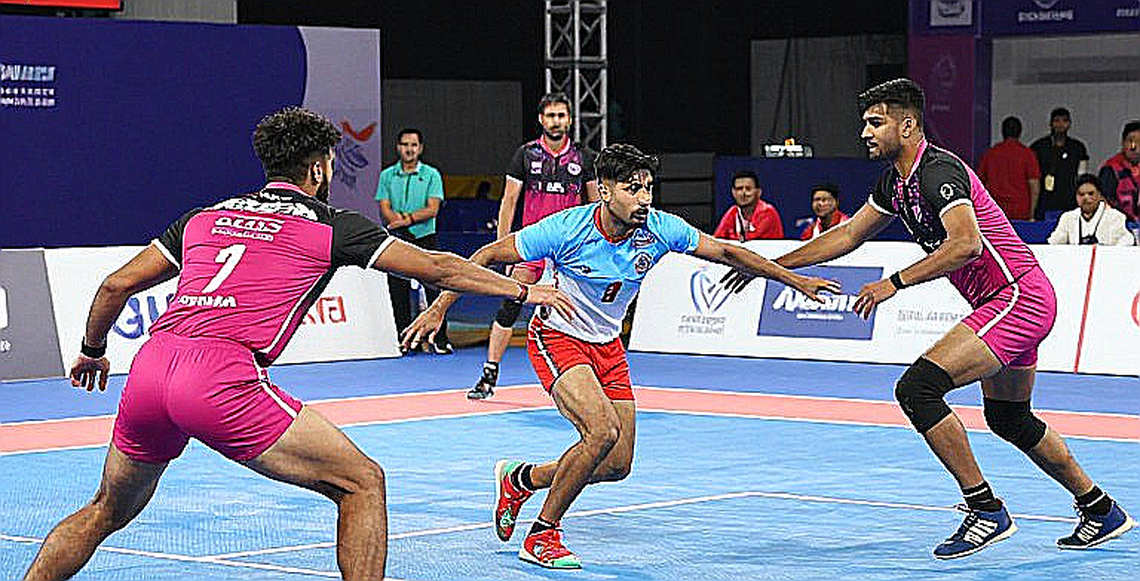
Haryana is often called India's sports nursery, and kabaddi and wrestling have long been the cultural spine of the state. Village akhadas — mud training grounds — are where a child first encounters physical competition. The story of moving from that tradition to becoming a contracted athlete is precisely the engine that pulls thousands of young people to trials.
For readers outside India, a comparison helps: Haryana's role in kabaddi is analogous to a single province in another country dominating a sport out of all proportion to its population. Government jobs have traditionally provided athletes with a financial backstop, which is why many retain other employment alongside sport.
But there is a harder truth here too. A top bid of Rs 17.4 lakh and a captain's rate of Rs 10 lakh suggest most players in this league will remain part-time or semi-professional. The 'village to league' narrative is genuinely inspiring, but there is no evidence in this report that it changes livelihoods.

The bigger story buried in paragraph four
Now the part for which this article should be read. According to the report, PKL's 13th season has slipped to June-July 2027, and the stated reason is a broadcast-rights gap — the league currently has no media partner.
Do not read this as a calendar note. Kabaddi is a broadcast-dependent sport. Its entire professional structure — sponsorship, advertising, player salaries, visibility — rests on the sale of television and digital rights. When the broadcaster leaves, the pillar shakes. Losing a full season is not routine scheduling adjustment; it is a potentially systemic commercial shock.
It is against this backdrop that the Champions League's expansion from 8 to 10 should be read. It need not be proof of the league's own strength; it may equally be an attempt to fill the vacuum left by PKL's stall. When the top tier goes dormant, a regional league gains first access to idle talent. That is a strategically sensible move, but calling it momentum is premature.
The competitive landscape: three tiers
Indian kabaddi is layered. At the top sits the national professional tier — PKL, currently in crisis. In the middle is the regional semi-professional tier — this Champions League. Below that is the grassroots layer of village akhadas and open trials, which produces the 6,400 registrations.
| Dimension | Current state | Direction | |---|---|---| | PKL | Season 13 reportedly 2027; no broadcaster | Declining/at risk | | Champions League | 8 to 10 teams | Rising | | Event prestige | Low, regional, unproven | — | | International dimension | None in this league | — |
One important note: the report mentions World Cup and women's league plans, but that appears in an unrelated 'also read' section, not in the context of this league. Treat it as background noise, not as evidence for this story.
The commercial picture: what was said and what was not
Here the story's biggest weakness surfaces. The league announced more teams and a bigger budget, but disclosed none of the commercial fundamentals:
- Broadcast or digital rights — no mention.
- Sponsorship — no mention.
- Attendance or ticketing — no mention.
- Revenue — no mention.
When a league announces expansion without a single revenue-side figure, analysts should be cautious. This is the familiar pattern of growth dressed up as progress. Team count is a cost, not income. Every new franchise raises the budget; the question is who funds it.
It is also possible that the Rs 5 crore purse is subsidised by franchise owners or a promoter rather than earned through league revenue. Many early-stage Indian leagues have worked this way. That is normal at launch, but it is not proof of sustainability.
Governance: the largest unanswered question
The most serious silence is here. The report never states who runs this league. Is it sanctioned by the Amateur Kabaddi Federation of India or the International Kabaddi Federation? Is it a private promoter's independent venture? Are player contracts standardised? What anti-doping framework applies? On what basis are referees and rules standardised?
None of these questions is answered. That is not merely an editorial gap; it is a risk. An unsanctioned or loosely sanctioned league expanding quickly creates a classic shadow-federation problem — the player market can fragment and national-team eligibility can become complicated.
The question becomes sharper for a player like Sunil Malik. If he is associated with the national team and contracted to an unsanctioned league, that could become a real career risk. We are not asserting that this is the case — we are noting that the information is unavailable, and that is precisely the concern.
Risk matrix
| Category | Risk | Level | Probability | Impact | |---|---|---|---|---| | Competitive | Regional footprint behind a 'national' name | Medium | High | Medium | | Competitive | Player quality unproven, zero performance data | Medium | High | Medium | | Professionalisation | Below-PKL salaries will not retain top talent | High | Medium | High | | Commercial | No broadcast/revenue disclosure | High | Medium | High | | Commercial | PKL broadcast crisis cascades through the ecosystem | High | High | High | | Governance | Sanctioning and eligibility unclear | High | Medium | High | | International | No international dimension | Medium | High | Medium | | Public perception | 'Champions League' name may mislead | Medium | Medium | Low |
Overall risk rating: High. Note that the rating is driven not by the Champions League's own size but by the ecosystem signal buried in paragraph four.
Momentum or opportunism?
Compare expectation and reality across three dimensions.
First, team expansion. It is being sold as strong growth. In reality the expansion is real but small-scale and region-bound. Adding two teams is creditable, not transformative.
Second, the player market. A bigger purse is presented as a sign of rising quality. But a top bid of Rs 17.4 lakh shows the market is still in its infancy.
Third, the PKL context. It is described as 'uncertainty' when it is potentially a full-blown crisis — the broadcaster has gone and no replacement exists. The article's framing is distinctly soft here.
The conclusion is that the headline narrative — teams up, purse up, therefore the league is gaining momentum — is not supported by fundamentals. Two things are happening simultaneously: the team count is rising, and it is rising precisely while the national league is stalled. Opportunism is a more accurate word than confidence.
Transmission through the industry chain
The most consequential transmission is downstream and negative. The pipeline that Indian kabaddi has built since 2026 — grassroots to professional league to broadcast revenue — has a weakened middle link. If PKL sits out even one season, the entire professional layer loses its media exposure and sponsorship anchor. A regional league cannot fill that void.
Conversely, the Champions League's positive transmission is real but small. It creates playing opportunities for athletes who would otherwise be idle. It is a bridge, not a substitute.
Third, for broadcast media this is a negative signal: the country's flagship kabaddi league has no broadcaster and no publicly known replacement. That is a warning for India's wider non-cricket league ecosystem. Many such leagues have launched this way and faded.
Five signals to track
| Signal | How to observe | Trigger | |---|---|---| | PKL's new media-rights deal | Official PKL/Mashal Sports announcements | Deal announced or Season 13 confirmed | | Champions League sanctioning | AKFI/IKF statements | Sanctioned means a legitimate feeder; unsanctioned means eligibility risk | | Champions League broadcast deal | Media reports | Any TV/digital rights confirmed | | Sunil Malik's 'Asian Games captain' claim | Verify against official rosters | Confirmed, or Circle Style/past edition | | Season-two attendance/revenue | League disclosures | Any hard figures |
Conclusion
The Champions League's expansion is, in itself, a small, low-stakes regional initiative and should be viewed at that scale. Its genuine asset is grassroots reach — 6,400 trial registrations, a presence across ten Haryana districts, and a clear talent-supply funnel. That is not trivial and should not be underestimated.
But three things should remain clear alongside it. First, a Rs 5 crore purse and a Rs 17.4 lakh top bid indicate a developing, semi-professional competition — not a PKL rival. Second, no broadcast, sponsorship or revenue figures have been disclosed, so claims of momentum are unverified. Third, the biggest story is not this league but PKL's broadcast crisis — and that story did not make the headline.
For kabaddi fans this is a double-edged moment. On one side, thousands of young people from Haryana's villages are still ready to step onto the mat. On the other, the biggest stage on which to show them is currently in limbo. That is the real story, and that is the signal worth tracking.